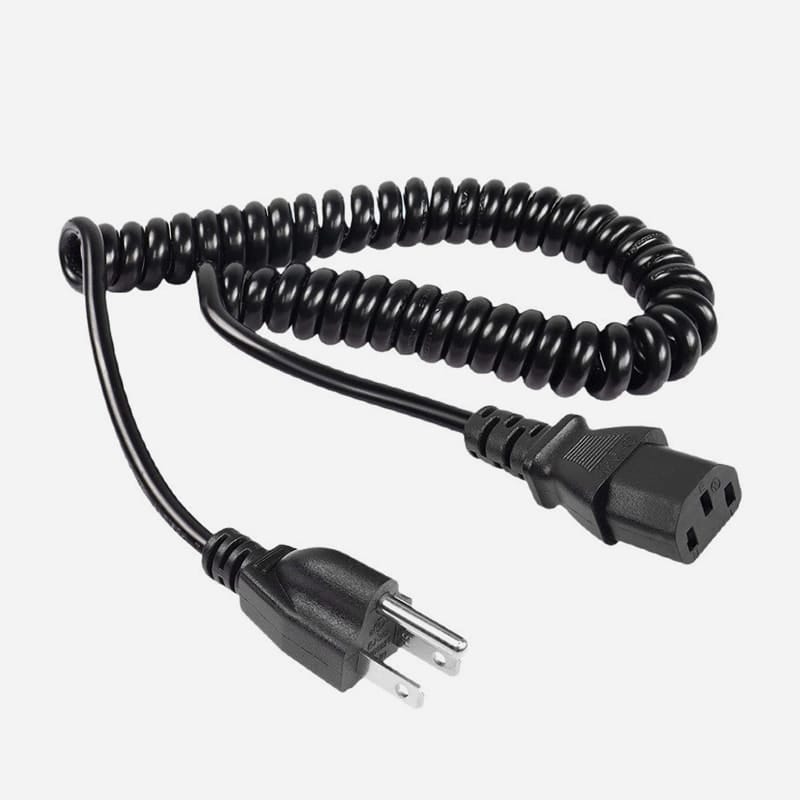
Make systems more reliable and safer with our
pro-grade flexible coil cable assembly. There are
many styles and sizes available with customization
options for different uses.
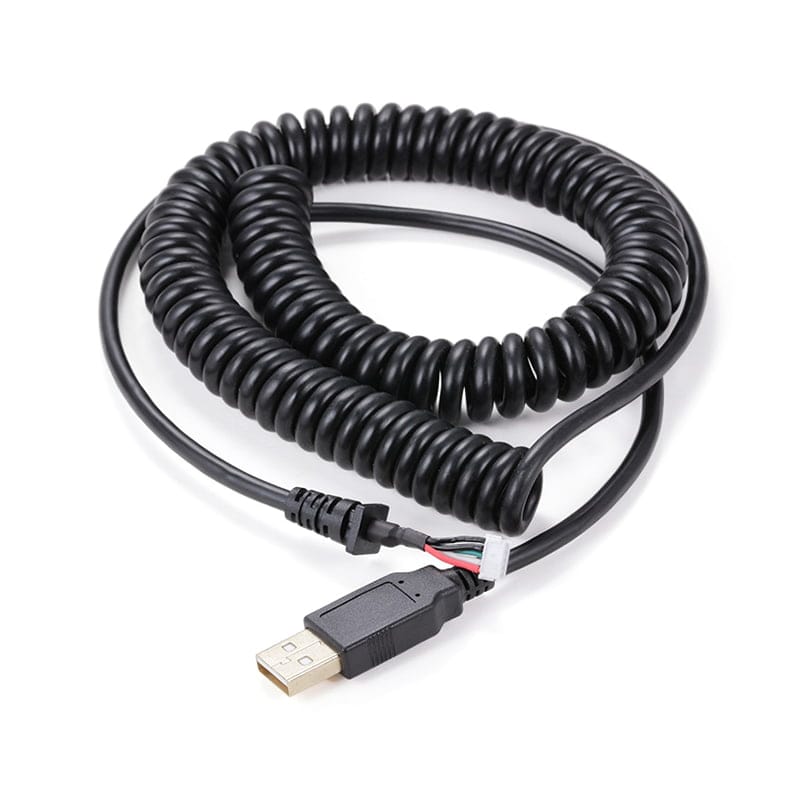
When a coil cable assembly is pulled back, it looks
like a coiled spring. It rolls up neatly into a
small bundle and only stretches when it needs to.
Thanks to its built-in spring action, it moves
without getting caught or tangled. A coil cable can
stretch and return to its original length, which
greatly reduces the strain on connections and makes
the cable last longer. Because these wires only go
as far as they need to, they don't take up as much
space in cars, on gadgets, or in taxis. They are
used in a lot of places where tools and machines are
moving, like industrial cabins, diagnostic vehicles,
hospital carts, and audio equipment.
Coil cables are better than straight wires in a lot of
ways. Coil cable assembly automatically pulls back when
not in use, so they don't get in the way. A helical
shape spreads out bending and twisting forces along the
wire, which makes it stronger and less likely to break.
Their ability to retract to a short length keeps work
surfaces neat and free of stray loops. The end result is
an installation that looks cleaner and more
professional.
Retracted length Good stretch
You can stretch a coil cable assembly several
times its resting length and then bring it back
to its original length without permanently
stretching it. The coils are springy, so they
give you a lot of movement and flexibility. This
regulated extension stops cords from hanging
down. The right length, nothing more. When you
use the cable, it "grows," and when you don't,
it "shrinks." This stops loose wires from
getting into cable pathways. The elastic jacket
and stranded conductor work together to make
sure that cable bouncing is reliable. A
well-made coil cable always retracts completely,
so the work space stays clean.
Optimize space and maintain neatness
When you tuck away a coil cable assembly, it
doesn't take up any more space than its tightly
wrapped spring. It doesn't stretch out like a
straight wire. It goes back to its small shape
after use to keep it from getting tangled or
tripping over. As a result, garages, cars, and
workstations stay clean and organized. Coil
cables look neat and organized, even in messy
places, because they don't have any loops that
hang down. When they are at rest, their small
size makes them a good fit for small spaces like
workstations, lab equipment, or rolling carts.
Coil cables keep installations neat and tidy by
extending when needed and pulling back when not
in use.
Long-lasting and resistant to wear/fatigue
The spring-like coil makes it less likely that
stress will build up in one place. Instead of
bending sharply at the plug or connection, the
motion spreads out over several loops. This
directly reduces the strain on the wires.
Studies have shown that coil cable designs can
handle thousands of draw cycles. They are made
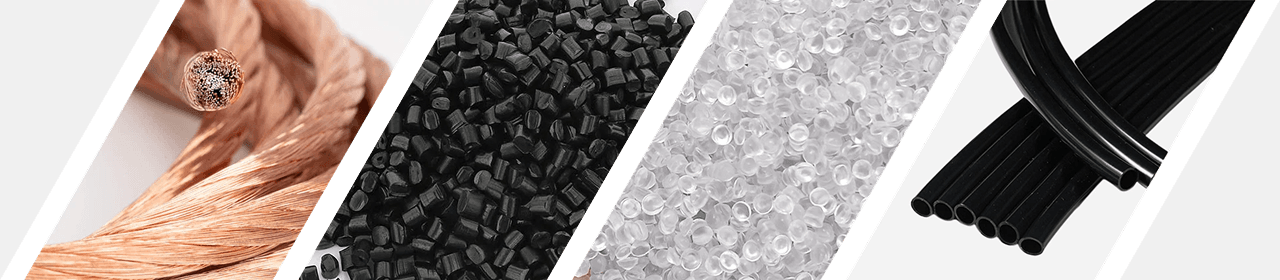
to always be moving. The copper conductors
inside the coil cable assembly have a lot of
strands, which makes them more flexible than
solid wire. This means that the cable can handle
being stretched and restrained over and over
again. TPU or Hytrel are examples of specialized
materials that make things more resistant to
wear and tear. In general, coil cables can
handle more stress than straight cords without
breaking.
The type of insulation and jacket material you choose
will affect how well a coil cable assembly works. We
always suggest a mix of chemical protection, durability,
and flexibility for outerwear. Materials like PUR or
TPE/TPU that are resistant to oil and abrasion are very
useful for industrial or heavy-duty uses. PVC is cheap
and might work for most indoor gear, but it isn't as
flexible as other materials. Also, think about the
insulation around each wire.
More strands copper- Increase retractability
The copper conductor has a big effect on how
flexible a coil cable is. Instead of one solid core,
we use several thin copper strands. The more strands
a wire has, the more flexible it becomes. A coil
cable made of hundreds of very fine copper strands
will not get tired very often when it is bent and
recoiled. This means that the cable pulls back
evenly and smoothly. You can coil and stretch
multi-stranded wire many times without it breaking.
So, using more (but thinner) copper strands directly
improves retractability and lifespan.
PE insulation for Coil cable
Polyethylene (PE) is a common type of insulation for
wires in coil cables. PE is a great electrical
insulator and is also very resistant to moisture.
Because PE naturally repels water, cables that are
insulated with it work well in wet or outdoor
settings. Besides being resistant to chemicals, PE
may also keep the conductor safe from dirt and other
substances, such as cleaning solutions and
lubricants. But when compared to other materials, PE
is a little stiff. We mostly use PE for the
insulation (the inner layer) instead of the outer
jacket because stiff insulation makes it much harder
for a coil cable assembly to bend. The cores of
coils are usually made of PE, and the jackets are
usually made of PVC or TPE.
TPE/TPU cable shealth BEST use for coil cable
Thermoplastic elastomer (TPE) or thermoplastic
polyurethane (TPU) jackets are great for coil cables
that last a long time and are very flexible. A TPU
jacket is an example of a material that is both
strong and flexible. They keep the wire from
breaking when it is coiled, bent, and twisted over
and over again. TPU and TPE are resistant to oils,
strong chemicals, and wear and tear, so coils stay
in good shape even in the worst conditions. Because
of this, these are great for industrial robots,
medical devices, and outdoor gear.
PVC cable shealth use for Coil cable
PVC is a common and cheap material for jackets, and
it works well for many coil cables. It is somewhat
flexible and also does a good job of insulating
electricity. PVC jackets are a great choice because
they last a long time and are somewhat resistant to
acid and oil. PVC coil cables are great for less
demanding uses, like consumer electronics or office
equipment, when the wire won't be stretched hundreds
of times. Processing it is easy and cheap. PVC is
often only used for less demanding coils or
applications where the coil cable assembly doesn't
have to move all the time because it isn't as
flexible as rubbery materials.
Coil cable products
We make coil cable assemblies for a wide range of uses
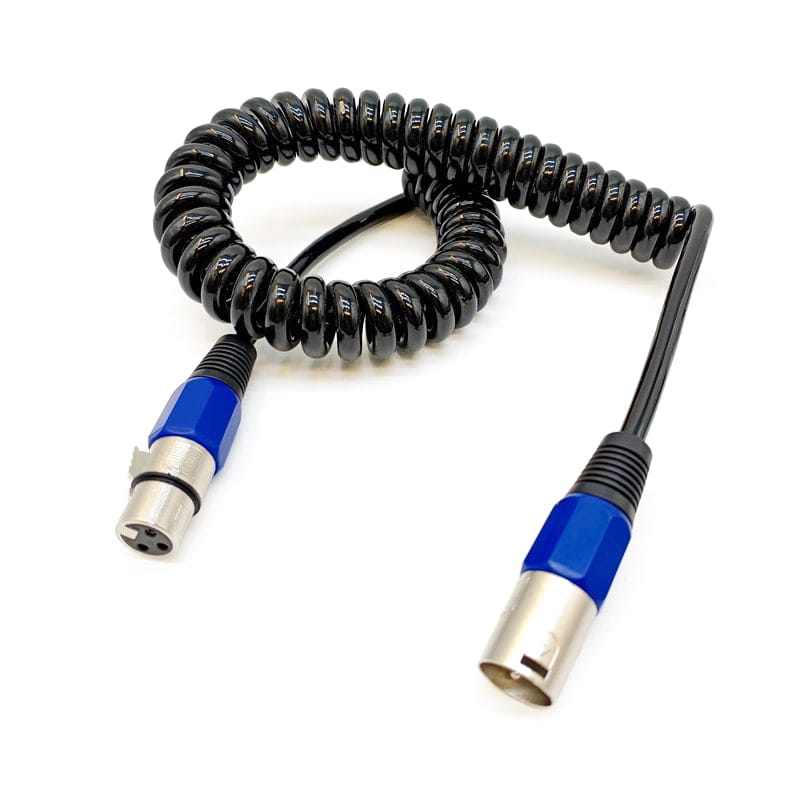
and communications. We sell audio coil cables for music
equipment, control box coil cables for machines, and
data coil cables for networking or sensors. Audio coil
cables, for instance, are made to order to make sure the
sound is crystal clear with the right connections (like
XLR or 3.5mm plugs) and shielding.
Audio coil cable
Audio coil cables can be used for many things,
such as live performances, recording in a
studio, and broadcasting. They connect
instruments, microphones, headphones, and
speakers while still allowing for movement.
People often use braided shields on these cables
to keep them from making noise. They have audio
connections like RCA plugs, TRS/TS jacks, or
XLR. Users like curled audio cables because they
can stretch out to several meters and then
neatly retract, which keeps people from tripping
on stage. The coil cable assembly is easy to
carry from show to show because it has a small
coil. In general, coiled audio cables give
producers and artists reliable sound and a lot
of range.
Control box coil cable
Control box coil cables are good for machines
and automation. These cables usually have a lot
of conductors so that they can send signals and
power from a central panel to different parts,
like motors, actuators, and sensors. The coil's
design lets panels or mobile machines (like
robots or forklifts) move freely over the wires.
These cables are built to last because they are
protected from electrical noise and have coats
that resist wear and tear, like TPU or PUR. In
short, control box coil cables make sure that
power and data can safely pass through
industrial equipment. They also keep the wires
safe from the dirty and dangerous conditions
that are common in factories.
Data coil cable
Data coil cables send digital signals between
computers, sensors, and other network devices.
Common examples are USB or Ethernet cables that
can be pulled back. Our coils can connect to
many different types of connections, such as
RJ45, USB-A, USB-C, and Micro-USB. As an
example, we could make a custom Micro USB to
USB-C coiled adapter cable to connect mobile
devices. The twisted-pair cores and foil or
braided shielding on these cables keep the
signals safe. Coiled data cables are used a lot
in robots and sensors because they keep data
speeds steady and cut down on cable drag. We
have a special shielded spiral cable that is
perfect for sensors that need to lower their EMI
in precision systems.
Industrias y aplicaciones
Industrial & Automation
Coil cables help machines and robots not trip
over wires that are hanging down. These flexible
power and communication cables are used a lot in
CNC machines, conveyor systems, robotic arms,
and other similar devices. Its design helps keep
work on schedule by reducing wear and tangling.
Automotive & Transportation
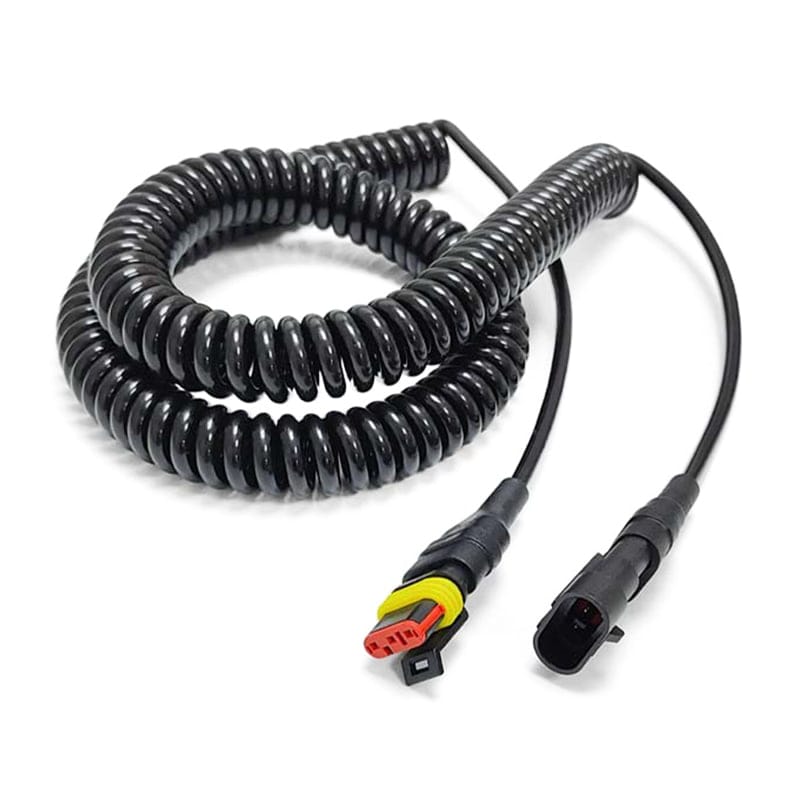
Coil cables are used in service trucks, testing
equipment, and trailer linkages. Many heavy
machines use 12V coiled cables that are made to
stretch when they are moving and pull back when
they are not in use. This makes the work area
safer and easier to use.
Medical & Healthcare
Hospitals use coil cables on imaging equipment,
monitors, and carts because they are easy to
clean and stretch. This is because these cables
are made of safe, flame-resistant materials like
LSZH or PUR, which means they can be cleaned and
used often.
Telecom & IT
In testing and server rooms, you can usually
find USB, Ethernet, and HDMI cables. They make
it easier to organize space and reach a lot of
different places. Shielded coil cables are also
used in sensors and smart buildings, which put a
lot of emphasis on keeping cables neat.
Consumer Electronics & Audio/Video
Coil cables are used in a lot of different
things, like headphones, phone chargers, camera
cords, and special keyboard cables. People like
them because they can stay neat, stretch when
needed, and help keep messages clear while also
preventing tangles.
Aerospace & Defense
Strong coil cables are used in military and
aircraft systems for their control, navigation,
and sensor systems. These cables are made of
long-lasting materials like PUR or Hytrel that
can handle vibration and constant movement
without breaking down the connections between
systems.
Coil Cable Assembly Wire Gauge Customization
Fine-Gauge Coils (28–30 AWG)
We use micro-signal cable for small signals, like those
from sensors, microcontrollers, and data with low
current. These small coils can handle low currents with
very little space and weight.
Mid-Range Coils (24–26 AWG)
It is a good fit for most control and data applications
because it strikes a good balance between flexibility
and current capability. These coils stay flexible so
they can move around all the time, and they don't lose
much voltage on medium runs.
Power Coils (12–20 AWG)
Thicker conductors are used to power machines or send
stronger signals. A bigger AWG (a smaller gauge number)
means less voltage drop and more current support because
the resistance is lower. A power-grade coil may use 14-
or 12-AWG wires to keep the power steady, even when the
wires are long.
Cooling & TrimmingMixed Gauges
We often use multi-core coils, which are coils that have
more than one gauge conductor in them. For example, a
coil cable assembly might have both power leads and
insulated signal lines. We choose each gauge based on
the amount of voltage and current it needs.
Custom Selection
Our engineers change the gauge for each project so that
the current stays constant with very little loss. No
matter if you're working with a small sensor coil or a
big power retractable cable, it's very important to pick
the right AWG.
Because of how we make our coils, they don't kink or
twist. The coil cable assembly stays the same
because of its unique winding patterns and internal
guides. Some designs have features like an internal
spiral or a double-sheath that keep the object from
spinning. This way, the ends won't be twisted, no
matter how the cable is twisted. These traits make
it easier for the coil to retract smoothly and put
less stress on the copper. The coil has a "shape
memory" because of how it is shaped, which lets it
rewind smoothly instead of getting twisted. In
reality, this means that the wire doesn't coil back
on itself; instead, it uncoils straight. The final
product is an anti-twist coil cable that stays neat
and tidy even after being used many times. This
makes it more reliable and easier to use.
We help you change the coil's diameter, pitch, and
size to get the spring tension and extension length
you want.
Our experts design connectors and terminations, like
strain reliefs or molded overmolds, to make sure the
cable stays strong. For instance, braided shielding
layers can be added to make sure the signal stays
clean.
The number of strands and the gauge of a conductor
depend on the current. Because of this, the
connection sends your signal or power without losing
quality. We use multistrand wire so that it doesn't
break.
We look at the whole design to make sure that the
coil cable assembly can be made and meets your
requirements for bend radius, cycle life, and
labeling.
For example, we recommend jackets that are resistant
to wear and tear for industrial use or jackets that
are resistant to flames for medical settings,
depending on the situation. You can find jacket
materials like PVC, TPE, TPU, and more.
We ordered coil cables for our medical carts and QL did a fantastic job. The coils stretch smoothly and tuck neatly. These met the medical grade coiled cable specifications we needed and the quality is top-notch.
Alice Johnson
Fast delivery and excellent product. The control box coil cables we got handle our harsh environment well. They used a TPE jacket which is very tough. The cables retract fully and keep our workspace tidy.
Emily Rogers
Great custom solutions. We needed a Micro USB to USB C coiled adapter cable for a handheld gadget project. QL turned it around quickly and it works perfectly. The cable is strong and clean-looking.
Daniel Lopez
These coil cables saved our coil cable-assembly space. We had a mixture of data and power coils made. The double-sleeved builds are incredibly rugged. They really understood our needs and the engineering support was very helpful.
James Kim
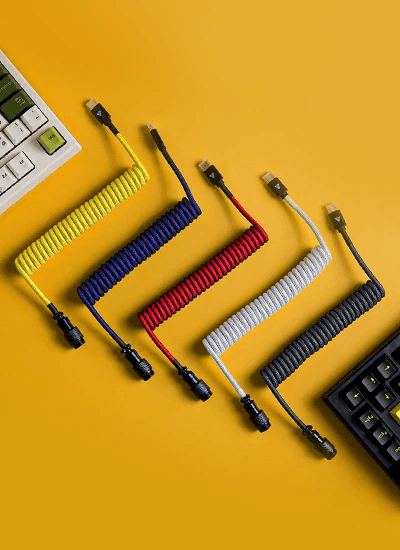
Good quality and prompt support. We asked for custom color cable coils for our gaming accessories line. The cables came out exactly the color we wanted, and they perform well.
Karen Smith
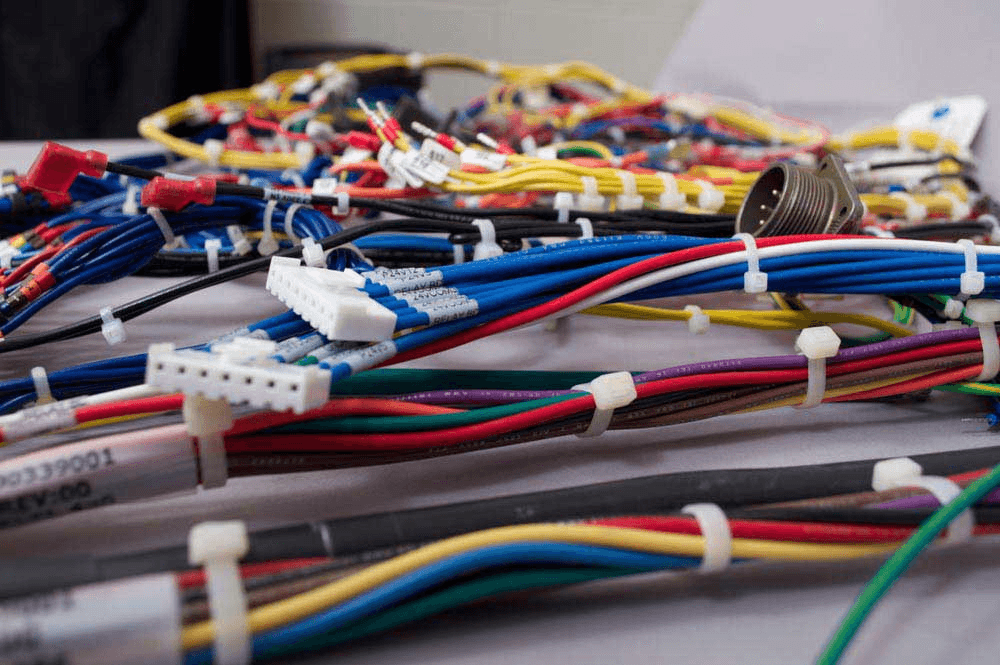
Professional company! The cables we got are well-made and tested. The lead time was as promised, and communication was clear. They provide a full wire harness service, which means we got everything integrated nicely.
Robert Brown
Your Ideal Coil Cable Assembly Partner
QL-Custom Technology Ltd. is the best company in the
business for bulk spiral cables and specialized coil
assemblies. We combine cutting-edge technology with
more than twenty years of experience to make cable
springs that are of the highest quality and
accuracy. Our in-house engineering team carefully
designs each product to meet specific needs, and we
test every batch thoroughly to make sure it works
well and lasts a long time. We are experts at making
prototypes quickly and cheaply in large quantities.
Our top priority is to see every order as a team
effort. We promise fast responses and reliable
service, no matter how many units you need. When you
choose QL-Custom Technology Ltd., you'll have access
to a factory that can make your one-of-a-kind coil
cable solution reliably and a team of experts who
know everything there is to know about coils.