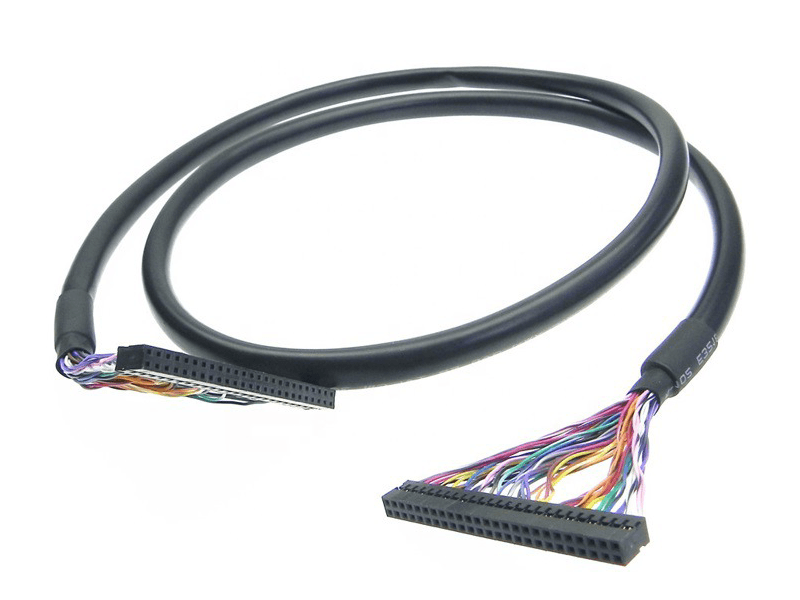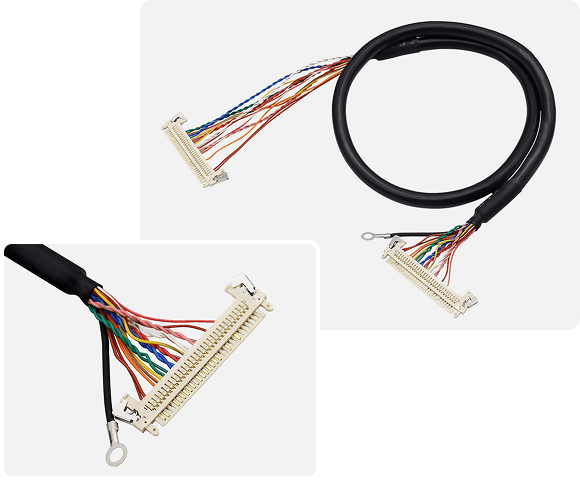
LVDS cable assembly

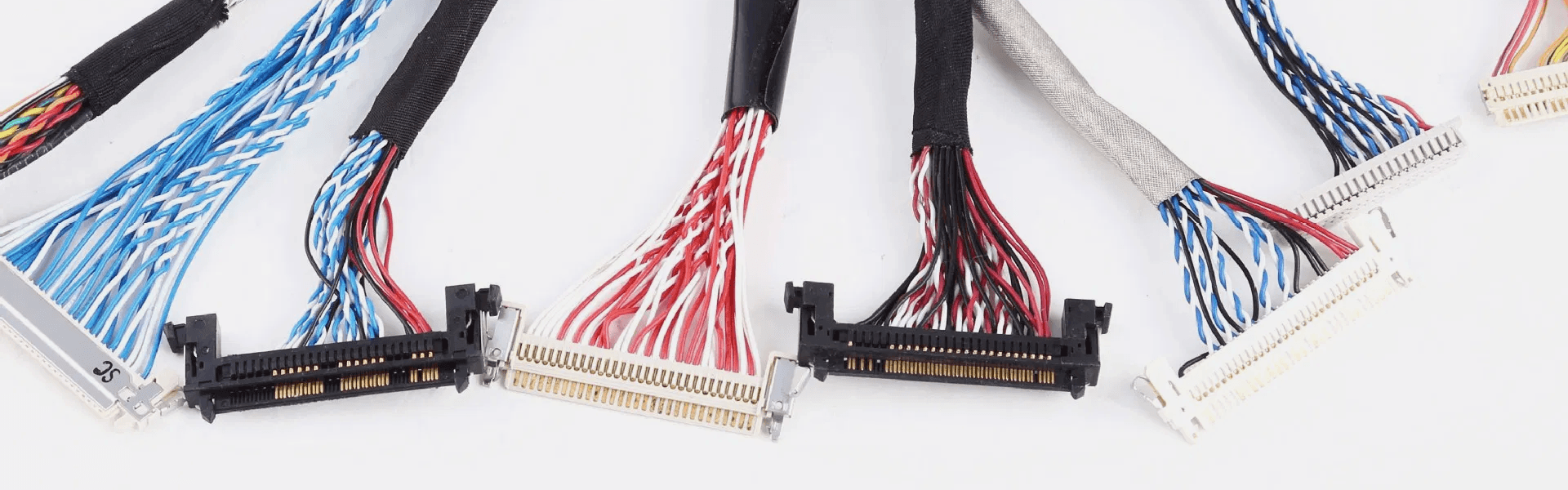
Clear video & fast data depend on cables. We manufacture custom LVDS cable assemblies that transmit signals accurately. Our cables use thin, twisted wires & robust connectors.

Custom LVDS Cable assembly

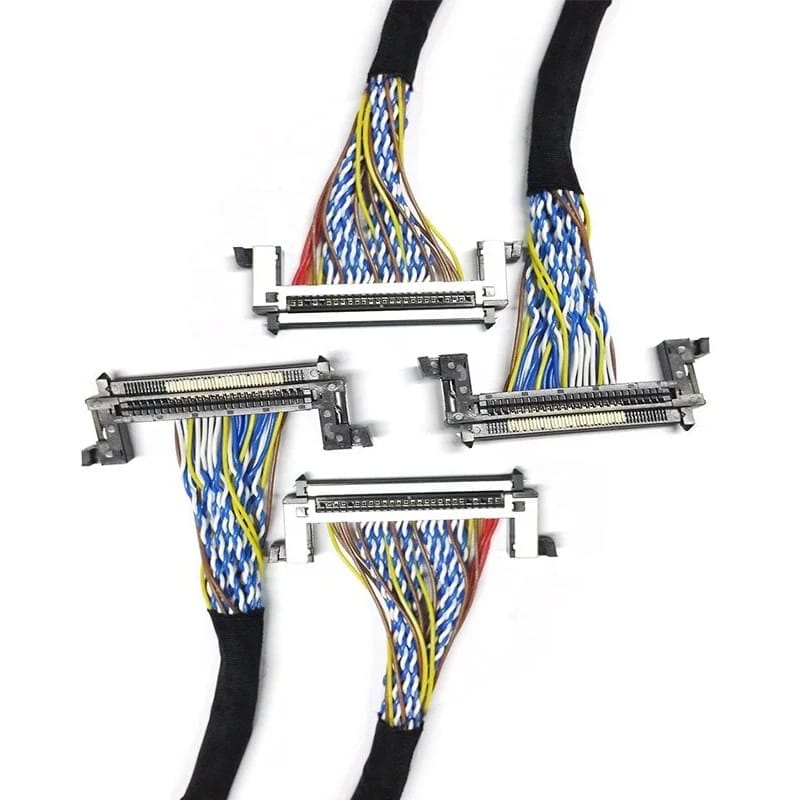
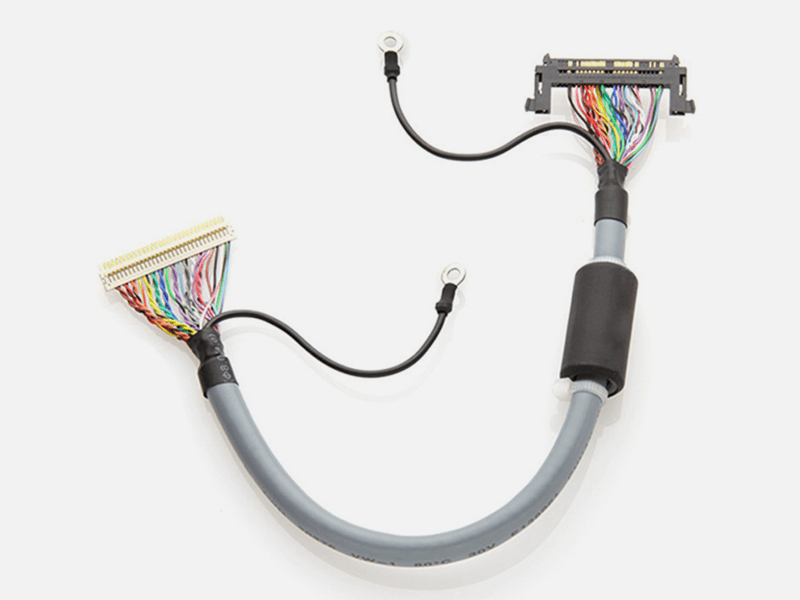
LVDS means Low-Voltage Differential Signaling. LVDS cable assembly is a specialized cable designed for high-speed data transfer. They use pairs of copper wires. Each pair sends one signal using two opposite sides. This helps block noise and outside interference. Due to this design, LVDS cables are ideal for high-resolution screens. You can find LVDS cables inside laptops, TVs, factory screens, and car displays. These cables must be made with great care. Each wire pair must have the same length and a steady 100-ohm impedance. If the cable is poorly made, the screen may flicker or lose signal. At QL-Custom, our team designs and builds custom LVDS cable assemblies that deliver sharp images and a long service life, even in demanding conditions.
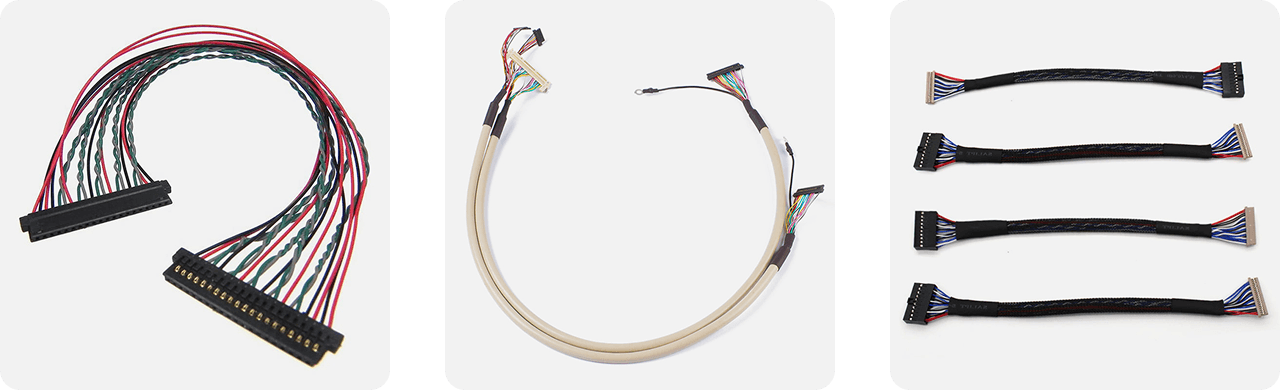
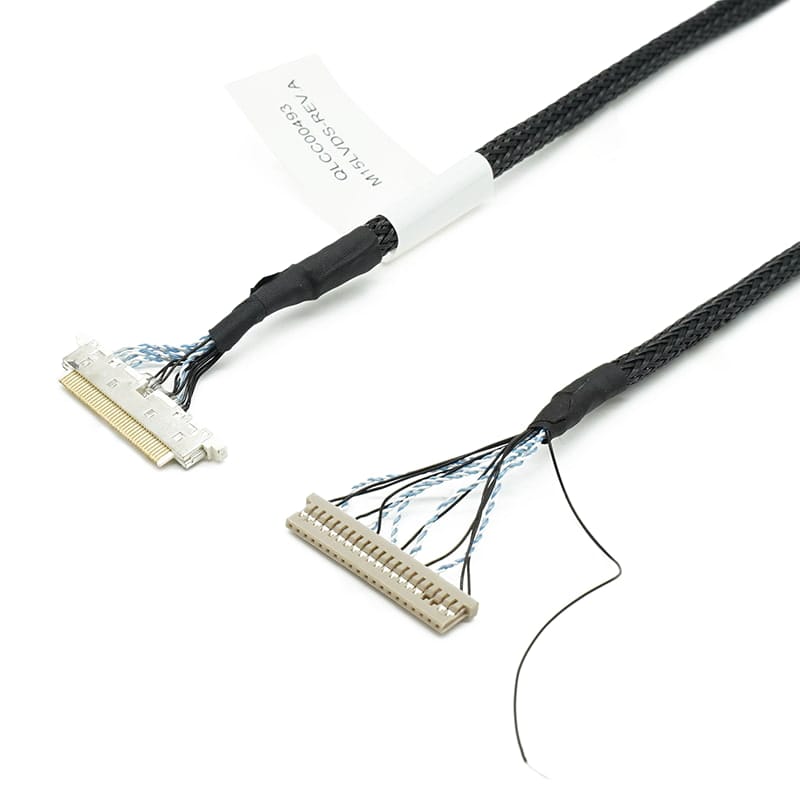
Custom made LVDS cable assembly

LVDS twisted pair wires

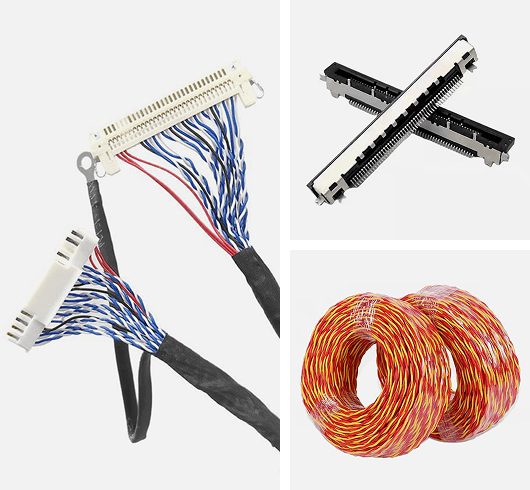
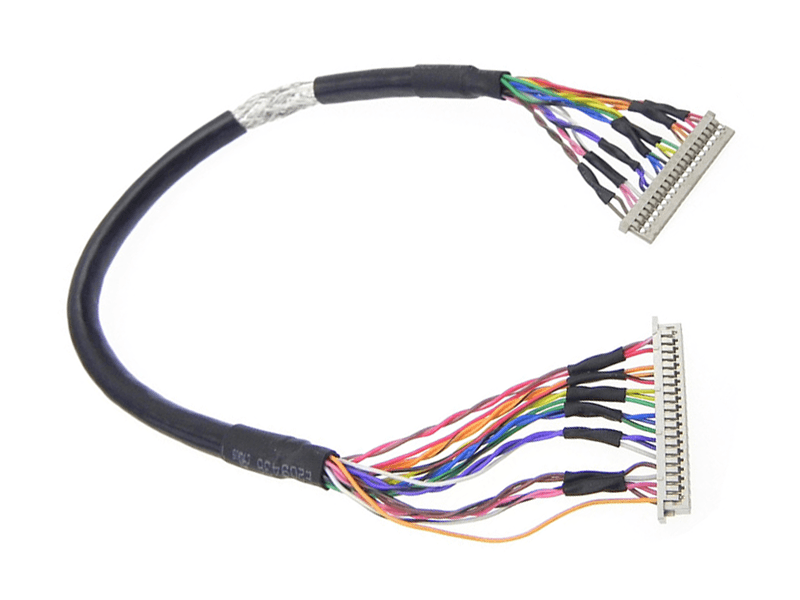
Each LVDS signal uses its own twisted pair of copper wires. Twisting the wires keeps them balanced and helps block noise. This also keeps the needed 100-ohm impedance. We often use 28–32 AWG stranded copper wire because it bends easily and has a longer lifespan. Most pairs have 2–3 twists per inch. For high-speed data, we can add more twists. The wire size and twist rate are chosen based on cable length and data speed.

LVDS female connector harness

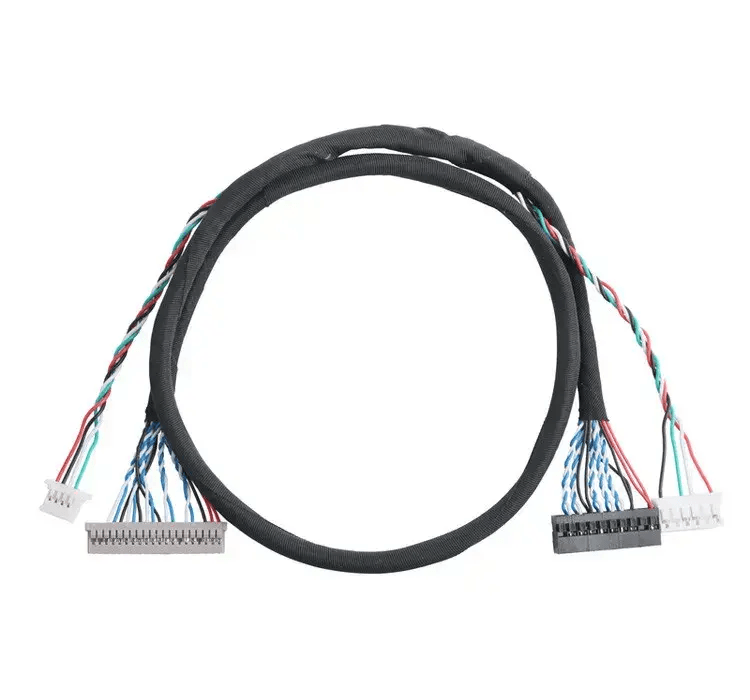
We utilize well-known LVDS female connectors from trusted brands such as JST, Molex, I-PEX, Hirose, and JAE. Female connectors plug easily into male board sockets. Each connector supports a set pin count and pitch, such as 30-pin or 40-pin. Our team carefully crimps or soldered each wire. We also add strain reliefs or locks when needed. This makes sure the LVDS cable assembly cable stays connected and works reliably.

LVDS 0.3–1.25 mm pitch connector to 2.54 mm with acetate tape

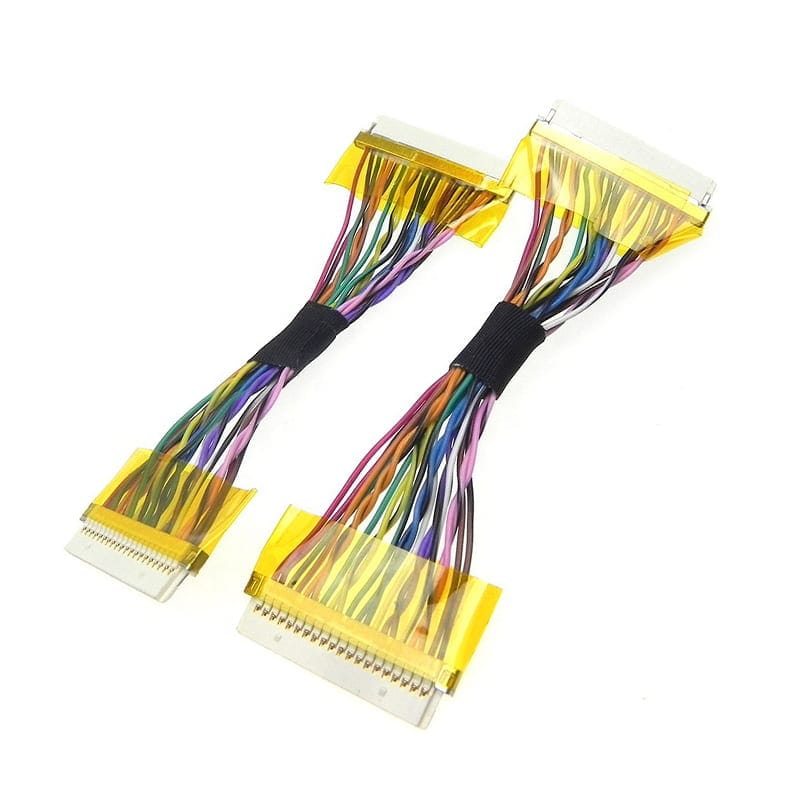
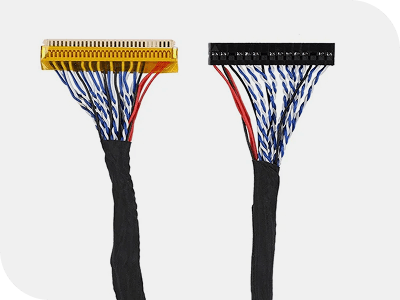
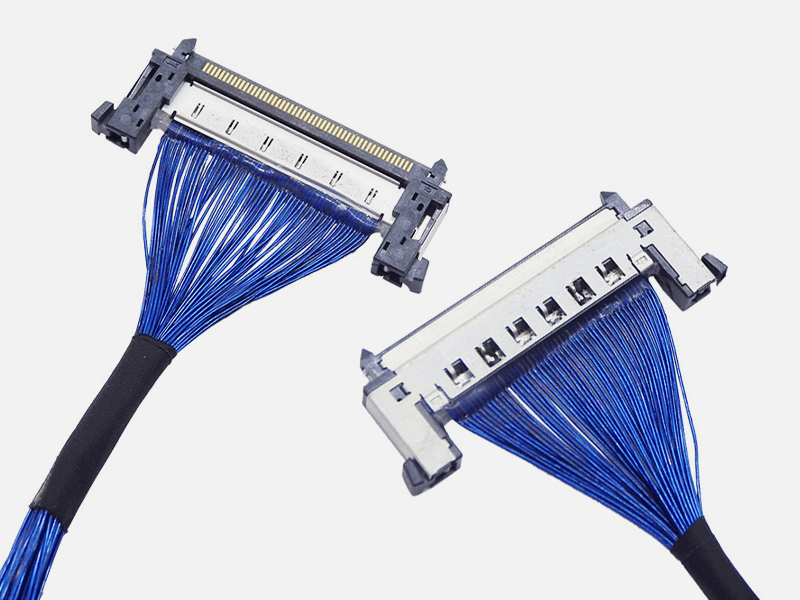
Many modern screens use tiny connectors to save space. We can attach fine-pitch connectors with pitches ranging from 0.3 mm to 1.25 mm on one end. The other end can use a standard 2.54 mm connector for circuit boards. The cable is wrapped with strong acetate cloth tape to keep wires neat and protected. This design securely and cleanly connects small modern screens to older or standard boards.

Custom LVDS cable more elements

When we make a custom LVDS cable, we think about more than just the wires and connections. We also think about how to plan labels, mounting parts, and sealing. You can put wire markers or clear labels on all of your cables. These help technicians figure out what each cable does. Our polyester labels are not affected by water, chemicals, or sunlight. We also sell heat-shrink labels that can be easily put on wires and then shrunk down to fit tightly. These labels won't fade or come off either.

LVDS cable labelling

LVDS cable labelling

We have a lot of different kinds of labels that we can use for all of our needs. The polyester labels we use can stand up to sunlight, water, grease, and scratches. When you're outside, use them. Polyimide (Kapton) labels can handle high heat. They work well in places where there are motors or hot circuit boards. We also use labels that are made of vinyl. Labels that are soft and bendable and fit around thin wires. Good for use indoors or with light loads. Their imprint is clear and will last a long time. You can give each LVDS cable a barcode, pin number, or serial number.

LVDS cable mounting kits

LVDS cable mounting kits

You can use a mounting kit to keep the LVDS cable from getting damaged. These sets might have brackets, clamps, screws, adhesive mounts, cable ties, and more. One way to keep the cable in place is to use plastic clamps that screw into the case. Some display panels need angle brackets to make sure the connections are lined up correctly. Some packages come with Velcro straps or snap clips to make it easier to use. We make each kit fit your specific gear. We make installation faster and cleaner by including mounting parts.

LVDS connector seals

LVDS connector seals

Connection seals keep water and dust out of cables. These seals are made of rubber or silicone. They go around the connection and keep water out. Mini O-rings seal the pin areas of LVDS connections that are used in car systems. We put these seals in place before the final LVDS cable assembly. You can also use rubber grommets or a special filler material to seal the cable entrance. For panels and outdoor systems, you can mold a sealed bushing where the cable comes out of the enclosure.

LVDS materials selections

The right materials are essential for LVDS cable assembly. We use high-quality stranded copper wire, often with tin coating. This keeps the signal strong and allows easy twisting. Standard wire sizes range from 28 to 32 AWG. Smaller wires allow for more pairs to be fit into a single cable. The wire insulation is typically made of PVC, polyurethane, or FEP (Teflon). When needed, we add shielding, such as foil or braided layers, to block EMI. Shielding can reduce noise by about 35 dB.

LVDS cable connector pitch

LVDS connectors come in many sizes. We support pitches as small as 0.3 mm, 0.5 mm, 0.8 mm, 1.0 mm, and 1.25 mm, as well as the standard 2.54 mm size. Many LVDS cables use 30 to 50 pins. For example, a 40-pin connector may use a slight pitch on the screen side and a larger pitch on the board side. If your board uses 2.54 mm headers, we can adapt the cable to match. Small pitch connectors save space, while larger pitch connectors are easier to solder and offer greater strength. We build each cable to match your screen and board design.

LVDS Connector types

We work with many LVDS connector types. These include JST, I-PEX Mini-LVDS, Hirose DF series, JAE FI series, and automotive HSD or Fakra connectors. Each type has its own pin count, lock style, and pitch. Some connectors use flat cables, while others use round wires. Our technicians use special tools to crimp or solder each contact correctly. We can also connect different connector types on each end of one cable. This gives you more design options and easier system integration.

Why we need to use pairs wires

LVDS works by using two wires for each signal. One wire carries the positive side, and the other holds the opposing side. The receiver reads the difference between them. This helps cancel noise because outside interference affects both wires equally. Twisted pairs also help lower power use. The voltage is small, so the system uses less energy. Using paired wires keeps the impedance at 100 ohms. This prevents signal reflection and errors. We also ensure that the length of each wire in a pair matches.

Industries and Applications

Medical Equipment

Medical Equipment

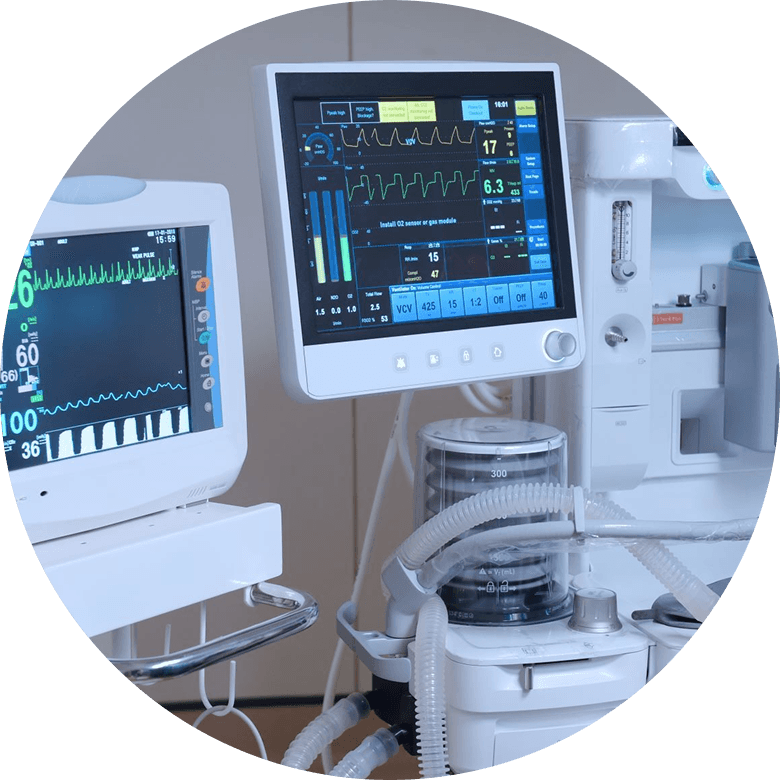
LVDS cables are used in medicine to send clear pictures to touchscreen displays. They are used in ultrasound, CT, and MRI machines. In healthcare facilities, these cords are often made to last through high temperatures and long periods of use.

Industrial Automation

Industrial Automation

LVDS is what control displays and touch panels in industrial automation machines use. Because the twisted wire design can handle noise from big machines, the images stay clear and steady.

Aerospace and Defense

Aerospace and Defense

The military and aerospace industries use LVDS to control and display information in the cockpit. These wires can handle very hot and cold temperatures, vibrations, and very little weight.

Automotive Displays

Automotive Displays

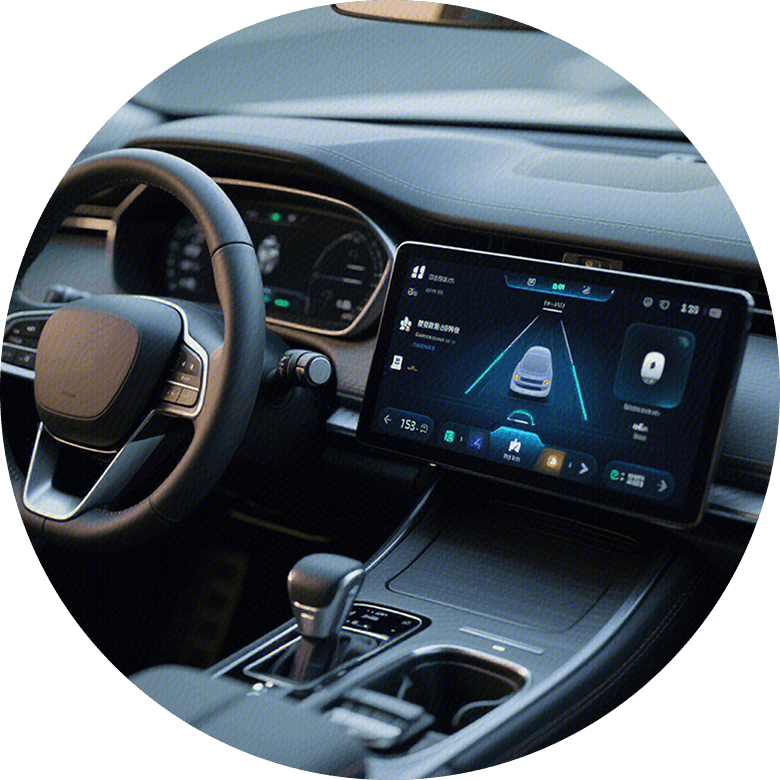
LVDS makes it possible to connect dashboard screens, cameras, and head-up displays in cars. Our automotive LVDS cables have extra shielding and sealing to protect them from harsh conditions.

Consumer Electronics

Consumer Electronics

LVDS is used in laptops, TVs, gaming systems, and VR gadgets to make displays clear and free of flickering. Custom cables help deliver high-definition and 4K images more smoothly.

Digital Signage and Broadcast

Digital Signage and Broadcast

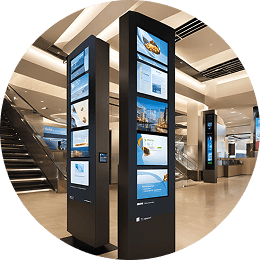
LVDS lets you send high-speed video to big screens and video walls. We make sure that the cables are the right length, have the right connections, and are insulated so that they work reliably.

Low-Skew Wire Design for Fast & Accurate Data

Important Rules

Matched Wire Length

All of the twisted pairs of wires are cut to the same length. This means that signals can arrive at the same time, which keeps timing issues from happening.

Stable 100-Ohm Impedance

By carefully spacing and twisting the wires, you can get a balanced signal. This means that there is less signal loss and reflection.

Skew Testing

We check the time of each cable one by one to make sure they are all very close to the same. This helps keep the footage clear even when you're moving quickly.

Clear High-Speed Video

Low skew and steady impedance can help you avoid flicker, ghosting, and losing data. This is very important, especially for 4K and HD screens.

LVDS Wiring Harness Architectures for Compact Electronic Systems

Differential Twisted-Pair LVDS Harness Design

Differential Twisted-Pair LVDS Harness Design

LVDS wiring harnesses are built around tightly controlled differential twisted pairs to maintain a constant 100-ohm impedance throughout the signal path. Each signal pair is carefully length-matched to minimize skew and ensure synchronized data transmission. This design allows LVDS harnesses to be routed through compact enclosures, hinge areas, and dynamic assemblies while preserving signal integrity in high-speed display and data applications.

Shielded LVDS Harness for Noise-Sensitive Environments

Shielded LVDS Harness for Noise-Sensitive Environments

In electrically noisy systems, LVDS wiring harnesses may incorporate overall foil or braided shielding, as well as drain wires, to suppress electromagnetic interference (EMI) and reduce crosstalk between signal pairs. Harnesses fitted with ferrite cores further filter high-frequency noise, boosting signal integrity in sensitive setups. Shielded LVDS harnesses are commonly used in automotive displays, industrial control panels, and medical imaging equipment where stable video and data transmission is critical.

Low-Profile LVDS Harness with Fine-Pitch Connectors

Low-Profile LVDS Harness with Fine-Pitch Connectors

To support modern thin displays and embedded systems, LVDS harnesses often use fine-pitch connectors (0.3 mm–1.25 mm) combined with optimized wire routing to reduce thickness and bending stress. These low-profile LVDS harness designs maintain differential pair spacing and impedance while allowing installation in space-constrained LCD modules, laptops, and compact HMI devices.

Customer Reviews

The LVDS cable assembly cables fit our 40-pin display perfectly. The signal is clear and stable. Fast delivery.

John Smith

John Smith

Good quality cables with clear labels. The packaging was great, the cables worked fine.

Maria Rodriguez

Maria Rodriguez

QL-Custom helped us from design to final product. Very professional and easy to work with.

Hao Li

Hao Li

The low-skew cable works perfectly. Our display quality has improved a lot. Great engineering support.

David Johnson

David Johnson

All cables were tested and labeled well. They passed our long-term use tests.

Emiko Tanaka

Emiko Tanaka

Excellent flexibility and signal quality. These custom LVDS cables exceeded our expectations.

Elena Petrova

Elena Petrova

High-Speed LVDS Cable Assembly for Your Project

QL-Custom Technology Ltd. is one of the most trustworthy companies that makes LVDS cable assemblies. We have been making LVDS cables for a long time, and we have our own factory in Changsha, China. Since 1997, we've made custom wire harnesses and cables for more than 300 customers all over the world. Our engineers will be with you every step of the way. We can help you with wires, connections, and cable designs, among other things. We want to make custom LVDS cable assemblies that meet all of your needs. We have strict quality controls in place during production to make sure we meet or exceed ISO standards. Every LVDS cable is checked for signal integrity, compatibility with wire-to-board connections, and timing accuracy.

We also move quickly, which is good. You can get a price quote in 4 to 12 hours and sample cables in just a few days. With QL-Custom, you can get all three: speed, quality, and expertise.