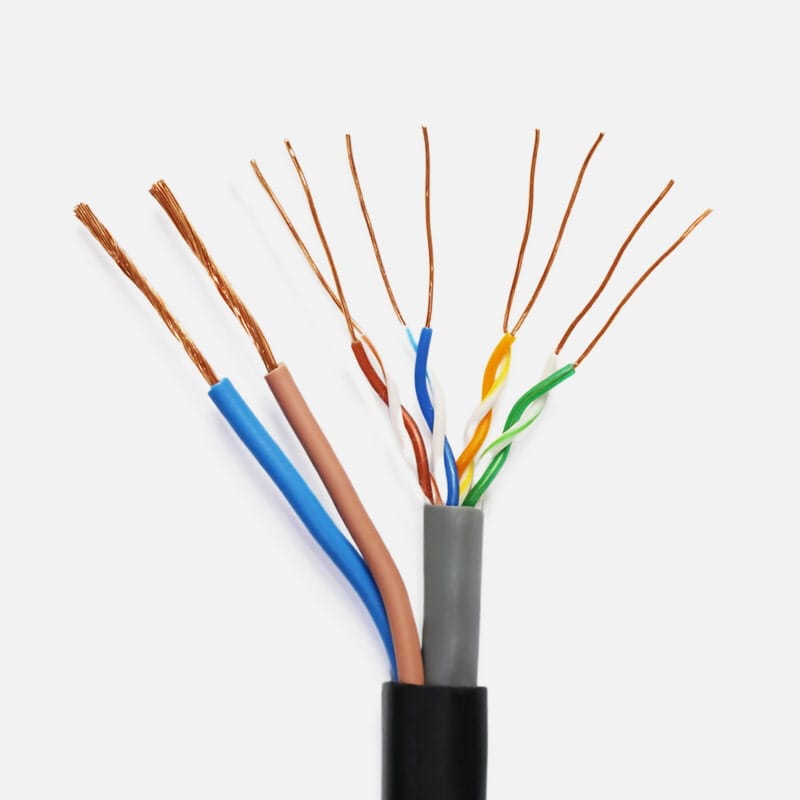
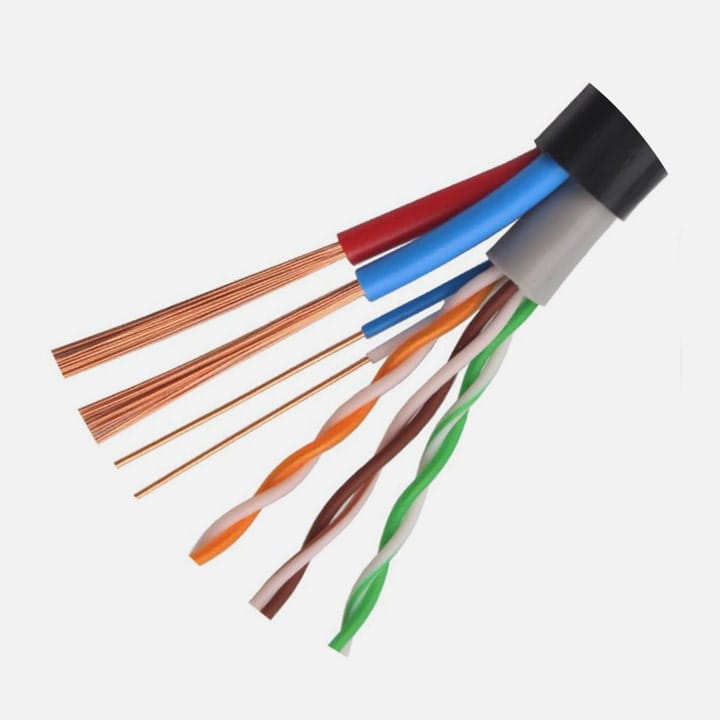
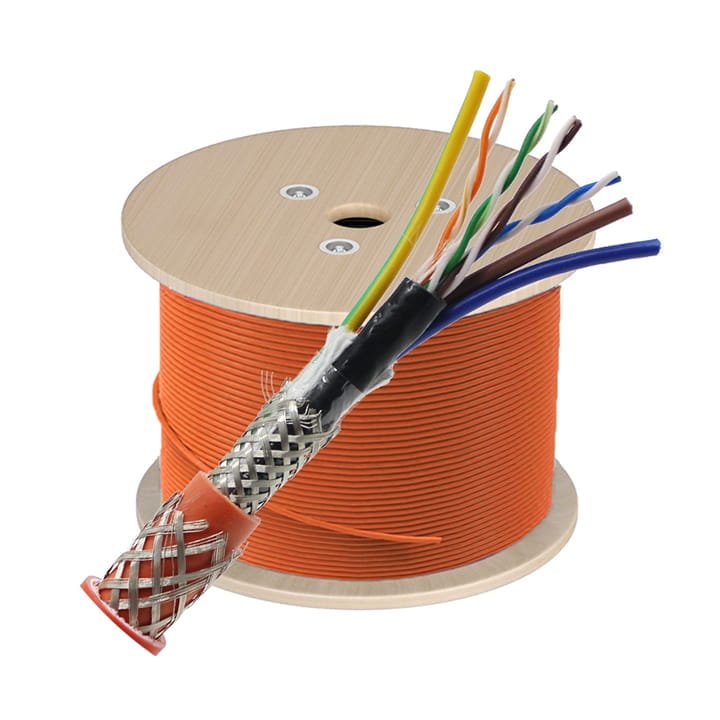
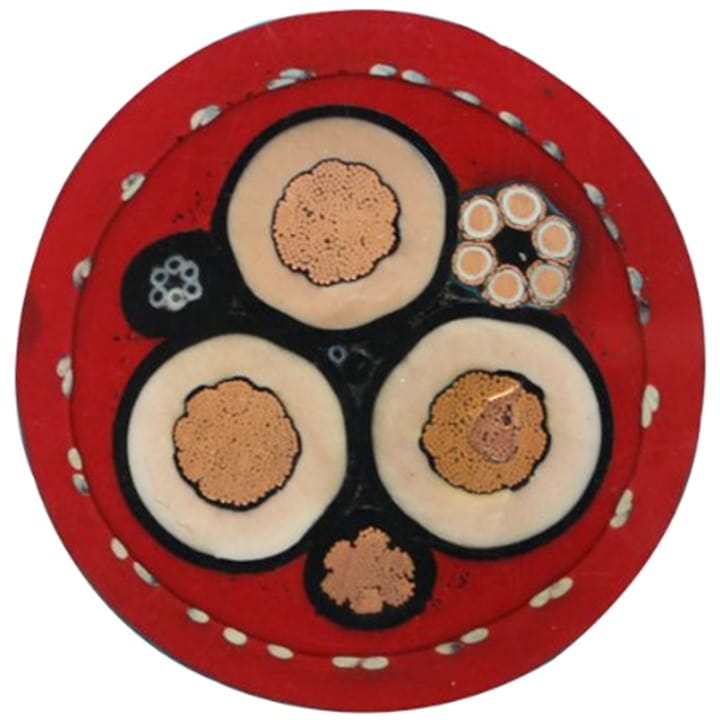
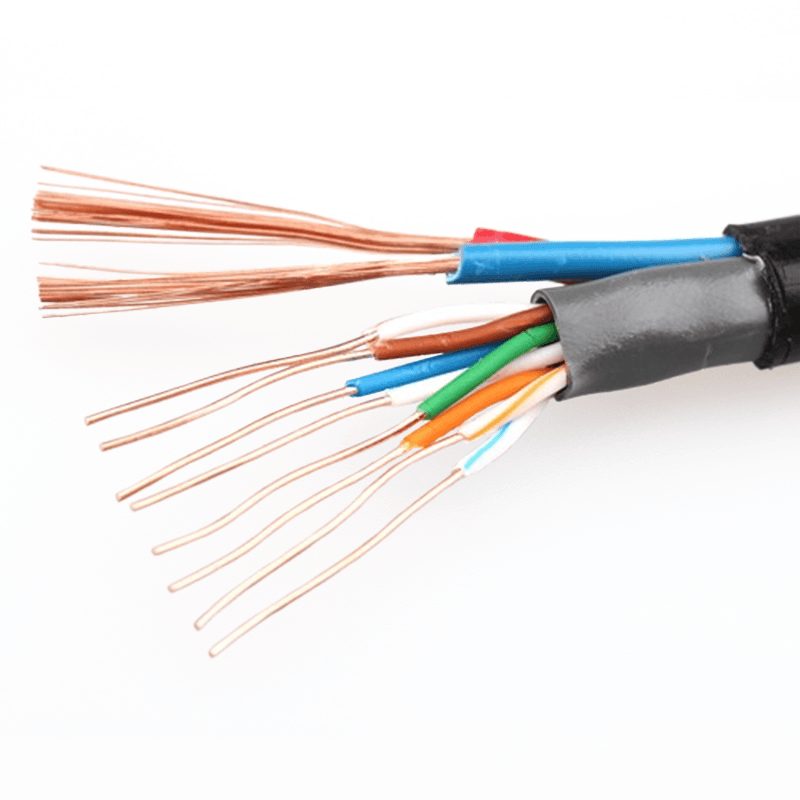
A ideia subjacente ao "Cabo em Cabo" é que pode
combinar vários fios num revestimento exterior para partilhar
energia e comunicações. Torna a instalação
mais fácil. Os nossos produtos "Cable-in-Cable" são totalmente
totalmente personalizados - diga-nos os seus requisitos, e nós
agruparemos os fios e materiais certos num único
revestimento.
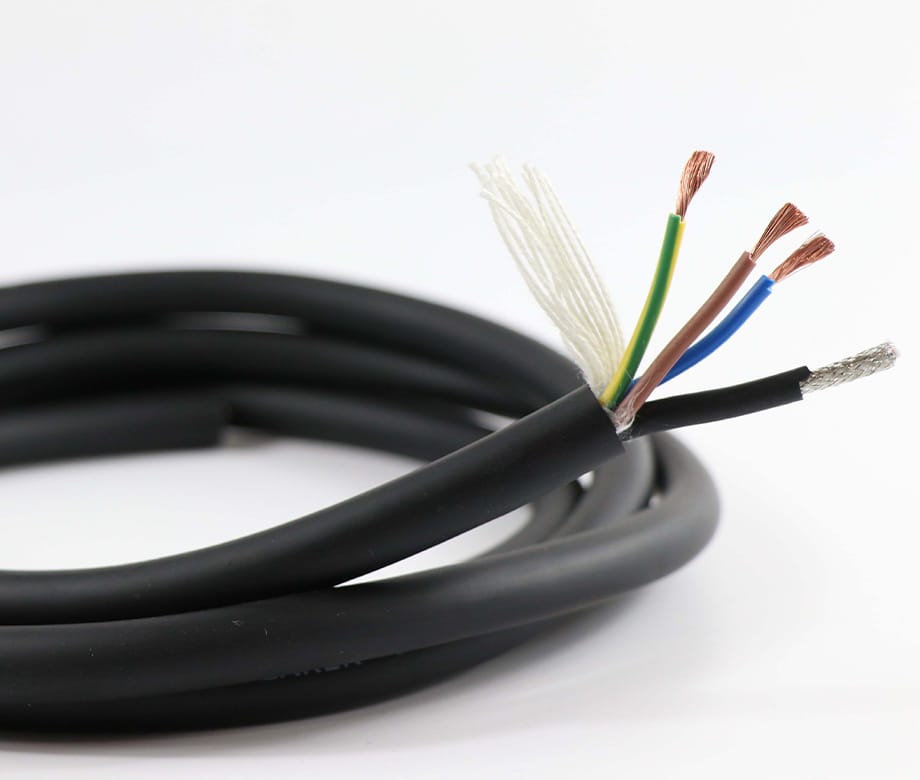
Figura: Um conjunto de cabos sobremoldados com ligações
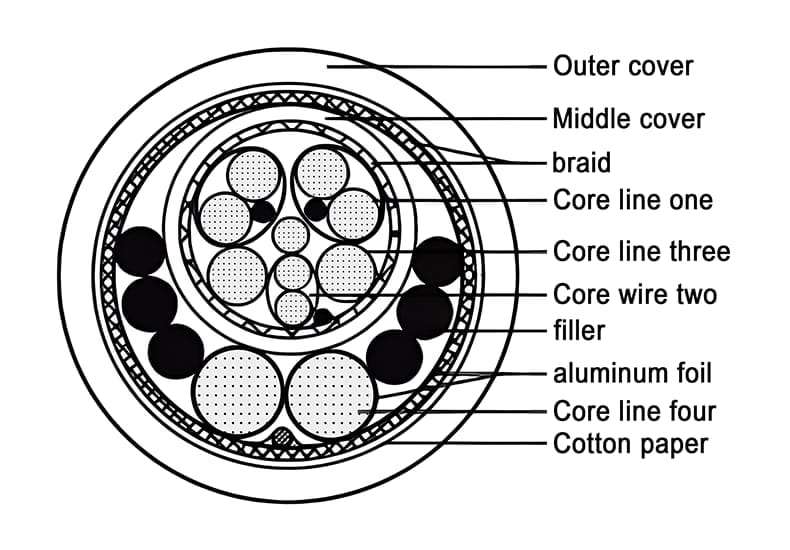
conexões de energia e sinal incorporadas. Um cabo em cabo é um
grupo de condutores que estão todos dentro de uma
exterior. É um design único que inclui cabos de
cabos de alimentação e de dados. Com a sua disposição multi-condutor
multi-condutores, esta conceção facilita a cablagem e reduz
e reduz a desordem. Numa configuração de cabo em cabo, as linhas de alimentação
e as linhas de sinal (como dois pares Ethernet ou USB)
partilham um revestimento. Por exemplo, uma única ligação híbrida
híbrida pode fornecer a um dispositivo tanto dados de rede como
alimentação de 12V. A junção destes grupos torna as
instalações mais rápidas e limpas. Se for necessário, podemos
podemos até adicionar peças em linha. Fabricamos cada cabo de acordo com
as suas especificações exactas, certificando-nos de que o
o número e a função dos núcleos são os corretos para
para si.
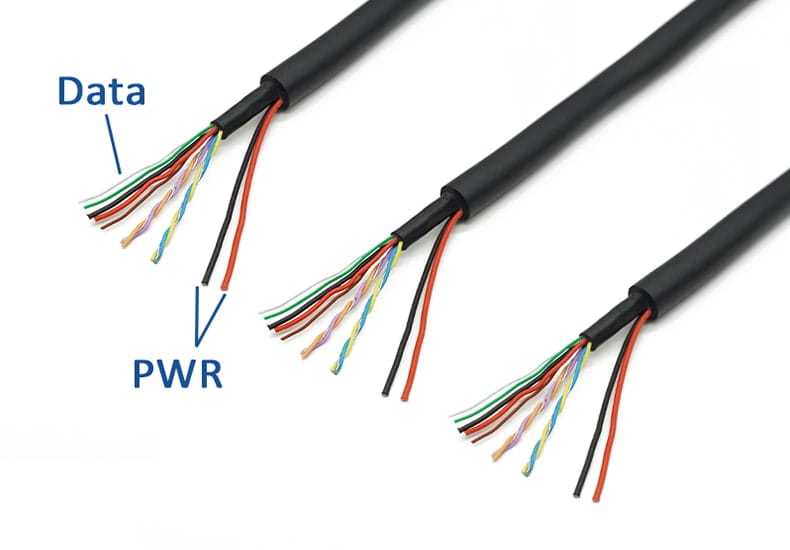
"Fios e cabos do "grupo de dados" e do "grupo de potência
Nos sistemas de cabo em cabo, os fios para o grupo de dados
e o grupo de potência são reunidos num único conjunto.
O grupo de alimentação transporta energia DC ou AC, enquanto o grupo de dados
dados transporta informações como Ethernet, USB ou sinais de
ou sinais de sensores. Quando os cabos são colocados juntos num único revestimento,
servem dois objectivos. Por exemplo, um cabo Ethernet
pode ter ligações de alimentação DC extra para que uma
uma única linha possa enviar energia e dados para uma câmara. Estes
cabos híbridos reduzem a confusão e o tempo de instalação. Nós
certificamo-nos de que as linhas de alimentação e de dados num único
cabo estão em conformidade com o código, alinhando cuidadosamente cada grupo
e escolhendo os materiais corretos.
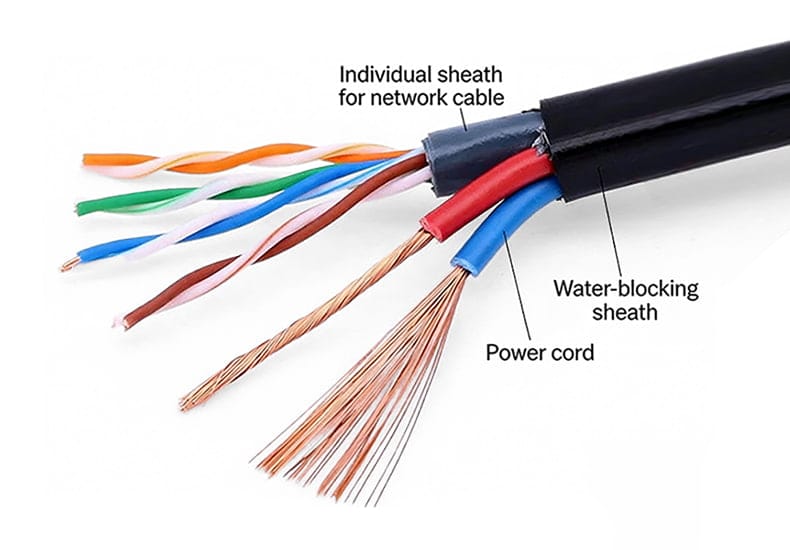
Cabo de rede com grupo de alimentação
Os condutores de energia também podem ser encontrados em
cabos de rede. Fazemos ligações de rede híbridas
utilizando pares Ethernet e fios de alimentação extra.
Por exemplo, podemos fazer uma ligação de rede
segura para ser utilizada em paredes, combinando quatro pares de dados
pares de dados Cat6 com uma linha eléctrica de baixa tensão.
Isto permite-lhe utilizar apenas um fio revestido para
alimentar uma câmara ou um dispositivo PoE. Estes cabos facilitam
Estes cabos facilitam as configurações, eliminando a necessidade de
linhas de alimentação separadas. Não só têm
isolamento para cumprir os códigos de construção, mas podem
também podem ter blindagem para manter os sinais de dados limpos
mesmo quando estão perto de fontes de energia.
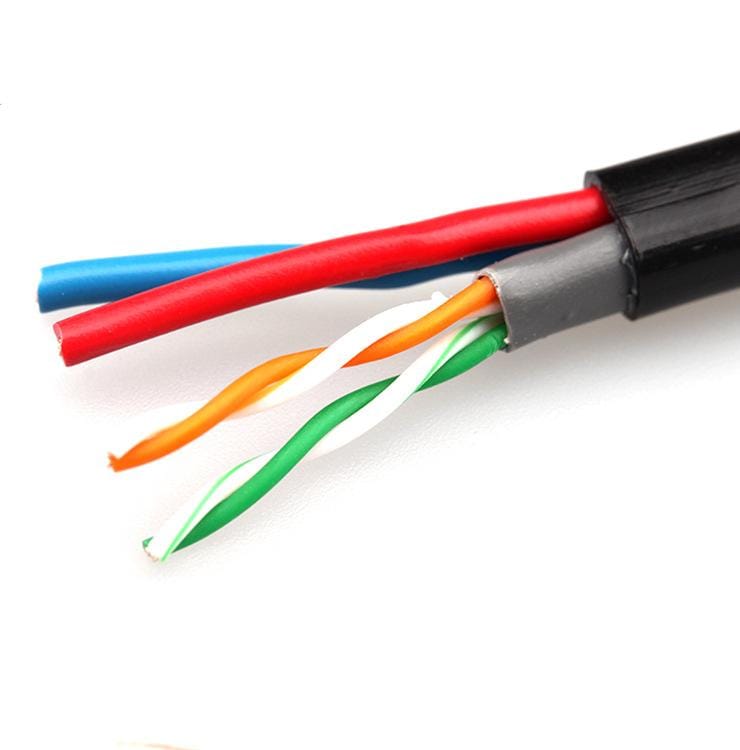
Cabo UTP com grupo de alimentação
Mesmo os cabos UTP normais podem transportar
condutores de energia. Adicionamos fios extra aos pares torcidos
num cabo UTP. Em resumo, é como o PoE,
mas um cabo transporta tanto a energia como o
sinal. Essa conexão UTP híbrida pode ter os
pode ter os habituais quatro pares de dados e duas linhas de alimentação. Esta
é o melhor caminho a seguir se não quiser usar muitos
muitos cabos na sua instalação. O cabo
mantém a qualidade do sinal do protocolo UTP enquanto
alimenta o dispositivo. Tudo está num único
para facilitar a instalação.
Cabo USB com grupo de alimentação
Podemos utilizar melhor os dados e a eletricidade de 5V que as ligações USB
já enviam. Por exemplo,
poderíamos criar um cabo USB com três conectores
que pode alimentar e enviar dados para três dispositivos diferentes
dispositivos diferentes ao mesmo tempo. Se precisar de mais
potência, podemos também fornecer-lhe cabos de alimentação adicionais.
Estes cabos USB híbridos têm um revestimento único
que esconde muitas extremidades, como conectores micro, USB-C e
conectores Lightning. Tornam mais fácil
carregar e obter dados de dispositivos de consumo. Estes
fios são fortes e flexíveis, pelo que podem
suportar uma utilização regular.
Grande potência e pequeno sinal integrados
Alguns cabos transportam linhas eléctricas pesadas, bem como
comunicações sensíveis. Uma configuração de cabo possível
é um pequeno cabo de controlo com uma
alimentação CA de alta corrente. No nosso projeto para um cabo AC in
um cabo de alimentação, juntámos uma linha de rede e
linhas de controlo de baixa tensão. Um cabo analógico
pode também ter fios de alimentação e de sensores analógicos
e sensores analógicos. Os fios híbridos são frequentemente utilizados em máquinas e
sistemas que necessitam de energia e controlo. O cabo
tem isolamento para proteger tanto os fios de sinal
e os condutores de energia pesados. Esta integração
significa que só é necessário passar um cabo longo
em vez de dois cabos separados, um para a alimentação e outro para o sinal.
um para o sinal.
Organização de grupos de cabo
Colocamos os nossos cabos em grupos com base no seu funcionamento, para
para podermos tirar o máximo partido deles. Os nossos projectos utilizam
cabos com isolamento para proteger os fios actuais. Aqui
alguns exemplos de como os revestimentos e o isolamento podem funcionar
juntos:
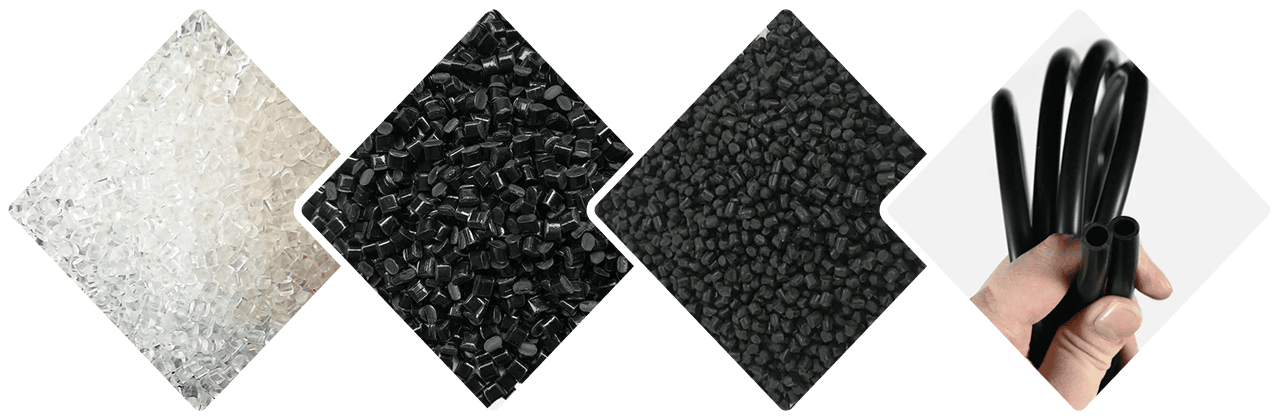
Grupos PVC + Teflon
O revestimento em PVC e o isolamento em Teflon (PTFE) funcionam bem
funcionam bem em conjunto para manter o calor afastado e tornar o revestimento
flexível. Tanto a camada exterior de PVC como a camada interior de PTFE
podem suportar temperaturas muito elevadas. A camada de
camada de PVC também é dura e resistente a produtos químicos.
Estes cabos funcionam muito bem quando apenas uma pequena parte do
do fio é exposta a temperaturas elevadas ou a
produtos químicos.
Grupo TPE + PVC
Utilizamos núcleos em PVC, isolados e
e cobertos com um revestimento TPE flexível, ou o contrário.
ou vice-versa. O PVC é barato e não absorve a humidade,
enquanto o TPE é flexível e macio mesmo quando está frio.
Por exemplo, um cabo de PVC envolvido num revestimento de TPE é
muito flexível e não se parte se o dobrarmos vezes sem conta.
vezes sem conta. Este grupo é perfeito para cabos que estão
sempre em movimento.
Grupo TPU + TPE
TPU e TPE são dois tipos de elastómeros que são
conhecidos pelo seu excelente desempenho. O revestimento de TPU
e as camadas internas de TPE trabalham em conjunto para tornar o cabo
muito flexível e resistente ao desgaste. Estes cabos
são óptimos para robótica ou controlo de movimento porque
podem dobrar-se muito sem se partirem. Eles não ficam
gordurosos, riscados ou danificados pelos raios UV como o
PVC normal.
PVC extrudido + tubo de PVC
Esta conceção utiliza duas camadas de PVC. Um núcleo de PVC extrudido
extrudido envolve os condutores incorporados num
tubo de PVC separado. Imagine um cabo com duas camadas de PVC. A
cabo forte e redondo, e é fácil de descascar.
O tubo extra torna o cabo mais forte para a utilização quotidiana
utilização quotidiana e protege-o de impactos.
Serviço personalizado de grupos de cabos
Oferecemos uma conceção de grupo de cabos totalmente personalizada para satisfazer as suas
necessidades específicas. Os nossos engenheiros configuram os fios e as
funções de acordo com as suas instruções, ordenando-os
por dados e potência. Escolhemos os materiais e o isolamento
em função das necessidades de cada grupo. Nós tratamos de tudo se
se nos disser o que precisa. Temos sempre em mente as suas
necessidades e certificamo-nos de que o sistema de cabos se adapta
às mesmas desde o início. Fabricamos cada cabo personalizado por encomenda,
tendo em conta o seu agrupamento exato de fios e
necessidades de desempenho.
Fornecer um pedido das suas necessidades
Tudo o que tem de fazer é dizer-nos o que precisa, e
nós tratamos do assunto. Por favor, diga-nos quantos
fios, que tensões, que tipos de sinais e
que tipos de conectores pretende. Podemos ajudar
com coisas como tipos de isolamento, revestimento,
e bitola do fio. A nossa equipa analisará tudo
consigo, independentemente da especificidade do seu pedido
seja específico. Com base nos seus comentários, escolhemos o melhor
número de núcleos e disposição dos fios. Isto
garante que o cabo acabado é exatamente
o que pretende. Também pode solicitar a adição de
código de cores ou marca especiais.
Podemos transformar as suas especificações de fios em
desenhos técnicos exactos. O nosso pessoal elabora
diagramas de cablagem ou esquemas de cabos e envia-os
e envia-os para o utilizador. Os desenhos mostram as cores,
materiais, etiquetas e disposição do núcleo. Nós
verificamos o tamanho, a blindagem e as camadas de revestimento no
no esboço. Antes do início da produção, pode
pode ver e aprovar o desenho. Desta forma, pode
pode ter a certeza de que o conjunto do cabo funcionará
perfeitamente para as suas necessidades. Guardamos o
desenho em ficheiro para que todas as encomendas futuras
utilizem o mesmo desenho.
Também somos especializados em trabalhar em condições muito difíceis e
condições extremas. Fabricamos sistemas Cable-in-Cable
que podem suportar temperaturas muito altas ou baixas
temperaturas muito altas ou baixas, produtos químicos, água e pressão.
Por exemplo, os cabos que se destinam a ser utilizados em
aviões ou debaixo de água devem ter determinados
revestimentos e jaquetas. Utilizamos materiais à prova de fogo ou
materiais à prova de fogo ou à prova de água para isolar quando é necessário.
necessário. Os nossos cabos para utilização em ambientes extremos
vêm com ligações protegidas, blindagens
blindagens entrançadas e revestimentos que resistem ao óleo. Nós
escolhemos cuidadosamente os materiais para o seu cabo
que ele funcione de forma fiável em locais onde outros
outros cabos não funcionam, como os sectores militar, do petróleo e do gás ou
sectores marítimos.
Com um arnês de cabo em cabo, um pequeno cabo
pode transportar energia e controlo. A sua utilização é
bom para robots, máquinas industriais e outros
tipos de equipamento móvel. Os revestimentos exteriores
fortes impedem que a gordura, o desgaste, a flexão e o
e a utilização intensiva não chegam ao interior.
Telecomunicações e segurança
Estes cabos são concebidos de forma inteligente para
possam enviar dados e eletricidade ao mesmo tempo
tempo. Todos os fios são agrupados em segurança
e protegidos por uma caixa exterior resistente.
Isto não só acelera o processo de instalação
instalação, mas também poupa espaço e mantém a cablagem
e mantém a cablagem limpa e arrumada.
Medicina e Ciências da Vida
O equipamento médico necessita de um sinal que seja seguro,
seguro, estável e claro. Estes cabos não só mantêm a
a energia ligada o tempo todo, mas também enviam dados de ECG
e EEG. São feitos de materiais macios e seguros
materiais macios e seguros que duram muito tempo, podem ser usados de
podem ser utilizados de várias formas e são fáceis de limpar.
Aeroespacial e Defesa
As aeronaves e os sistemas militares precisam de fios que
sejam leves mas muito resistentes. Estes fios podem
suportar temperaturas muito altas e baixas, alterações
mudanças de pressão e fortes vibrações. Eles seguem
regras rigorosas de segurança e qualidade para garantir
que os resultados sejam sempre os mesmos.
Veículos automóveis e eléctricos
Os fios são necessários para os automóveis que funcionam com
eletricidade e sistemas de dados. Esta é uma forma inteligente
inteligente de ligar motores, baterias, sensores e
unidades de controlo em espaços pequenos. O isolamento ajuda
a evitar que as coisas vibrem, façam ruído e
ficar demasiado quente.
Eletrónica de consumo e PCs
Estes cabos têm tudo o que precisa para alimentação,
sinais e USB. Ajudam a evitar que os cabos
de ficarem emaranhados em pequenos aparelhos electrónicos como PCs
e outros dispositivos. Isto tem muitas vantagens,
incluindo melhor fluxo de ar, produtos mais limpos e
melhor desempenho geral.
Factores de resistência mecânica
Todos os cabos têm de ser suficientemente fortes para se aguentarem.
A resistência à tração de um cabo diz-lhe quanta
tensão que pode suportar antes de se partir. Uma resistência à tração
é a capacidade de suportar a tensão sem
quebrar. Todos os especialistas no sector concordam que esta
é uma qualidade importante nos cabos. A resistência à compressão
mostra até que ponto um cabo pode resistir a ser
esmagado ou comprimido quando é submetido a uma grande
pressão. A classificação da força de tração indica-lhe a forma mais segura
segura para puxar o cabo através de tubos e outros orifícios.
Utilizamos fibras de aramida resistentes, revestimento extra e
núcleos reforçados nos nossos projectos de cabos para contornar
estes problemas. De facto, um cabo que pode suportar
tensão, compressão e tração manter-se-á
seguro e funcionará bem durante a instalação e utilização.
Podemos alterar o comprimento de cada fio para o adaptar às suas
necessidades. Há menos desperdício e instalações mais limpas quando
não há folga extra. Medimos e cortamos cuidadosamente
cortamos cuidadosamente os fios para que se ajustem bem às suas
máquinas.
Blindagem
Pode escolher entre blindagem em folha, em trança e em espiral
espiral, para que possa encontrar a que funciona melhor
para o seu sinal. O objetivo da blindagem é reduzir
reduzir a interferência electromagnética. Quando há
quando há muita interferência electromagnética (EMI), podemos
até usar uma mistura de trança e folha de alumínio.
Cor
Escolha cores de casaco que os façam sobressair mais.
O código de cores é útil quando há muitos
cabos. Pode escolher entre as nossas cores básicas ou mandar fazer
cores básicas ou mandar fazer cores que correspondam ao seu logótipo ou sistema.
Impressão
Pode imprimir o seu texto ou logótipo no revestimento do cabo.
Pode encontrar marcas como números de peça, nomes de empresas
nomes de empresas ou instruções de utilização. A ATI Electrical diz
que todos os cabos, independentemente do seu comprimento, vêm com
impressão personalizada no revestimento. Isto torna mais fácil encontrar
cada cabo no local.
Amostragem rápida e tempo de produção
Amostragem rápida
Normalmente, demoramos dias, e não semanas, para
amostras de protótipos de volta para si. Se tudo
correr como planeado, devemos ser capazes de terminar as
amostras em cerca de três dias. Desta forma, pode
testar rapidamente o cabo antes de fazer uma grande quantidade
cabos.
Tempo de produção
Coisas como a facilidade de ligação e a complexidade dos
complicados dos cabos afectam o tempo que
demora a fazer muitas coisas. Melhoramos o nosso
processo para cumprir os padrões de qualidade com o menor
tempo necessário. Quando um projeto é
aprovado, a produção completa é normalmente enviada em
semanas, não meses.
Encomendámos um conjunto de cabo em cabo personalizado e ficámos muito impressionados. Correspondeu exatamente às nossas especificações e funciona perfeitamente. Alta qualidade e serviço rápido.
John Smith
O cabo funcionou muito bem e simplificou a nossa configuração. A qualidade de construção é sólida. Tudo chegou como prometido.
Joana Ninguém
Excelente serviço da QL-Custom. Entregaram atempadamente cablagens duradouras e bem feitas. Voltaremos a utilizá-los de certeza.
Mike Johnson
Excelente experiência geral. O cabo personalizado integrou muito bem as nossas linhas de alimentação e de dados. A entrega atempada foi muito apreciada.
Alice Williams
Solução perfeita para cabos personalizados. A equipa da QL-Custom ajudou-nos a finalizar o design e o produto final excedeu as expectativas. Recomendo-o vivamente.
Linda Davis
A solução Cable-in-Cable é exatamente o que precisávamos. Robusta e exatamente de acordo com as especificações. A amostra ficou pronta em dias, o que foi impressionante.
James Wilson
Comprar cabos Pro-Grade em soluções de cabos
A QL-Custom Technology Ltd. é a empresa de referência para
cabos personalizados. Somos especialistas no fabrico de cabos
cabos personalizados, e a nossa certificação ISO9001:2015 demonstra-o
isso. Verificamos cada produto cuidadosamente e prometemos
que todo o nosso trabalho será efectuado a tempo 96% do
tempo. Os nossos engenheiros são especialistas em tudo, desde
desde arneses básicos a sistemas complexos com vários cabos. Nós
utilizamos os mais recentes testes e tecnologias para garantir
que tudo funciona em todas as situações. Quando
trabalha connosco, pode esperar respostas rápidas, desenhos
detalhados e cabos que são feitos só para si e
e que satisfazem todas as suas necessidades. Por isso, a QL-Custom
é o melhor lugar para comprar soluções de cabo em cabo.