Secure your cables with our maximum quality molded
strain reliefs. These strain reliefs are made
through a smart, advanced manufacturing process
using pro-grade materials for quality.
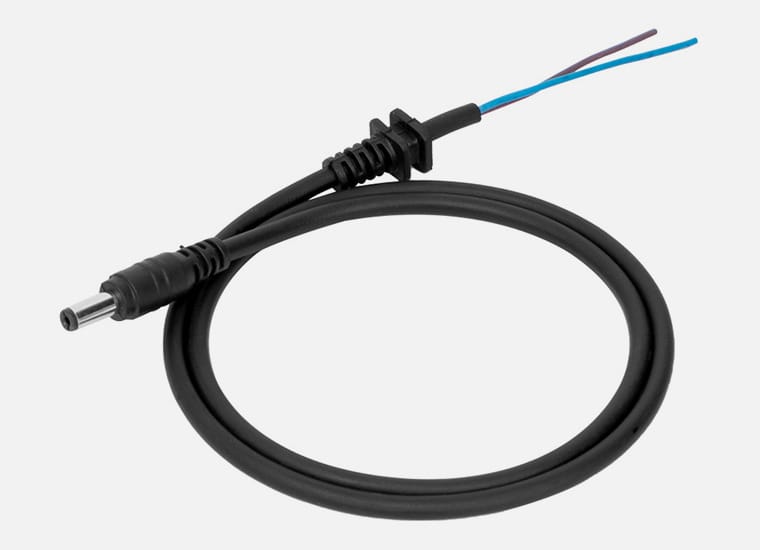
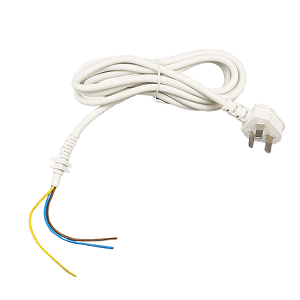
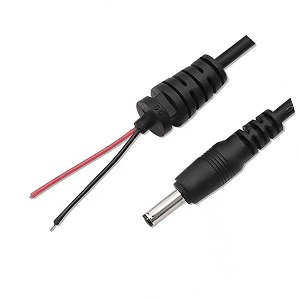
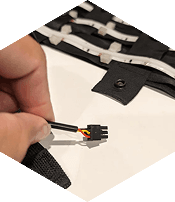
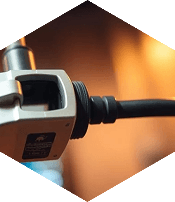
A molded strain relief looks like an
injection-molded boot when it is put into a cable
assembly. By injecting elastomer (plastic or rubber)
around the cable termination and connection, a
single, sealed unit is made. This method attaches
the boot directly to the cable jacket using the
right materials. The molded design makes the
transition from the stiff connection to the flexible
cable smooth and without any gaps. This is better
than using heat shrink or separate sleeves. It
protects the delicate solder joints and conductors
by spreading the stress over a large area. When
built correctly, it gets rid of stress
concentrations and meets cable bend-radius
requirements. The end result is a strong exit point
that can handle pulling, kinking, and rough
conditions, so your cables will last longer.
Strain relief designs
Alleviate stress for cable
Molded boots are made to make it easier for
cables to bend smoothly. They often have ribbed
or tapered profiles to help spread out bending
stresses evenly. Boots with strain relief get
rid of possible weak points at the connection by
making their level of flexibility match that of
the cable jacket. In reality, insulation is less
likely to crack or break when tension is evenly
spread out through the right kind of relief. A
good design also avoids sharp corners and
extends 25 to 100 mm beyond the connector. The
right hardness (40A-80A) is also important.
Because of this, the end of the cable can be
bent without putting too much stress on it. The
molded shape is meant to handle daily bends and
pulls, which makes the cable last much longer.
Molded strain reliefs seal cable entrances to
keep dust and water out of enclosures and
junction boxes. A molded boot may have a
built-in gasket form or a cable-gland design
that matches in order to keep its IP rating.
Several companies combine boots with overmolded
connections to make them IP67/68 safe. For
example, a sealed overmold around the connector
makes a waterproof barrier, just like the design
of an M12 industrial plug. The end result is a
signal or power wire that can go through a panel
without any gaps. According to the maker, these
boots are great for outdoor, maritime, or
harsh-use environments because they are
"waterproof and protect the environment."
Molded strain relief means you don't have to do
any extra assembly steps. Having an integrated
boot makes installation a lot easier. When you
buy connectors and boots for overmolded cables,
they usually come as one piece, which makes them
easy to use. The strong plastic boot keeps
things in place, so technicians can connect and
disconnect connections without pulling on the
wires. There won't be any problems with snagging
or misalignment because the boot and connector
are one piece. The overmolded assembly goes in
and out easily because of the leading connection
designs' "enhanced strain relief" and smooth
shape. In short, molded boots protect the
interface with each plug-in and make it easy to
match connections.
To get the right pair of boots, you usually have to
match the materials. Use a material that works well with
the cable jacket for molding strain relief to get the
best results. This guarantees a strong connection and
similar flexibility. In reality, there is a perfect
overmold for every type of wire.
Overmolding wires with TPU jackets made of
polyurethane (PU) is a common practice. PU can bend
over and over again without breaking because it is
flexible and resistant to wear and tear. The
materials stick together well, and the connection
between a PU boot and a TPU-jacketed cable stays
strong even after many cycles. This combination
makes for a cable termination that is very flexible
and lasts a long time.
TPE Overmolding for TPE cable
If the cable's jacket is thermoplastic elastomer
(TPE), it would be great to use a TPE overmold. A
TPE boot should match the cable's hardness and
texture so that the changeover goes as smoothly as
possible. The molded relief may bend with the cable
over time if the materials are arranged this way.
This will keep the cable from peeling or making
sharp turns. People say that these boots are made of
TPE as a rule.
PVC overmolding for PVC jacketed cable
People often put a PVC or vinyl overmold on plain
PVC cables, which is what power lines are made of. A
PVC jacket and boot make an impenetrable barrier by
chemically bonding. It is not only cheap, but it
also meets a number of safety standards and is
resistant to fire. Our product data sheets list PVC
as a common molded strain relief material. These
boots are great for everyday use because they are
strong and flexible at the same time.
POM resin for tough overmolding cable shealth
You can make boots out of tough polymers like POM
(acetal) for very tough jobs. Pom is very strong and
can take a lot of damage. A POM overmold makes a
strong cable head that can handle a lot of pulling
and crushing. This is the best way to go for cables
that need a very strong locking shell, like thick
power leads. This elastomer isn't very flexible, but
it makes a tight seal around the cable when shaped
correctly.
TPU
TPE
بولي كلوريد الفينيل
POM resin
Solution for cable strain relief
A cable or connection that is molded into the boot at
the same time is an important part of the solution.
Because it is made in one piece, there are no visible
glue lines or sharp edges. Instead, the cover flows
smoothly from the connection to the cable. It also lets
us match processing stages and materials at the same
time, which keeps the strain relief bonded and
consistent.
Using molded plastic, we can match the color
of the boot to the cable or device. You can
make reliefs in any color you want,
including white, black, or any other color
you want, because injection molding lets you
mix dyes. The boot might hide its wires or
even color-code them. With custom
overmolding, you can even add text or logos.
A single, seamless piece can hold as much
branding or code as you want. It's easier to
find cables when they're in bundles or when
they're all the same color.
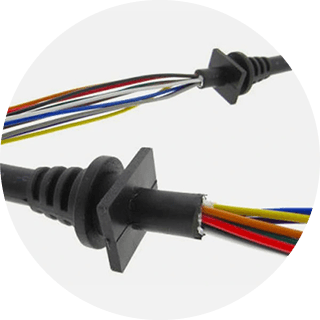
Rectangle or circular or featured shape
The shape of your strain-relieving boots can
depend on your design. Most of the time,
round or oval shapes are used, but
rectangular blocks or shapes that look like
wire are also common. If the mold is right,
computer-aided design (CAD) software can be
used to change the shape of the boot by
adding extra ribs, flanges, or custom
features. There are many ways to make custom
forms, and designers often use configurators
to enter the size and shape of the forms. In
addition to changing the size of the cable,
you can also change the "slot shape" and
"profile shape," as one manual says. Because
it is so flexible, the boot will fit
perfectly into its designated space and meet
all mechanical needs.
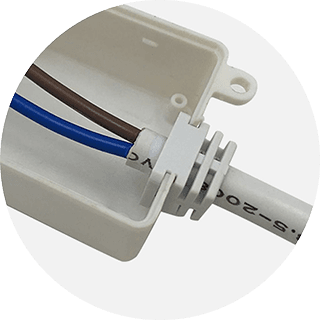
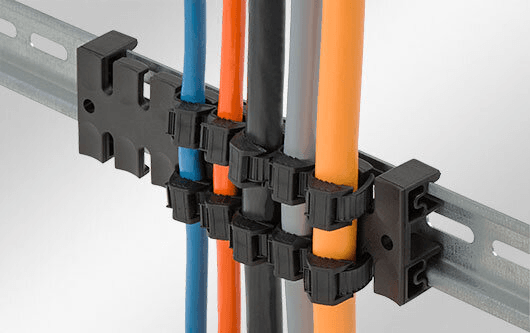
Slot design applied for box installation
You can add slots or mounting elements to
molded boots so that wires can go through
panels or boxes. For example, boot flanges
can fit into panel holes or a keyed slot.
You can change the settings on the mold for
this slot so that it is the right thickness
and shape to fit a mounting panel. Suppliers
say that the thickness and shape of the slot
are two things that can be changed. A
rectangular boot with a slot in it actually
seals the front panel around the cable. This
slot design makes installation easy and
keeps the fit snug and safe in equipment
boxes.
الصناعات والتطبيقات
Industrial Equipment & Machinery
Strong cables connect sensors, motors, and
machines in factories and on assembly lines.
Using molded strain-relief boots to protect
cables can keep them safe from heat, chemicals,
and vibration. This helps keep things from
breaking and cuts down on equipment downtime.
Automotive & EV Charging
A lot of the cables that modern cars and EV
chargers use are exposed to heat, movement, and
the weather. Molded boots protect the cable
exits from dust, water, and vibration. Cables
made of strong materials like PVC or TPU are
more likely to last and follow safety rules.
Medical & Healthcare
Medical equipment like scanners and monitors
needs cables that are both safe and flexible.
The materials used in medical-grade overmolding,
like silicone that can be sterilized, are easy
to clean. Strain relief is what keeps cables and
other equipment from breaking down over time.
Telecommunications & Networking
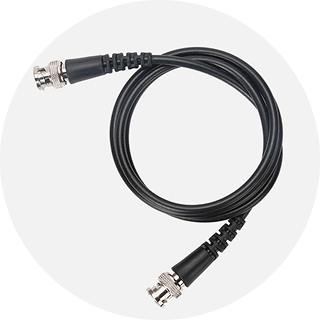
Molded boots protect connections and stop
network and fiber cables in data centers from
being pulled and damaged. This makes sure that
connections stay strong and that the signal
quality stays good even when the device is used
a lot.
Consumer Electronics & Appliances
Many things, like chargers, computers, and
household appliances, have molded strain relief
to keep cables from cracking or fraying. These
simple designs keep products light and cheap
while also making them last longer.
Aerospace, Defense & Transportation
For aerospace, rail, and defense uses, cables
that can handle harsh conditions are very
important. Overmolded strain relief protects
against vibration, temperature changes, and
tight spaces, making operation safer and more
reliable.
Maximum Cable Bend Protection
Molded strain reliefs excel at preserving a cable’s
bend radius. Instead of a sharp kink at the
connector, the overmold enforces a smooth, gentle
curve. This means the cable never bends past its
minimum radius, as defined by standards. According
to Interpower, repeatedly exceeding the cable’s
minimum bend radius can cause cracked insulation or
broken conductors. A properly shaped relief boot
prevents this by acting like a flexible ramp. In
effect, the overmold absorbs and redirects bending
stresses away from the cable end. By controlling the
bend radius (often 8× cable diameter or more), the
boot protects the wires inside from fatigue. This
preserves conductivity and avoids premature cable
failure.
Heat a thermoplastic elastomer (TPU, TPE, PVC, etc.)
until it melts at the right temperature. This makes sure
that the flow is smooth and the bond is strong. To make
sure the plastic sticks to the cable jacket securely,
you need to get it ready ahead of time.
Cable & Connector Assembly
Cutting and stripping cables, as well as crimping or
soldering connections, are all steps in the process of
putting together cables and connectors. The casing of
the connection makes sure that each pin or wire is in
the right place. This step will help you make sure that
the wires stay in the right place when you mold the
plastic around them.
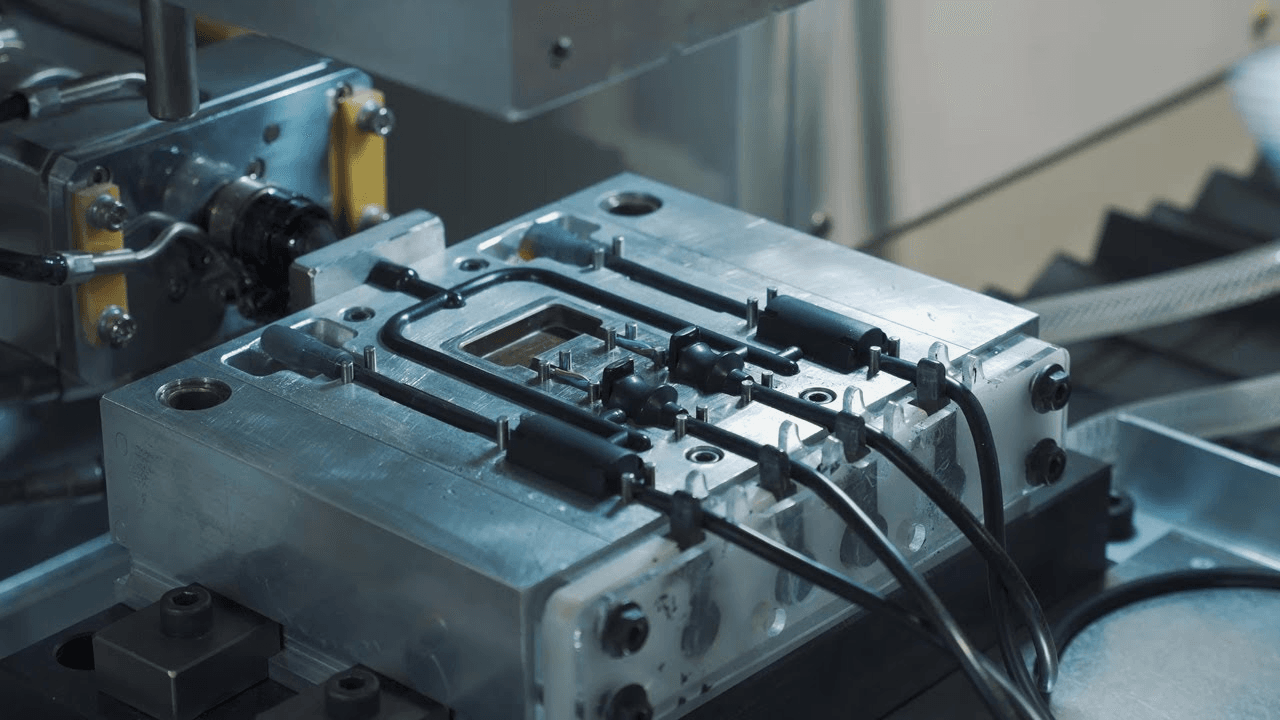
Overmolding
It involves putting the prepared plastic, cable, and
connection into a special mold under a lot of pressure.
The mold surrounds the joint and makes it solid when it
is full. Elastomer bonds without being seen because it
can change shape when it is compressed. The result is
that the overmolded assembly and the connection make one
strong object.
Cooling & Trimming
The molded cable is cooled in the mold after being
injected until it hardens. Then, it is cut down to size.
Controlled cooling can stop warping. Cutting away any
extra plastic or flash after demolding is done to get
the right proportions and a perfect finish.
Quality & Testing
We check and test each overmolded cable carefully as a
final step to make sure it is of high quality. Visual
inspections and pull tests confirm the mechanical lock.
For instance, the manufacturer makes sure the cable is
strong by testing each assembly for continuity and
insulation. This strict quality control process makes
sure that the molded relief will hold the cable securely
and meet the design specifications.
With these branding options, you can have your custom FTDI
cable assembly manufacturer's name or part scheme put on
every cable we send. The scheme is built into every cable we
deliver.
Custom & Bulk Options with Smart Manufacturing
Custom and Bulk Options
We can help you with both small and large
projects, so you can count on us whether you
need one assembly or a thousand. We make a
custom mold for wire strain relief that fits
your cable and connection perfectly, so your
designs can be one of a kind. Even in small
batches, quality can be kept up. We can make
parts for large orders quickly and easily with
our multi-cavity molds. We can offer quick
turnaround times for both prototypes and mass
production at reasonable prices because we are
flexible. Bulk tooling can help spread out
costs, making it possible to find a
cost-effective solution even for one-of-a-kind
parts.
Smart Manufacturing
Using advanced automated processes makes sure
that things are always the same. Our digitally
controlled injection molding equipment ensures
that the temperature and pressure settings are
exactly what your injection molded strain relief
specifications call for. Automation, which
includes robotic cable feeders, makes things
more reliable. To further accelerate
development, we also make use of methods like
3D-printed mold prototypes. We improve the
design and eliminate waste by modeling
manufacturing runs in software. To sum up, our
automated cable overmolding process effortlessly
scales production while keeping costs down by
using technology.
Reliable Process
Every stage is designed to be of high quality.
We conduct in-line inspections and adhere to
methods that have been verified by ISO. Strength
and consistency are measured in every batch. Our
dedication to a dependable process is something
our customers appreciate. To guarantee
consistent outcomes, we document every
instrument and process parameter. Our methodical
strategy gradually decreases strain relief mold
tooling cost per item and scrap rates. Delivered
with the dependability you want, the end product
is an industrial-grade molded cable assembly
that is completed to specification.
آراء العملاء
John Smith: I installed the 2 wire power cord molded strain relief on our lab power cable and it works perfectly. The cable is secure with no risk of breakage. The fit is tight and the material feels very strong. Highly recommend this part!
John Smith
Michael Brown: We replaced our old boots with this molded rubber strain relief on an audio cable. It fits snugly, has no seams or gaps, and seems very sturdy. The cable has survived plenty of bends. I’m impressed with the durability and finish.
Michael Brown
Sarah Davis: This heavy duty cable strain relief boot was exactly what our machinery needed. It's thick and the cable simply cannot pull out. The hexagonal shape fits well on our panel. Installation was a breeze and it feels very secure. Great product!
Sarah Davis
Daniel Wilson: I have a printer with a flat ribbon cable that keeps failing. The ribbon cable molded strain relief we got now holds the flat cable firmly in place. It prevents sharp bends perfectly.
Daniel Wilson
Alice Martinez: For our circular sensor cable, this flexible molded strain relief for round cables was ideal. It’s flexible enough to allow movement but strong enough to protect the cable. After 1000 bends in testing, it still looks like new. Very satisfied with the quality!
Alice Martinez
Emma Clark: We needed a robust solution for our factory cables. This industrial grade molded cable assembly part did the trick. The finish is excellent and it fits our application perfectly. It even comes in our brand’s cable color. Will definitely order again for our next batch!
Emma Clark
Reliable Partner for FTDI Cable Assemblies
QL-Custom Technology Ltd. excels at custom cable
assemblies, including specialized FTDI cable
assemblies. Overmold design and molding is something
we've been doing for decades. The automated lines
and in-house manufacturing allow us to match the
cable requirements and FTDI connection pinout to a
tee. Prior to shipment, each cable undergoes
comprehensive testing for conductivity and strength.
Because integrated strain relief is typically
necessary for FTDI cables, our smooth overmolding
guarantees excellent performance. To ensure that
your bespoke FTDI assemblies stay within budget and
on time, we provide rapid prototyping in addition to
volume production. Simple, effective FTDI cable
solutions are what QL-Custom is known for, thanks to
their combination of engineering knowledge,
stringent quality control, and adaptable production.