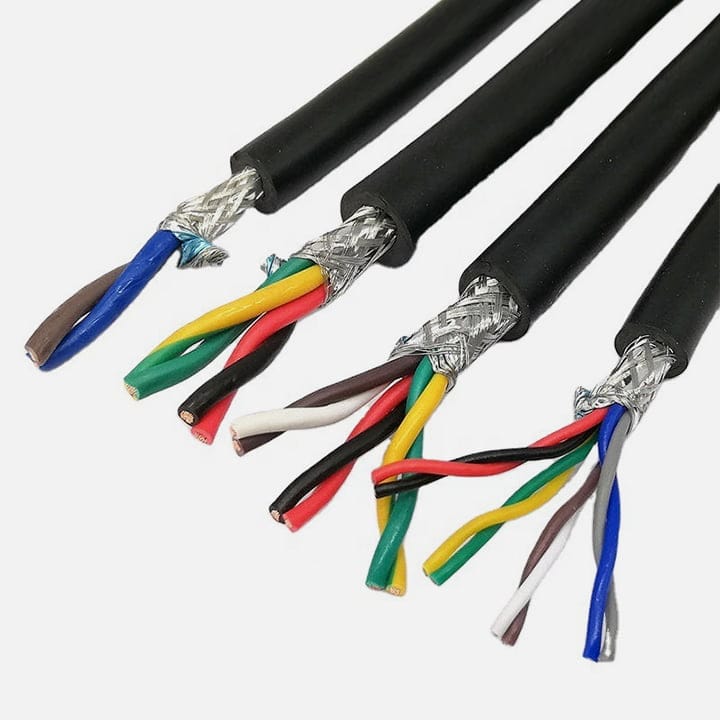
Hilo y cable de bus CAN

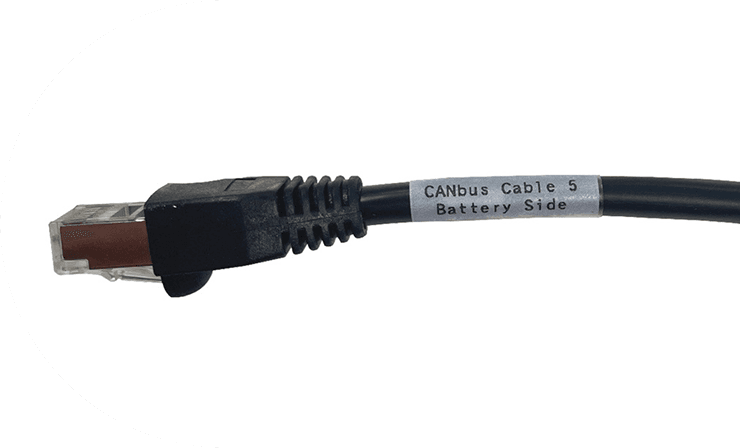
M12 codes including A B C D L K X available

Overmolded type and wirable types with shell

Stainless steel nuts are available to OEM

Do you know CAN bus cable protocol ?

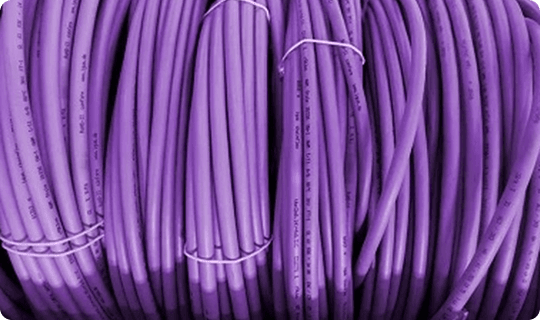
The Controller Area Network (CAN bus) is a high-speed data connection that is often used in networks for cars and factories. A differential pair of wires (CAN_H and CAN_L) lets devices talk to each other and share control and sensor data without needing a central host. According to ISO 11898, CAN bus wire and cables must be able to send data at speeds of up to 1 Mbps (or 5 Mbps for CAN FD) and keep the signal strong over time. Without a conduit, they often wear jackets that are resistant to wear and tear or armor instead. When you use a shielded CAN bus cable, signals are also safe from electromagnetic interference (EMI) and radio frequency interference (RFI) in bad weather.
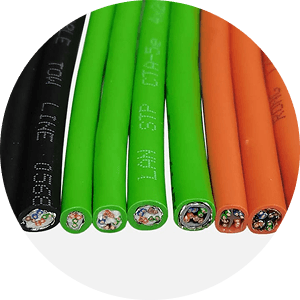
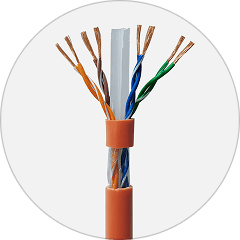
Twisted can bus cable

Insulation wall thickness

The strong insulation on CAN bus wire and cables makes sure that they work well and are safe. Choosing an insulation thickness that doesn't cause dielectric breakdown will give you the 120 Ω differential impedance you want. A thick jacket made of PVC, LSZH, or PE will keep you safe from chemicals and heat. High-quality CAN cables may or may not have insulating jackets that can withstand grease, UV radiation, and wear and tear, depending on the specifications.

Flexibilidad

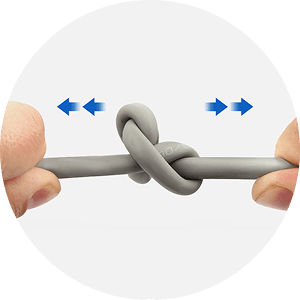
Routing CAN wires in small or changing spaces needs a lot of flexibility. Stranded copper is the most common material for CAN wires. It can handle tight turns and vibrations without breaking. Some CAN cables, especially the ones that connect to the chassis, have thin jackets and strands that are very small in diameter. This makes them very flexible. To make the twisted CAN bus wire flexible enough for cable trays or robotics motions, high-quality cables use soft insulation and a lot of copper stranding.

EMI/RFI

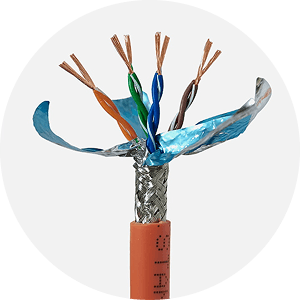
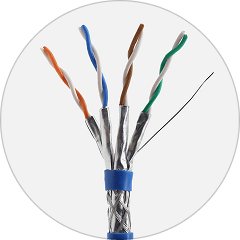
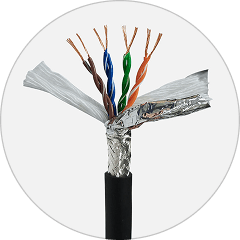
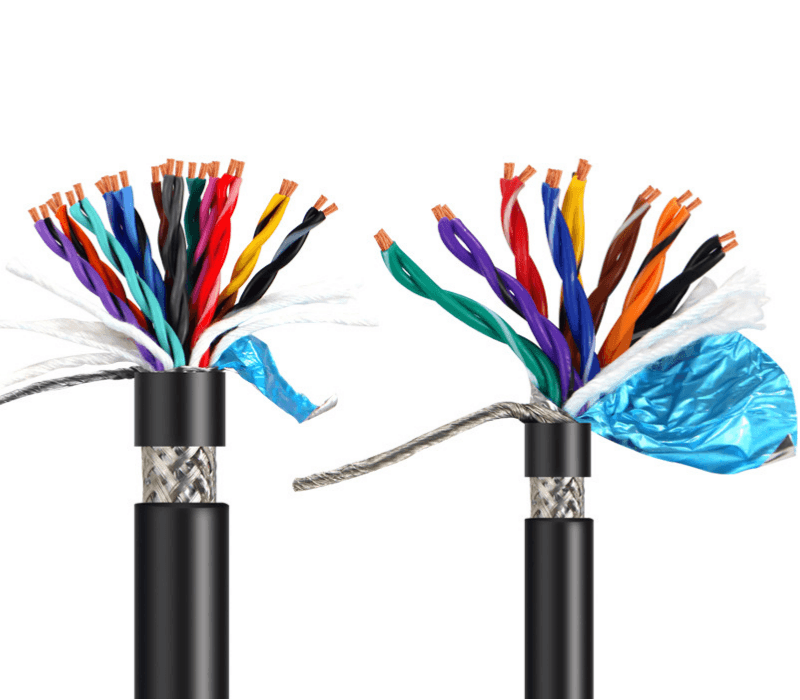
Many CAN bus wires and cables have shields and twisted wires to keep electrical noise from happening. A foil barrier completely protects the twisted pair from high-frequency interference. A braided copper barrier makes things stronger and stops low-frequency noise from getting through. The dual-layer shielding and twisting work together to protect the CAN signals from EMI/RFI from outside sources. The twisting cancels out any currents that are created.

Other protocol except CAN bus

Other standards for industrial networks use similar cabling techniques, but they are for different things. EtherCAT and CC-Link IE are two examples of automation networks that use regular Ethernet cables (Cat5e/6) with special connections to reach gigabit speeds. It is possible to control PROFINET in real time over Ethernet, but you may need to use industrial-grade jacketing for this. Power over Ethernet (PoE) lets you send power over the same twisted pairs, up to 90W, which makes Ethernet cables more useful. CC-Link IE (Industrial Ethernet) often uses double-shielded Cat5e cables to make sure that the factory connection works. X-coded connections let you talk to each other quickly, and twisted-pair assemblies that are carefully controlled are the main parts of both PROFINET and EtherCAT.

CC-Link IE

CC-Link IE is a real-time Ethernet network that started in Japan. You can use either Cat5e/STP cables or optical fiber cables. CC-Link IE Field says that for speeds of 1 Gbps, you should use double-shielded Ethernet connections (Cat5e or higher). Most of the time, these cables have power conductors built in for devices, and their impedance must stay the same. CC-Link IE cables are tough enough to be used in factories, and they are similar to CAN bus wire and cables. But they work best when there are a lot of nodes spread out over a long distance (hundreds of nodes over 100 meters or more) and a lot of data is being sent.

Ether CAT

EtherCAT, which stands for "Ethernet for Control Automation Technology," is a fieldbus that works quickly and reliably. It usually uses Cat5e or Cat6 cables with standard 8P8C connectors. EtherCAT cables may be flame-resistant or plenum-rated and have full shielding because they are meant to be used in factories. The actual physical structure is a twisted 4-pair cable, not a coaxial or fiber core. EtherCAT cables are like Gigabit Ethernet or Power over Ethernet connections for practical purposes, but they have a much stricter phase balance. They use differential signaling over twisted pairs at gigabit data speeds and frequencies in the MHz range, similar to twisted CAN bus connections.

PROFINET

The PROFINET protocol from Siemens is a standard for Industrial Ethernet. An IP20 indoor jacket protects a pair of Cat5e wires, which is the industry standard for PROFINET. For PROFINET IRT (isochronous) connections, the cords must have a skewness of 45 ns/100 m or less. In reality, PROFINET connections often use molded M12 or RJ45 connectors, just like regular Ethernet cables do. Twisted copper pairs and, if you want, shielding are the building blocks of both. Keep in mind that PROFINET is made to send lower-speed serial data, while CAN bus connections have been tested to handle high-speed Ethernet signals in real time.

POE

PoE is a way to send DC power over Ethernet connections, usually Cat5e or Cat6. A PoE cable is basically just an Ethernet cable with two twisted pairs. It can still carry data and up to 48 V DC (Type 3/4 PoE). Industrial PoE cables usually have a jacket or extra-thick copper to protect them from high current and heat. Power over Ethernet (PoE) solutions are basically cables that carry both data (twisted pairs) and power. This CAN bus wire and cable can carry both the CAN bus pair and an extra high-voltage line, just like a hybrid CAN cable. Ethernet PoE standards, on the other hand, are fully defined.

How to define the can bus cable

Pitch is the number of twists in a pair of cables based on how long they are. It's very important for noise immunity. More twists per meter make it easier to cancel out interference. But very tight twists can make cables thicker and stiffer. Manufacturers set the twist rate to find a balance between these factors. For example, some companies that make racing harnesses focus on getting exactly two spins per inch instead of encouraging shortcuts. In CAN cable design, the twist pitch is chosen so that CAN H and CAN L pick up the same amount of interference. This makes sure that the differential receiver gets rid of it.

Pitch of twisting

It is common to use fillers around the twisted pair in hybrid assemblies or multi-conductor CAN cables. The cable is filled with symmetrical yarns made of cotton, jute, or polymer that protect the wires and give the whole thing a more rounded look. They make sure that the cable's cross-section stays round, which makes it easier to handle and strip. For example, a synthetic filler could be used to make a quad-twist cable more stable. Fillers keep the inside of the cable from wearing out when it is bent over and over again. The end result is a better jacket surface and a longer life for the cable.

The wire group with fillers

The twisted pair in CAN bus wire and cables is usually safe from the outside world. This could be a copper jacket with foil braided into it, or the other way around. The foil layer completely covers the area, blocking high-frequency RFI. At the same time, the mechanical strength is improved, and a copper braid or a tinned copper shield protects against low-frequency electromagnetic interference (EMI). The shield is grounded on one or both ends. The outer barrier of the CAN transmission keeps electromagnetic interference from getting in from the outside. Proper shielding is very important in industrial and automotive settings where motors and ignition coils cause interference.

Shielding of the twist outside

Industrias y aplicaciones

Automoción y transporte

In modern cars, trucks, and buses, CAN bus wire and cables connect engine control units, airbags, ABS systems, and entertainment systems. CAN wire harnesses can replace complicated analog circuitry and make a reliable network inside the vehicle. It is common to see jackets for cars that can handle high temperatures.

Automatización industrial

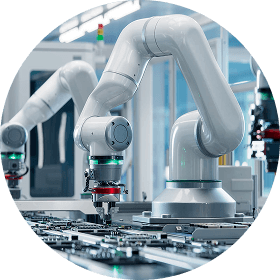
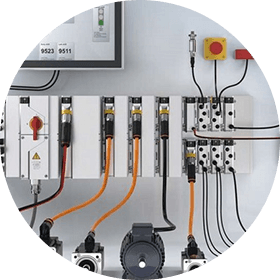
Factories and machines use CANopen or J1939 networks to control motion, robotics, and conveyor systems. Sensors and programmable logic controllers use CAN wires to make real-time control loops. They make it easier to wire up machines on the assembly line.

Mass Transit & Infrastructure

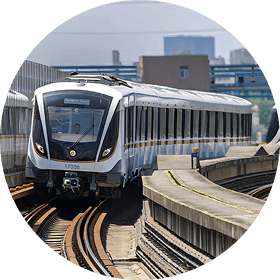
Trains, trams, and smart transportation systems all use CAN to figure out what's wrong and keep things running smoothly. CAN cable networks are good for building automation because they are strong and can be used with HVAC, elevators, and security systems.

Marine and Aerospace

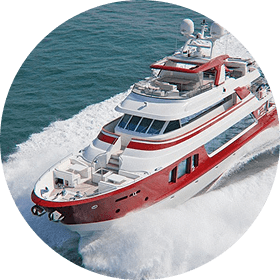
Ships and boats use CAN bus (also known as NMEA 2000) for navigation and engine data because it is strong and can work over long distances. Aircraft and drones also use CAN buses for important sensors and actuators because they are light and work well with networks.

Agriculture & Heavy Equipment

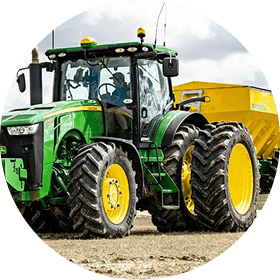
In harvesters, tractors, and construction equipment, CAN bus wire and cables help with engine management, stability control, and telemetry. The CAN wire in off-road vehicles needs to be strong enough to handle wet and vibrating conditions.

Other Applications

CAN bus networks have a lot of different uses, including for medical equipment, elevator controllers, parking lots, and smart grid devices. If you need a strong and reliable data connection, a CAN bus wire and cable is a great choice.

Multi-Core & Hybrid Cable Solutions

Power + Data Cable Assemblies

Our multi-core cables have CAN twisted pairs, power leads, and grounds, and one jacket has several cores. A hybrid CAN connection might also have 18 AWG power wires in addition to the data pair. A single wire can send CAN data and power, which makes it easier to install the gadget.

Integrated Shielding

To save space, hybrid CAN bus wires and cables sometimes use the same shield for all of them. One design for a CAN cable is to put a foil/braid shield over each and every conductor. This protects all power lines and transmissions in places where there is a lot of electromagnetic interference.

Customized Constructions

These wires make it easier to design systems. Instead of needing two separate conduits, our CAN hybrid cable combines data and power. This makes the harness design simpler, with fewer connections, and easier to put together for things like mobile equipment and automated machines.

Enhanced Bandwidth for Next-Gen Systems

CAN FD Support

Our cables are made to work with CAN FD's faster data speeds. ISO 11898-1 sets the rules for CAN FD at speeds of 5 Mbps and higher. The materials and twists we use keep the signal intact at these speeds.

Higher Data Capacity

With CAN FD frames, you can go from 8 bytes to 64 bytes, which means you can store more data. The wire's shape makes it less likely for signals to bounce back and forth.

Upgraded Impedance Control

The better impedance control keeps the characteristic impedance for CAN FD close to 120 Ω. We carefully control the distance between conductors and the twist pitch so that the cables can meet these stricter standards.

Ensuring Reliability, Durability, and Compliance

Tailored Designs

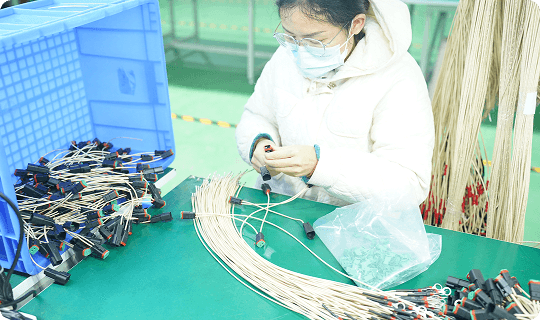
We offer complete custom cable design services, from the first idea to mass production. We offer can-bus cable solutions that are made to fit your needs, whether you need unusual jackets or exact wire gauges.

Industry Expertise

Some of our staff members have worked in the automotive, medical, and manufacturing fields. We know what OEMs need, like UL certification, RoHS compliance, and exact cable color coding layouts.

Quality & Support

We might over-mold stress reliefs, add connections, or print labels if we need to. Our quality system (ISO 9001) says that each CAN bus wire and cable must pass a lot of tests and meet all performance and reliability standards.

Opiniones de los clientes

We ordered custom 5-meter CAN bus cables from QL-Custom and are very impressed. The flexibility and build quality are top-notch. Installation was quick thanks to the clear color coding. Our control systems now run flawlessly without any EMI issues.

Alice Johnson

Alice Johnson

As a robotics engineer, I needed CAN cable that could handle constant movement. The multi-core hybrid CAN cables we got were perfectly flexible and robust. Shielding effectively cut down interference on the factory floor.

Michael Lee

Michael Lee

The QL team helped us spec a CAN FD cable for our new machines. The cables arrived on time and matched all our custom requirements (jacket color and connectors). Performance was exactly as tested – no data errors even at high speed.

Isabella Smith

Isabella Smith

Excellent custom cable manufacturer. They designed a 4-core CAN/data cable with power lines, exactly as our spec. The cable's shield is solid, and data integrity in our automotive tests is perfect.

Robert Brown

Robert Brown

CAN bus wire and cables worked great on our equipment. The cable length was precise and the twist rate was consistent. Overall a great product for the price.

Emily Davis

Emily Davis

As an OEM, reliable supply is crucial. QL-Custom's team delivered on time and the quality is excellent. Our CAN cable harness passes all EMC tests now. We highly recommend them as a CAN cable supplier.

James Wilson

James Wilson

Why Choose QL-Custom for CAN Bus Cable

Get your CAN bus wire and cables from QL-Custom Technology Ltd. if you need them. We make custom wire harnesses and are an ISO 9001-certified cable maker. From our years of experience serving the automotive, heavy truck, marine, and industrial industries, we know what real-time network performance needs are. Our facilities can handle any size, gauge, color code, or jacket standard for your CAN bus cable goods. We can draw the wire and put it together. We guarantee that 96% of the time, we will deliver on time, and we also guarantee that all of our products will be of the highest quality. You can count on great technical support from QL-Custom, cables that work best with CAN/CAN FD, and the ability to quickly prototype and make a lot of things.