Custom Cable Labels and Wire Markers, Harness Tags
By hdhhd shhsbbs / 2025年12月9日
Custom cable labels, also known as wire markers or harness tags, are used to identify and organize wires and cables. These labels display words, numbers, or barcodes, allowing workers to distinguish one wire from another. When wires are clearly labeled, it is easier to identify and resolve problems, as well as perform repairs. Labels also help keep people safe by lowering the chance of wiring mistakes. You can see labeled wires in data centers, factories, cars, and many other places. Good labeling saves time and helps work move faster.
Types of Custom Cable Hire Harness Labels: Categories
There are many kinds of cable and harness labels. The main types are thermal transfer labels, laser printing labels, inkjet printing labels, embossed labels, and handwritten labels.
Thermal Transfer Label
Thermal transfer labels are printed using a special printer and an ink ribbon. Heat from the printer causes the ink from the ribbon to move onto the label. These labels are typically made from durable materials such as polyester or vinyl. The text and barcodes come out very clear and sharp. These labels are resistant to fading and can withstand heat, oil, and rubbing.
Laser Printing Label
Laser printing labels is made using a standard office laser printer. The labels come on sheets and are made for laser heat. These labels provide clean and sharp text without the need for wet ink. Many laser labels come with a transparent top layer that protects the print. They are suitable for small and medium projects because they can be easily created at the office.
Inkjet Printing Labels
Inkjet labels are printed using inkjet printers. These printers use liquid ink, so the label paper must be special to hold the ink. One significant advantage of inkjet labels is that they can be printed in color. This can help when you want to color-code your wires. The downside is that water can make the ink smear. Due to this, many inkjet labels require a transparent cover to protect them from damage.
Embossed Labels
Embossed labels are made with a hand tool that presses raised letters into plastic tape. The letters stick up from the surface and can be felt with your fingers. These labels are durable and do not fade because they are ink-free. They are often made from vinyl or metal tape. Embossed labels are well-suited for use in dirty, oily, or rough environments.
Hand Writing Labels
Handwritten labels are the simplest type of label. You write on a blank tag or sleeve with a pen or marker. This method is fast and needs no machines. It is useful when you only need to label a few wires. However, the writing may not look neat and can fade over time. Ink can also smear if it gets wet. Because of this, handwritten labels are best for quick, temporary work.
Custom Cable Wire Harness Labels: Materials
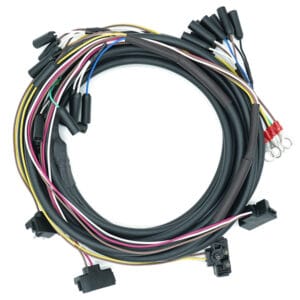
Cable and harness labels can be made from a variety of materials. Each material is best suited for specific applications.
Polyester Labels
Polyester labels are durable and long-lasting. They can handle sunlight, water, oil, and many chemicals. They also work well in hot and cold weather. The glue on polyester labels sticks very well to plastic and metal. These labels do not tear easily and keep their shape. Because they are stiff, they work best on flat or larger wires. Many polyester labels can last for many years outdoors.
Polyimide Labels
Polyimide labels are designed for use in extremely high-heat areas. They can handle extreme heat without melting or breaking. These labels are often used on circuit boards and inside machines. They also withstand exposure to strong chemicals. The glue on polyimide labels remains strong even in high temperatures. These labels are used in cars, airplanes, and factories.
Vinyl Labels
Vinyl labels are soft, flexible, and cost-effective. They wrap easily around small wires and cables. These labels are well-suited for use inside homes and offices. They stick well to smooth surfaces and are easy to remove and replace. However, vinyl does not perform well in extremely hot environments or when exposed to direct sunlight. It can crack or fade over time.
Fabric Labels
Fabric labels are made from cloth-like materials, such as cotton or nylon. Many are coated to make them stronger. These labels bend easily and wrap well around wire bundles. They are often used as tag-style wire markers. Fabric labels can be removed and moved if needed. They are mainly used indoors because they do not handle water or chemicals well. People often use them in data rooms and light work areas.
Sleeved Style Labels
Sleeved labels are printed on tubes that shrink when heated. These tubes slide over the wire and then tighten when heat is added. Once they shrink, the label becomes part of the wire. These labels do not fall off and cannot be moved. They are powerful and withstand heat, oil, and rubbing. Heat-shrink labels are used in airplanes, military gear, and phone systems.
Other Waterproof Labels
Some labels are designed specifically for use in wet or very rough environments. These can include heavy plastic labels, metal tags, or special coated labels. Some are made for food plants or marine use. Others can handle vigorous washing and steam. These labels keep the text safe even underwater. When moisture is a big problem, these special waterproof labels are the right choice.
The labelling Method On Wire and Cable

There are several methods for labeling wires and cables. The best custom cable labels method depends on the wire size and the label’s expected lifespan.
Flag Label
Flag labels fold like a small flag. One side adheres to the wire, and the other side extends outward, allowing for easy reading. They provide an ample space to write on, allowing technicians to view the text from a distance. These labels do not wrap entirely around the wire. They are great for groups of wires or panels where wires run parallel to each other. They are easy to read but may catch on things, so they work best in low‑vibration areas.
Wrap-Around Label
Wrap-around labels encircle the entire wire. They have a sticky end that holds the label together. Many wrap-around labels also have a clear tail that covers the printed part to protect it. You place the printed part on the wire, then wrap the clear part over it. These labels are compatible with most wire sizes. The transparent layer keeps the print safe from rubbing, dust, or oil. These are common in data wires and inside machines.
Heat-Shrink Sleeved Label
Heat-shrink labels use a tube with printed words on it. You slide the tube onto the wire and heat it. The tube shrinks tightly around the wire, so the label becomes part of the wire’s outer layer. The print is fully protected because it is inside the tubing. These labels are used in harsh environments, such as aircraft or telecom systems. They do not use glue, so they never peel off.
Laminated Peel-Off Label
Self-laminating cable labels consist of a printed part and a clear part. You print on the label, wrap it around the wire, and then cover the printed area with the clear layer. The transparent layer protects the text from the sun, chemicals, and scratching. These labels are easy to use and can be placed by hand. They work well in both outdoor and rough environments.
Custom Cable Wire Harness Label Content
When creating a label, consider the text, font, color, spacing, and any necessary codes. Labels should be simple and easy to read.
The label font
Select a clean and simple font, such as Arial or Helvetica. Larger letters are easier to read on thin wires. Use the same font style on all labels so everything looks clear. Ensure that letters and numbers are easily distinguishable from one another. Short words or codes are good when space is limited.
The label colors
Color can help people understand custom cable labels faster. Many labels use black text on a white or yellow background, making it easy to read. Some industries use colors to match wire functions, like red for power. Just ensure the text color stands out against the background.
The label pitch of the word
Pitch means how close the letters are to each other. If you put too many letters in a small space, the label becomes hard to read. Leave enough room around the text and make sure spacing is even.
The Code of the label
Some custom cable labels include barcodes, QR codes, serial numbers, or special symbols. These help with scanning and tracking wires. Codes can match wiring diagrams to reduce mistakes. Always make sure the code has a precise meaning.

Laser Wire Marking for Custom Wire Labels
Laser marking prints text or codes directly onto the wire’s insulation. It does not use a sticker or tag. The laser removes a tiny bit of the custom wire labels surface, leaving permanent marks. This method works well on fragile wires or wires in tight spaces. It is used in electronics and cars. Laser marking costs more, but the label will never fall off or fade. This is the most reliable for long term levels.
Best Practices for Cable Labeling
Good labeling helps people install and fix wires easily. Plan your label text and determine its placement. Clean the wire first. Ensure the label remains readable after the wire is bent. Some key tips:
- Clean the wire: Wipe the wire with alcohol to ensure the label adheres well.
- Use the right material: For outdoor use, use polyester; for high heat, use polyimide.
- Keep labels consistent: Use the same fonts and colors on all wires.
- Check the adhesive: gently pull the label to ensure it stays in place.
- Keep records: Save a list of label codes so people know what each one means.
Custom Cable Labels Material Comparison
Different label materials have distinct performance. The table below compares common cable label materials by durability, temperature range, and typical use (based on industry data).
| Material | Durability | Temp Range (°C) | Typical Use |
| PVC (Vinyl) | ★★★☆☆ | -20 to 80 | Indoor use, short-term projects |
| Polyester (PET) | ★★★★★ | -40 to 150 | Outdoor/industrial, resists UV & chemicals |
| Polyimide (Kapton) | ★★★★★ | -40 to 260 | High-temp electronics (e.g. PCBs, aerospace) |
| Heat Shrink (Polyolefin) | ★★★★★ | -40 to 125 | Permanent, critical wiring (aerospace, telecom) |
| Fabric (Cloth) | ★★☆☆☆ | 0 to 80 | Indoor bundling, general wiring markers |
Great Choice for Custom Cable Labels
QL-Custom Technology Ltd. has over 20 years of experience with cables and labels. They offer a variety of custom cable labels, including heat-shrink, vinyl wrap, and self-laminating cable labels. They use high-quality printers to produce clear, long-lasting text. Since they also make wire harnesses, they can label everything for you during production. They check every batch for readability and durability. Whether you need labels for cars, industry, or general wiring, QL‑Custom provides reliable options.
FAQs
What printing methods can be used for cable labels?
Thermal transfer, laser, inkjet, and embossing can all be used. Thermal transfer is popular because it makes long‑lasting prints.
Are heat-shrink cable labels suitable for all types of wires?
Heat‑shrink labels work best when you need a permanent label. Once they shrink, they cannot be removed easily.
How should custom cable labels be applied to cables?
For wrap‑around labels, place the printed part on the wire and wrap the sticky tail around it. For self-laminating cable labels, print the text, wrap the label, then cover it with the transparent layer.
Are self-laminating cable labels waterproof?
Yes. The transparent layer covers the print and prevents water, oil, and chemicals from penetrating.
Can custom cable labels handle harsh conditions?
Yes, if you choose the right material. Polyimide and heat-shrink labels are well-suited to withstand high temperatures and various chemicals. Polyester works outdoors. Vinyl is better for lighter use.
Where can I order custom cable labels?
You can buy them from electrical suppliers or companies like QL‑Custom Tech. They will ask for your label material, size, color, and the amount you need.