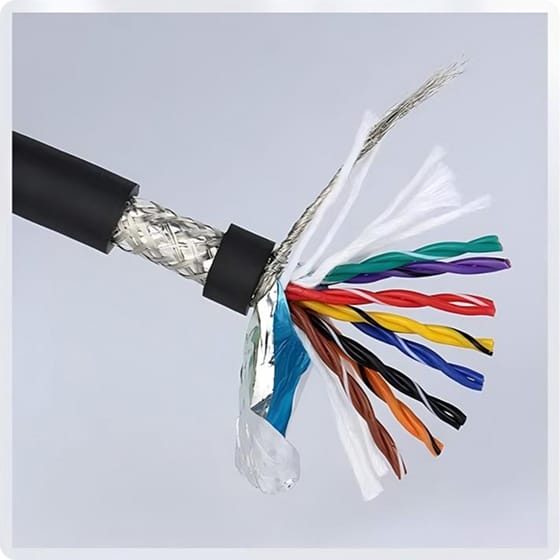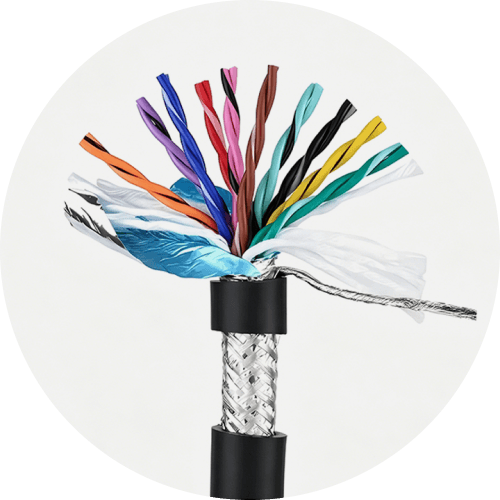
Impedance twisted wires are twisted-pair conductors that let you control impedance exactly. They help signals get through safely and clearly. This helps to reduce errors with signal loss and reflection.

Impedance twisted wires are made to order for specific impedance needs. There is a different way to twist and insulate each pair of wires. So, the signal stays the same even when it travels a long way. These cables must meet very strict standards in many communication systems. Engineers have complete control over the size, spacing, and insulation. With this, you might be able to get very close to the impedance value you want. A well-made cable is necessary to reduce weak signals and improve performance.
There are many design elements that can change the impedance of twisted-wire cables. The most important things to think about are the type of insulation, the distance between the conductors, and the twist rate.

We design custom twisted pair cables with controlled impedance to meet your exact application requirements.
To control impedance properly, you need to plan and test carefully. Engineers put a lot of thought into how they plan the insulation, wire spacing, and wire size. This process is very important for making cables.

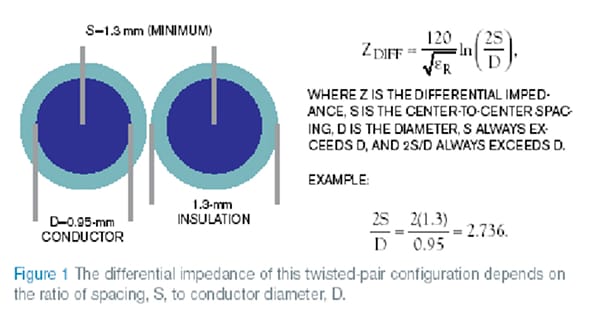
The first step in designing impedance is choosing the size of the conductor. When a cable pair has a larger conductor, the impedance usually goes down. When the conductor is thinner, the final impedance value is usually higher. Engineers use a lot of different formulas to figure out the best size of Impedance twisted wires. Carefully choosing insulation and spacing makes it possible to control performance exactly. Using solid copper gives you a stable shape and better results that you can count on. Stranded copper is more flexible, which makes cable systems more flexible. For wire gauge, it is very important to match the impedance correctly.

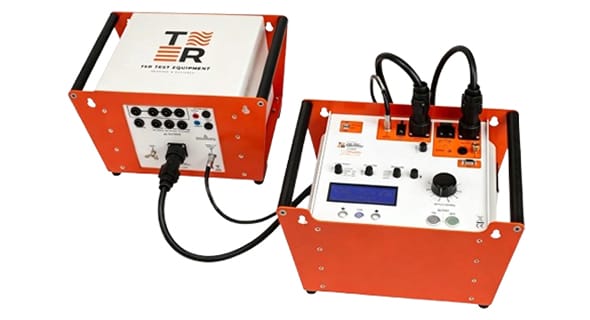
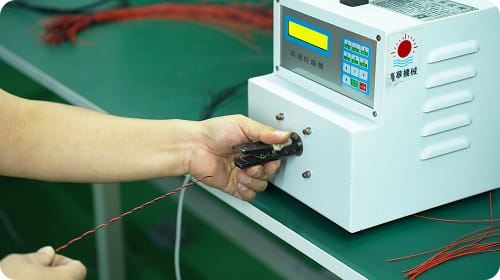
Specialized tools are used to check the impedance values of the last cable. Time domain reflectometers and network analyzers are two tools that are often used in this field. A TDR sends a signal pulse to clearly check reflections. This makes it possible to accurately measure the wire's impedance over its entire length. Network analyzers make it easy to test performance at a wide range of frequencies. These tools are great for quickly finding problems and mismatches. A high-quality cable will have an impedance line that is straight and smooth. This means that the thing is ready for its last use.

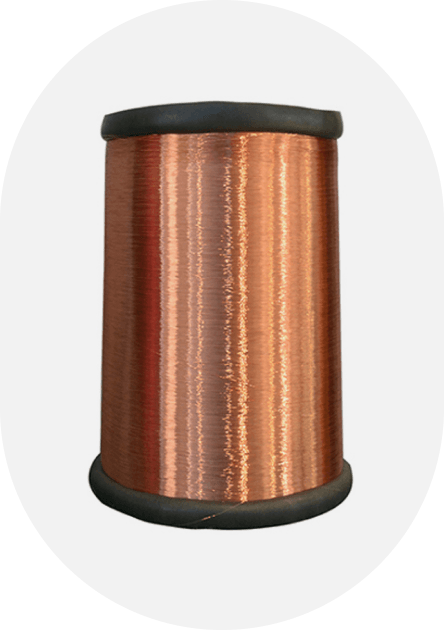
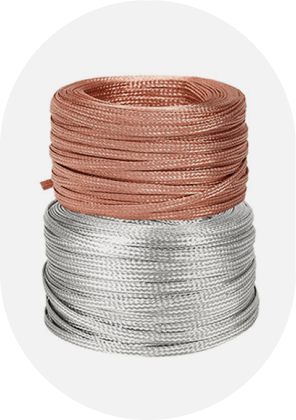
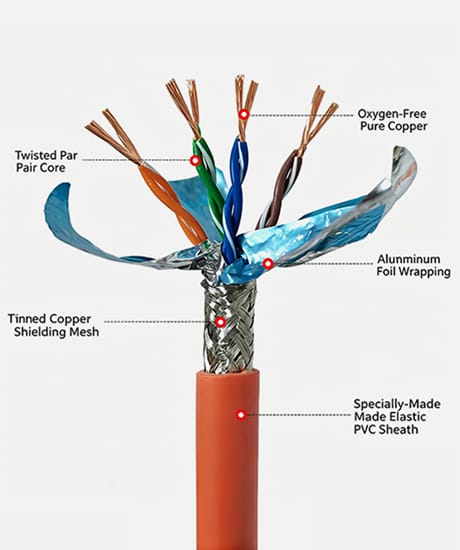
Most of the time, these kinds of cables use bare copper as the main conductor. Copper has a low resistance and is a good electrical conductor. Signals move faster and use less energy because of this. Bare copper also makes a good conductor because it has a consistent size and shape. This makes it possible to control impedance very precisely in twisted pair design. It is not only easy to find, but it is also cheap and easy to work with. Optional plating can make things more resistant to corrosion in some situations. Pure copper helps with strong and consistent electrical performance.

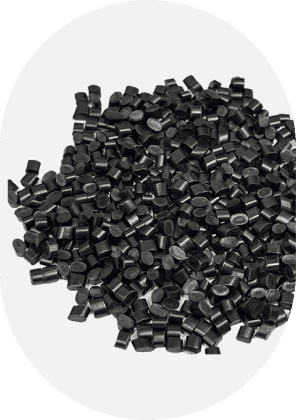
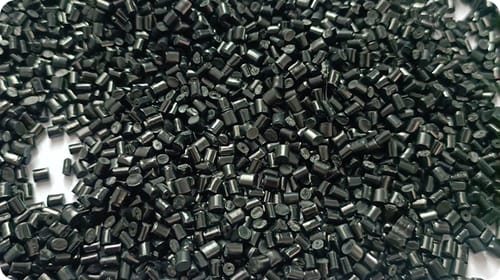
For insulating cables, use new PE or PVC resin. New material lets you control thickness exactly and keeps dielectric value the same. Polyethylene has a low dielectric constant, which means it handles more impedance. PVC is very flame-resistant and lasts long. Over time, electrical results of using recycled mixed materials could be hard to predict. This makes it harder to control and accurately guess cable impedance. Better insulation ensures each manufacturing batch is always higher quality. This is very important for requirements with little impedance tolerance.

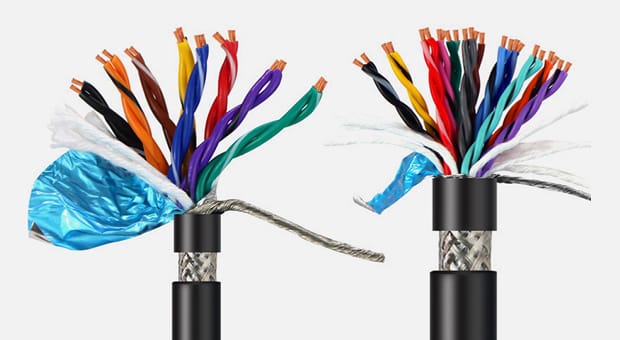
Braided shielding makes the cable much stronger and better at blocking EMI. A thick braid protects impedance twisted wires from electrical noise outside. This helps protect signals in loud, crowded areas. Also, enough braid coverage helps improve high-frequency impedance stability. Adding it to the twisted pair strengthens the return path. Though shielding makes the cable bigger, it greatly improves long-term performance. For extra protection, foil and braid are often used together. In industrial shielded twisted-pair cable networks, this setup is common.

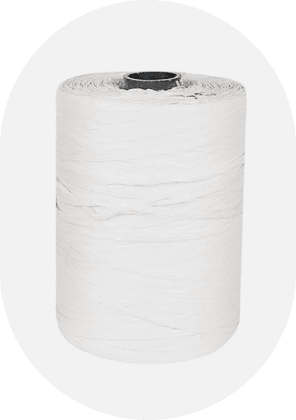
Pull strings and filler yarn are used to protect the cable structure. They protect the impedance during installation without changing it. A strong pull rope can safely handle the force when you pull a wire. Because of this, the twisted pair won't be able to stretch or change shape. The filler material keeps the conductors in the middle of the outer jacket. It also keeps the twist in place while you bend and pull. This way, the shape stays the same during the installation process. Consistent impedance keeps the long-term performance of consistent geometry.

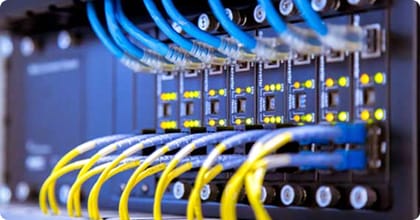
For easy and fast transmission, data networks use Impedance twisted wires. Internet systems like Cat5e and Cat6 need the right impedance to work best. These lines connect computers in homes and businesses, as well as routers and switches. A low impedance helps get rid of background noise and keeps the signal clear over long distances.
Most network connections work best when they have a 100-ohm impedance. Because of the twisted architecture, the signal stays balanced and steady. Because of this, they are very important to computer and internet systems.

Impedance twisted wires are also often used in factory control systems. For systems like RS-485 and Profibus, the performance of the cable must be strong and steady. These systems often use cables with a 120-ohm impedance to improve signal quality.
Twisting is a good way to keep signals safe from noise from nearby motors and power lines. These Impedance twisted wires are used by sensors, control panels, and other equipment. Shielded twisted pairs offer more security and less signal loss. This makes machines work more reliably and efficiently.

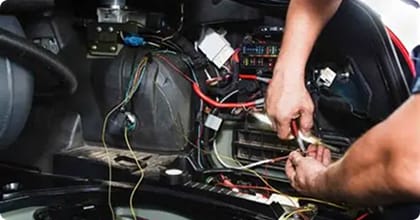
Also, twisted-pair wiring systems are strong and used in planes, cars, and trucks. Automotive Ethernet and the CAN bus are used to connect systems in cars. These cables need to have the right impedance and be able to handle vibration and movement.
Airplanes also need secure and reliable signal transmission for important equipment. Twisted cables let sensors and control units send accurate data. Improving system safety by blocking out electrical noise from outside. These wires have to work no matter what the weather or the ground is like.

Twisted-pair cables are also often used in security, audio, and video systems. Audio cables send music without any problems and with very little background noise. Security systems and CCTV cameras need a steady video signal every day. Twisting the microphone and speaker greatly improves the quality of the signal.
In places with a lot of noise, like offices, shielding makes long-distance performance better. For crystal-clear TV and audio, the internal impedance needs to be very high. These cables make the system safer and the communication better.

Strong materials and smart design go into making tightly wound wires. The wire form stays the same from start to finish. When making the twist and spacing, a lot of care is taken. So, the impedance stays the same while the signal is being sent. We also check that the size of the conductor is right. Good insulation keeps both the cable and its signals safe. So, the cable is strong and can be used every day. Every cable undergoes 100% electrical testing to ensure consistent performance in real-world conditions.

The insulating material is also important for a good cable installation. Polythene fluoride (PTFE) and plastics are great at controlling signals. Because of this, the signal stays clear and the loss of signal is lessened. Many cables also use fillers to keep Impedance twisted wires from moving around inside. This is why the cable can keep its shape when it is bent or pulled. Some cables have copper that has been silver-plated to make them work better. These parts make the cable work better and last longer.


Different tasks need different levels of impedance, and custom cable design can help with that. Engineers can change the twist rate and wire size with great accuracy. They also choose the best material for safety and signal quality. This makes the cable work better in specialized machines and systems. Well-controlled design leads to better performance and fewer signal problems. This helps both meet client needs and follow industry standards. Custom cables work better in some areas of work than others.
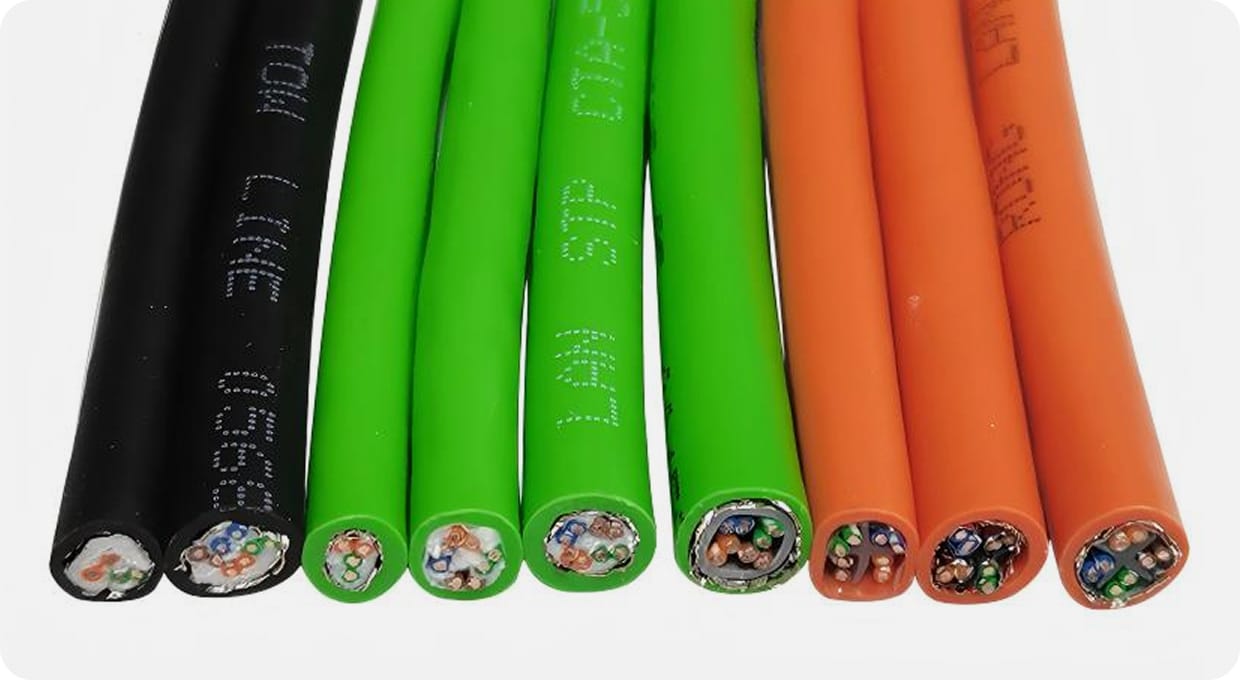
There are many different types of shielding that can be used to make the cable even safer. It's also possible to use both foil and braid shields together. Because of this, the signal stays strong and clear while EMI is lowered. Power Impedance twisted wires and coax parts are inside some cables. A strong jacket, like the LSZH, will keep you safe from the heat and the weather. Armored layers are an option for use at work or outside. These solutions make cables stronger and safer in rough places.
Twisted wires help with noise immunity and balanced signaling by cutting down on interference. Their ability to block out background noise is good for music, data, and sensors. It works well, even when things are loud.
These wires are made to work with a wide range of cables and devices and help match impedance. This makes sure that signals don't get mixed up and flow smoothly. The signal stays strong and clear.
It is possible to send data quickly over twisted cables. They make things like the web and movies work faster. The signal stays strong as it moves along the cable.
Twisting the wires keeps signals from overlapping, which cuts down on crosstalk. This keeps each signal clear and intact. It makes it easy for several wires to work together.
The wires are strong and built to last a long time. Even if they are bent or worn out, they still work great. Because of this, you can be sure that they are safe and work.
QL-Custom supplied the Impedance twisted wires for our network, and the controlled impedance is perfect. Signal quality has never been better.
The cables worked flawlessly in our audio system. Low noise and stable impedance throughout.
Good custom cable service. Quick prototype and testing met our exact specs for RS-485.
High-quality materials and excellent engineering support. Our communication system runs smoothly.
We got shielded twisted pairs with precise impedance. Installation was easy and performance is outstanding.
As an OEM, we trust QL for custom impedance-controlled cables. They always deliver consistent products.

If you need custom cable solutions that you can count on, look no further than QL-Custom Technology Ltd. Our team is very good at designing and making Impedance twisted wires. We are very careful about the wire size, insulation, and twist structure we use. This lets us meet our clients' exact impedance needs. We check the quality of every cable all the time while it is being made. Safety, accuracy, and long-term effectiveness are always at the top of our list. Our goal is to provide all industries with reliable cables. QL-Custom offers fast and dependable custom cable solutions. We work hard to give all of our customers the best cables possible.