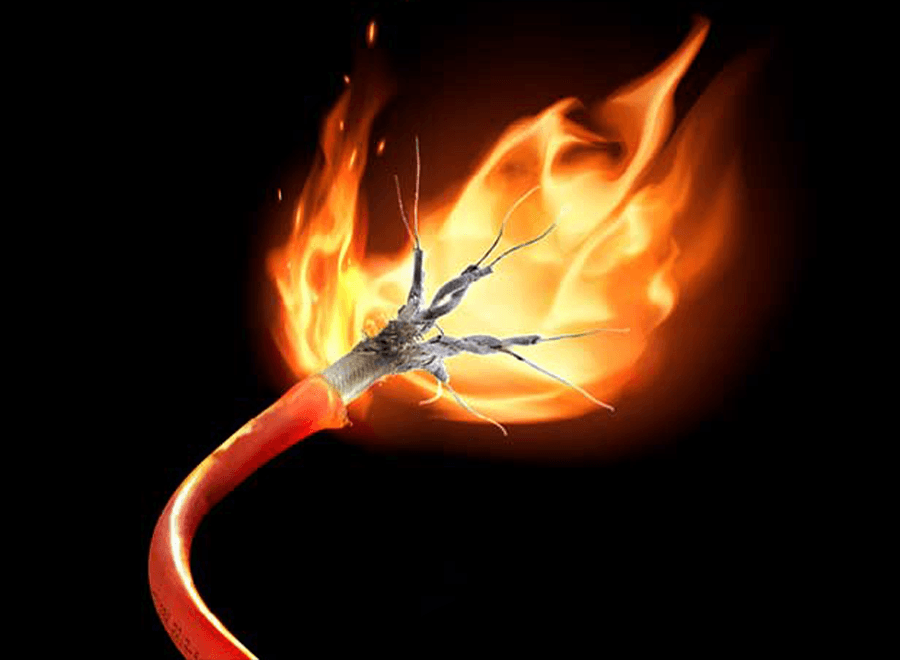
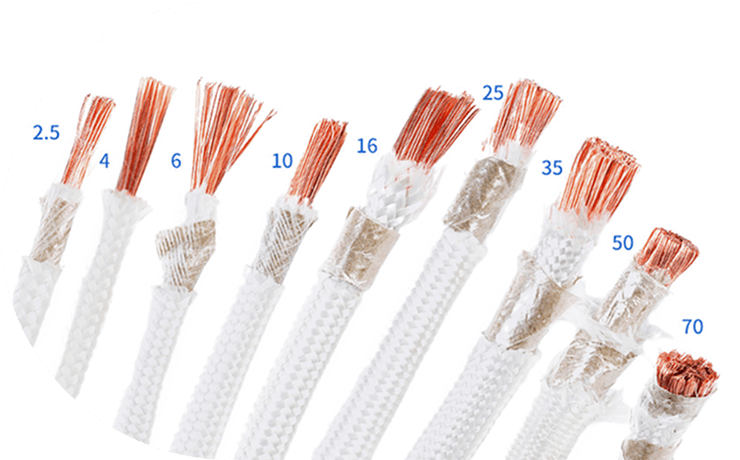
Select the pro-grade fireproof wire and cable that are made to keep working even during high heat and fire. These specially designed wires help protect power systems and improve safety.

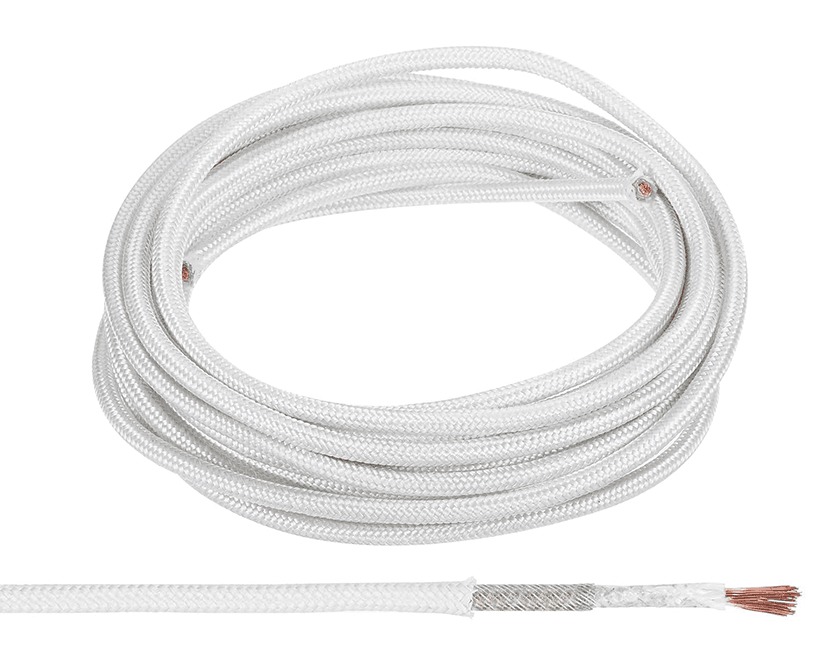
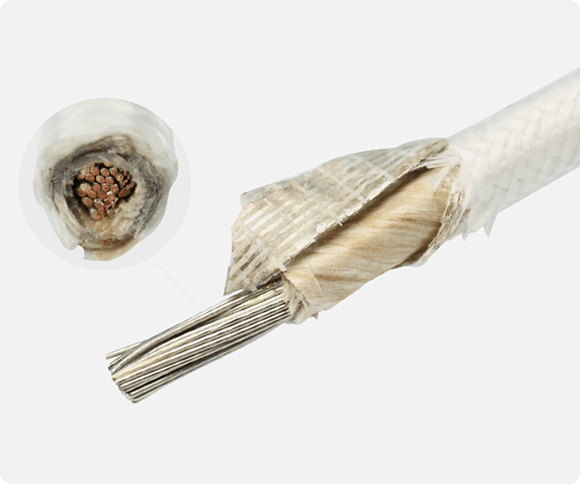
Mica tape fiberglass-insulated wire uses a middle metal wire. First, you put on mica tape that is safe to use around heat. A strong fiberglass braid is then used to strengthen the outside. This fire-proof wire and cable stays safe even when it gets really hot because it is so simple to make. You can use it a lot. The mica layer keeps things warm up to 450°C. The fiberglass coating protects against fire, friction, dust, and normal use and tear. It helps the circuit work during fire tests like IEC 60331. It can handle a lot more heat than regular PVC or silicone wire. It is meant to stay safe by design. This helps heating coils and sensors in industrial and household machines that get very hot work better. Strong mica, silicone resin, and fiberglass are the main materials used in QL-custom's mica-glass cables. The oven, motor, furnace, and safety system parts are all very reliable, which makes them a great choice. It also helps make products last longer and be safer.
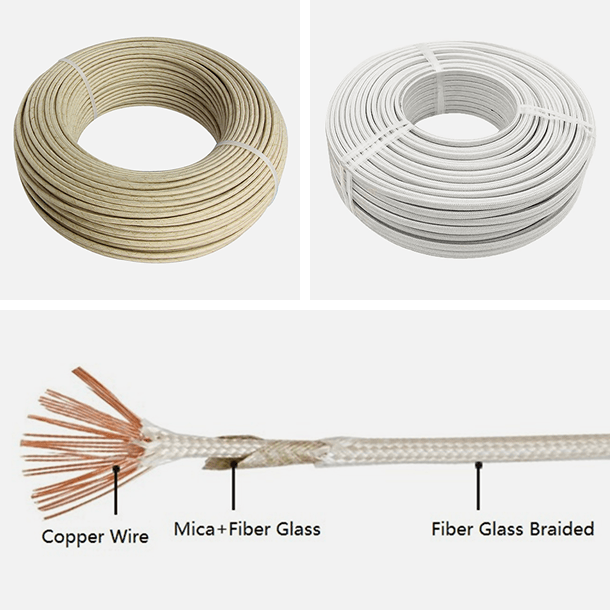
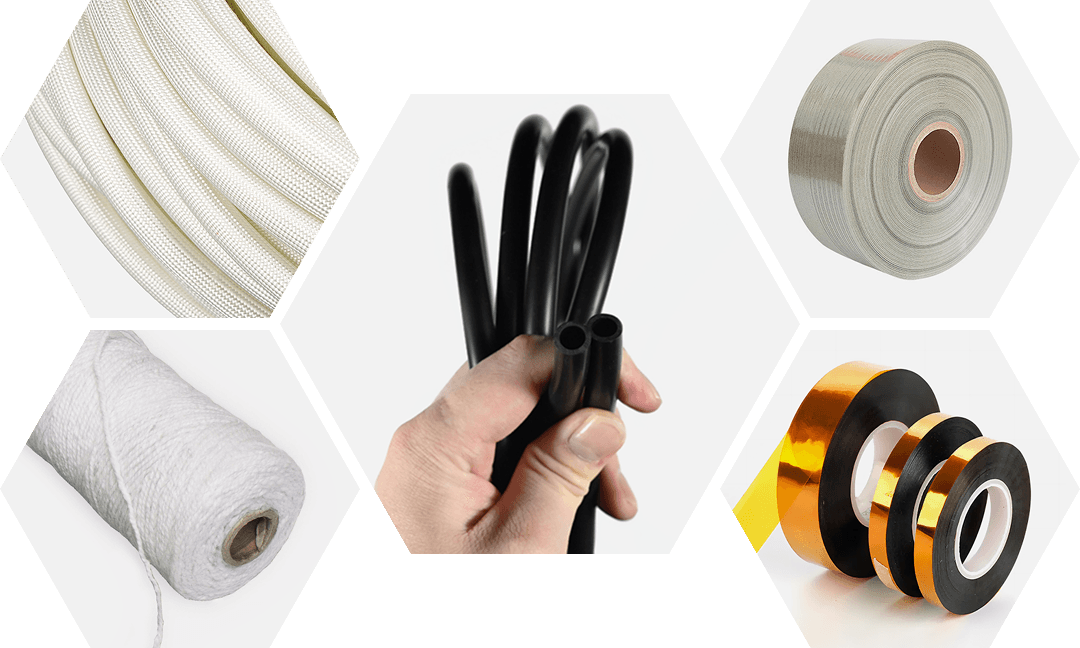
Copper that has been nickel-plated makes up the core of 450°C wires (Type MG/MGT). It is surrounded by a fiberglass braid and mica tape. The nickel and mica in the wire make it safe to use at 450°C for long periods of time. There have been times when it has gone above 538°C for a short time. These fire-proof wires and cables are often used in hot machines like ovens, kilns, and others. Mica keeps electricity from flowing. The glass braid makes things stronger and safer. These wires keep working even when other wires stop working. UL Style 5107 is often used to standardize this type of thing. It's smart to choose it for hot spots.
Nickel-copper alloy or pure nickel cores are common in wires that can handle temperatures up to 1000°C. Mica or ceramic provides insulation. The inner wire is wrapped in mica tape and yarn that can handle heat. Then, ceramic or fiberglass is put on the outside. These fire-proof wires and cables won't be damaged by temperatures up to 1000°C. Some types can handle short bursts of heat up to 1500°C. They are used in systems that are very hot, like furnace heaters and airplane engines. UL or VDE has approved a lot of them. They are the best solutions for places where the wire needs to keep working.
The materials used to make high-temperature wires don't break down when they get hot. PTFE, FEP, and PFA can work at temperatures close to 260°C, while silicone rubber can handle temperatures up to 200°C. Kapton tape will keep its shape even when the temperature rises to 400 degrees Celsius. When working with higher temperatures, it is common to use mica tape at temperatures over 450 °C and fiberglass braid at temperatures around 500 °C. Ceramic fiber can handle temperatures up to 1200 °C. Nickel-plated copper or nickel is often used as the core metal. They can't be hurt by either heat or rust. These materials are affordable, durable, flexible, and resistant to fire. They also make the fireproof wire and cable last longer.

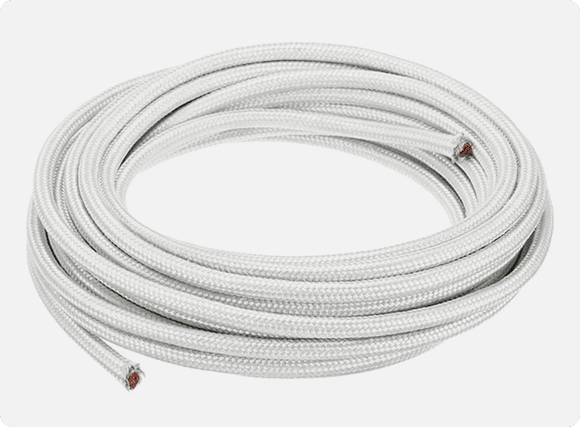
Fiberglass braid is made by twisting glass yarn. It is completely safe to use because it has a coating that protects it from heat. It can be used as a jacket for cables because it can handle temperatures up to about 500°C. Type MG wires have this over the mica insulating layer. It won't catch fire. It makes the surface more stable and tough. It also doesn't wear down or get scratched easily. It can be used in stovetops, barbecues, motors, and heating systems. This outer layer keeps the fireproof wire and cable safe for a long time.
This is the first step: wrap the conductor in mica tape in this way. The last step is to wrap it in fiberglass braid. The mica tape won't melt if the temperature is higher than 450°C. The fiberglass keeps the insulation in place. Usually, the end product is a fireproof cable that can handle temperatures of 450 °C or higher. It is used in heating systems, ovens, kilns, and furnaces. Mica keeps heat from getting through. The fiberglass makes the pull strength stronger. This method can be used to safely wire motors and furnace wiring.
The flame safety ratings for PVC cable jackets are FT4 and VO. FT4 is the name for vertical flame testing. The fire-proof wire and cable must stop the fire from spreading within 1.5 meters. According to VO, the PVC must put out its flame after being taken away from the flame for ten seconds. The most important thing about VO-grade PVC is that it burns out quickly. A lot of these coats are rated at 105°C. One of their jobs is to keep the wiring in the building safe from fire. It adds another layer of safety in case something goes wrong with the electricity.
Ceramic fiber wires use braided alumina-silicate yarn. Made for use in very hot places of work. They can run all the time at temperatures up to about 1200°C (2200°F). They are a little more flexible than rubber wires, but they are also rougher. They are naturally resistant to fire. They are also resistant to chemicals. Furnaces, labs, and testing equipment are all places where you can find them. Ceramic insulation adds extra protection that keeps things from getting too hot all the time.
Kapton, also known as polyimide tape, is a thin but strong layer that keeps things from touching. It helps both small systems and places that are hotter. Kapton wires won't melt between 250 and 400 degrees Celsius. This tape is very thin, strong, and safe to use in heat. It is used a lot in electrical and aeronautical systems. It saves both space and weight. It still works great as an electrical insulator. This is a big plus for small, high-performance devices.

The cables used in nuclear power plants must be able to handle a lot of radiation and fire. These cables usually have jackets that don't contain halogens and double insulation. They shouldn't catch fire or let out smoke that is bad for your health. People often use mineral or mica insulation to make things safer. They keep the emergency power and control systems running. They can live for up to sixty years. These are some of the reasons why they are so important for plant safety and crisis management.

Silicone and fiberglass are the most common materials used to wire ovens and grills. Many people use silicone and fiberglass insulation. You can use them all the time at temperatures up to 200 °C. These fire-proof wires and cables won't break when they get hot, wet, or greasy. When they are near heating segments, they stay flexible. They keep going through a lot of cooking cycles. They are the best because they work well and last a long time in the kitchen.

We use special sensor wires in metal plants and furnaces. A thermocouple cable with a fiberglass insulation that can handle temperatures up to 482°C is a common choice. Some people also use nickel or stainless steel braid on the outside for even more protection. They can't be damaged by chemical spray, slag, or sparks. In reality, sensor signals are sent over fireproof wires with two or three cores. Using metal and fiberglass protection makes signals more stable near areas where metal is melting. These fire-proof wires and cables are needed for automation, temperature control, and safety devices to work. Their job is to make sure that factories run safely and smoothly.

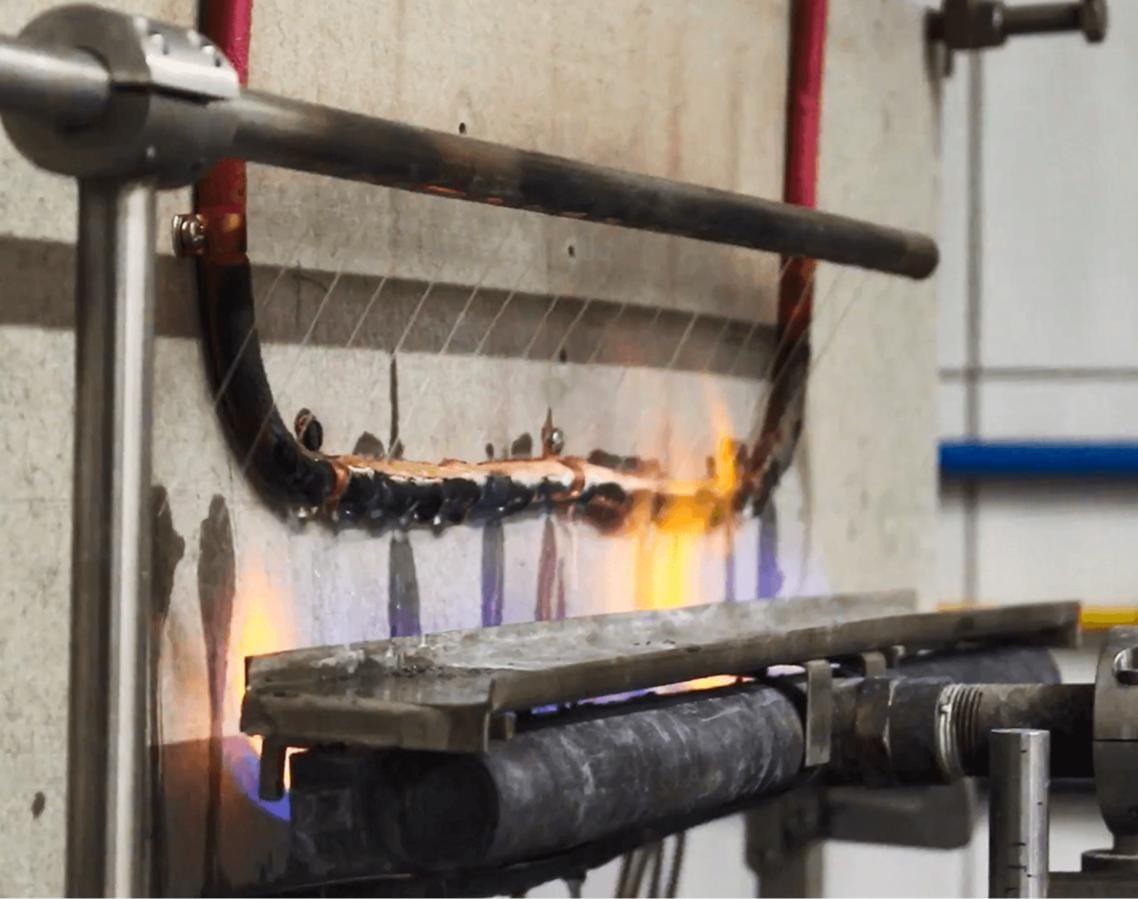
When you plug in the cables, they get hot in a flame that is set to 750°C for 90 to 180 minutes. The electricity will keep flowing even if there is a big fire. This standard is the basis for all Fire Survival Cable Standards.
BS 6387 is the British standard for testing fire safety with just one cable. Class C (CWZ) cables are exposed to flames and water spray at 950°C for 60 minutes. A pass is required to keep operating in a jet-fire situation. It also has fire tests that last only 20 minutes.
UL 2196 and UL 13 say that fire alarm wire testing should be done in North America. Cables must hold their rated current for two hours when they are in a furnace that is 1000°C. The UL fire-resistant mark may be on passed cables for security systems.
According to UL VW-1 and IEEE 1202, check for vertical flame spread. In a flame, fire-proof wire and cables are heated to 750 degrees Celsius on a vertical specimen. It is very important that the flame goes out quickly on its own. VW-1 is a common grade for flame-resistant wires. It comes from IEEE 1202.
For use in vehicles and for emergency exits. For at least two hours, the lights and signaling circuits must stay in good shape. If there is a fire, the escape lights in these tunnels and stations must work because the cables used must meet NFPA fire-resistance standards.
These global fire performance standards ensure fireproof wires and cables maintain circuit integrity, resist flame spread, and operate reliably during fires, safeguarding critical power, signaling, and emergency systems across diverse applications and regions.

Conductors made of nickel alloy or copper are completely covered in inorganic magnesium oxide (MgO) insulation inside a copper or Inconel metal sheath. A naturally mineral-insulated fireproof cable is produced as a result, with no plastic to burn.
MI cables can keep circuits running even when they are very hot. Testing them for 2 hours of integrity using the IEC 60331/BS 6387 standards is a common practice. The circuit keeps working even when it is on fire.
The normal continuous rating is between 200 and 250 degrees Celsius, but the short-term fire resistance is much higher. Not all MI cables are ruined by molten metal splashes or direct flame contact. They burn without letting out any smoke or gas.

Nuclear instruments, emergency lights, and fire alarms are just a few of the many things these fire-proof wires and cables can be used for. They are very strong and useful shields because they have a tough covering. They save unscheduled downtime by protecting important circuits from deadly flames.
MI cable is less flexible than polymer wires. Unmatched reliability comes with a price: you have to be careful with it (bigger bend radius). Its all-metal construction makes it almost impossible for harmful gases to escape in the event of a fire.

Keeping circuits running in the event of a fire helps to prevent catastrophic outages. Fire-rated cables keep electricity flowing to important equipment so that it can safely shut down or keep running. One study found that the costs of unplanned downtime are much higher than the cost of making the right connections. By using fire performance cables, a plant can avoid shutdowns and damage to its equipment. These strong, fireproof wires keep lights, alarms, sensors, and controls powered on so that evacuations go smoothly and recovery happens quickly. Fireproof wiring is a good investment because it keeps the power on and saves a lot of money in case of an emergency.
We installed QL-Custom's mica tape fiberglass cables in our new oven line. They survived 500°C tests with no damage. Very reliable and high quality.
QL's fire-proof wire and cables outperformed our old cables in a factory fire drill. Our emergency lights stayed on. Great product and support!
Excellent customer service from QL-Custom. They helped us pick the right FT4-rated cable for our building project. Cable works perfectly.
Our furnace controls use QL's mineral-insulated cable. Even when we test fire exposure, the circuit stays alive. These fireproof cables are top-tier!"
We needed a 2-core fireproof cable for a sensor array. QL-Custom made a perfect cable to order. It's tough and well-constructed; exactly as advertised.
Good overall experience. The fireproof cable wrap on the delivered product is durable. Wires handled 300°C, no problem. Documentation and testing reports were helpful.
Since 1997, QL-Custom Technology Ltd. has been making cables under contract. They got the ISO 9001:2015 quality seal of approval. We are experts at coming up with new ways to make high-temperature fireproof wire and cables. Our state-of-the-art factory uses UL/IEC-approved materials like mica-glass, ceramizable silicone, Inconel, and others. It also tests to BS 6387/IEC standards, which include 1000 °C furnaces. Helping over 300 clients in the US and the EU. We know a lot about this area. QL always meets all of our clients' requirements, from very small tolerances to strict flame testing. You can also get custom runs of fire-rated cable for a low price. When you need certified fire-resistant wires that you can trust and that will last, QL-Custom is the best choice. We know a lot about this and have strict quality control measures in place.