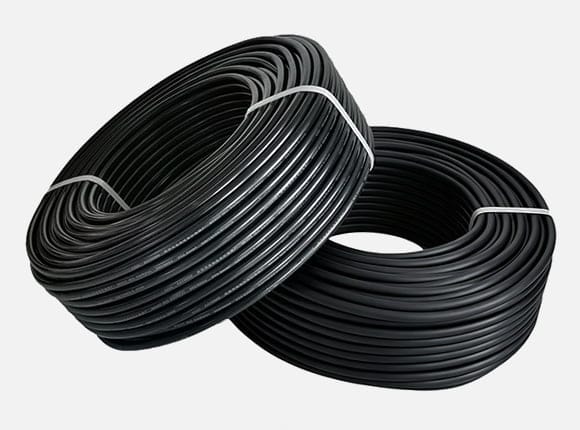
The Drag chain wire and cables are used for the heavy industrial jobs. These chain wires easily handle tough uses and rough situations. For the maximum flexibility these wires are the best.

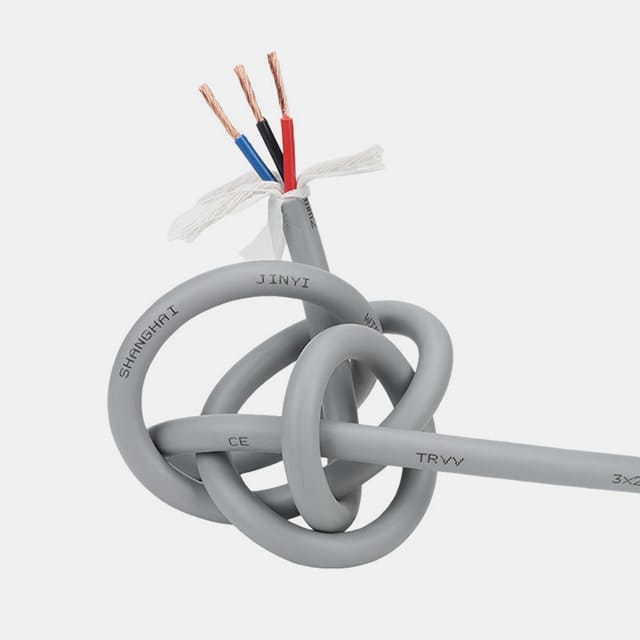
Drag chain wire and cables work best with machines that are always moving. These devices twist and bend the cables while they are in use. The cables need to be strong and flexible. Each wire has a lot of small copper strands in it. The cable is flexible and easy to work with because of these strands. The cable's strong outer layer keeps oil, dust, and wear and tear from getting to it. Special fillers keep the inner wires in place and stop them from rubbing against each other. Because of how it was made, the cable will last a long time. These cables are used in machines with numerical control, robots, packing lines, and conveyor systems. They work best between -40 °C and +80 °C. These traits make them great for modern automated systems.
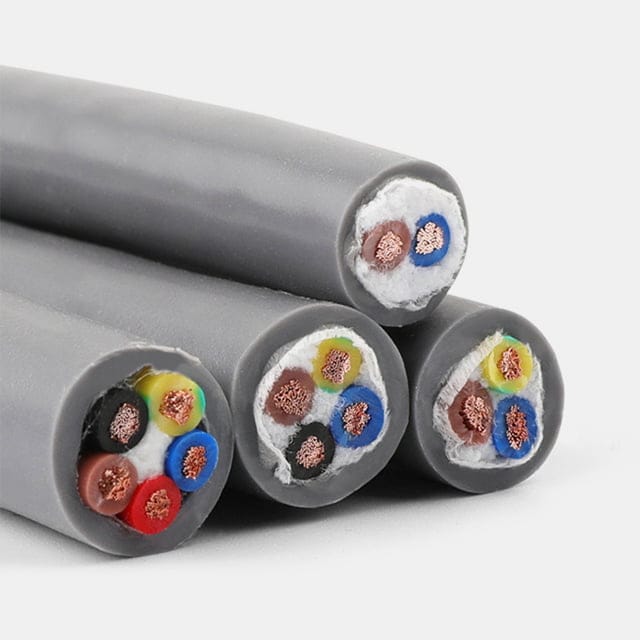
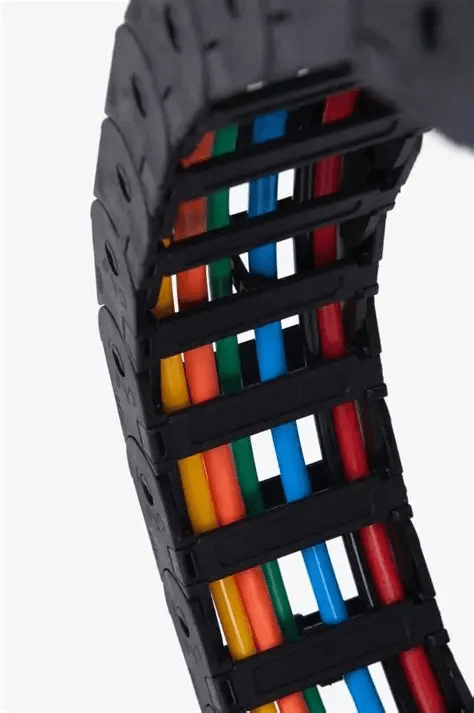
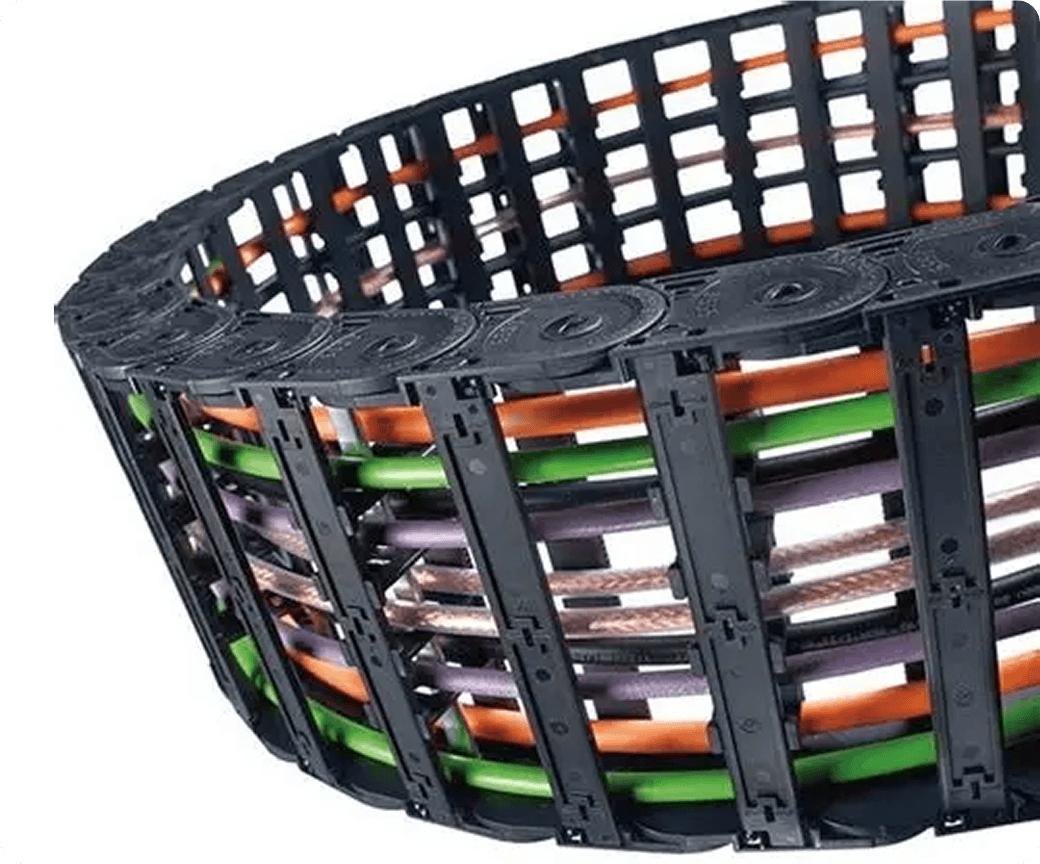
A drag chain guides cables, keeping them straight to prevent tangling and sharp bends. The conductors use fine-stranded annealed copper. Cores are arranged to move together, reducing friction and preventing damage. Many drag chain cables also include a strong center yarn (e.g., aramid) for added strength. This design ensures high resistance to repeated bending and twisting.

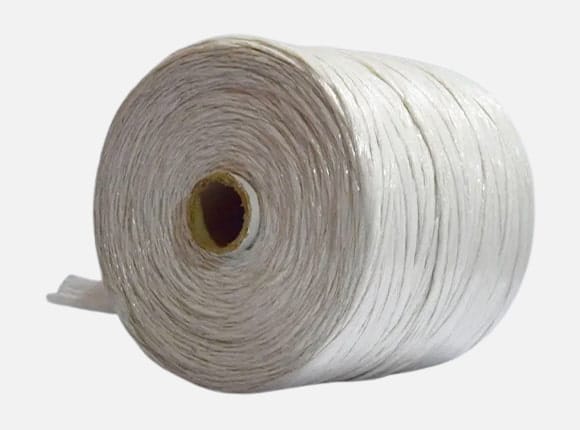
The fillers are what make the drag chain cables work. This helps the cable keep its round shape. They also make the system stronger. Some common filler materials are polyester fibres and aramid yarns. These materials help keep the conductors in place. They stop the wires from moving around when you do. Fillers make the wires move more easily by cushioning them. This safety feature makes the drag chain wire and cable last longer and puts less stress on it.

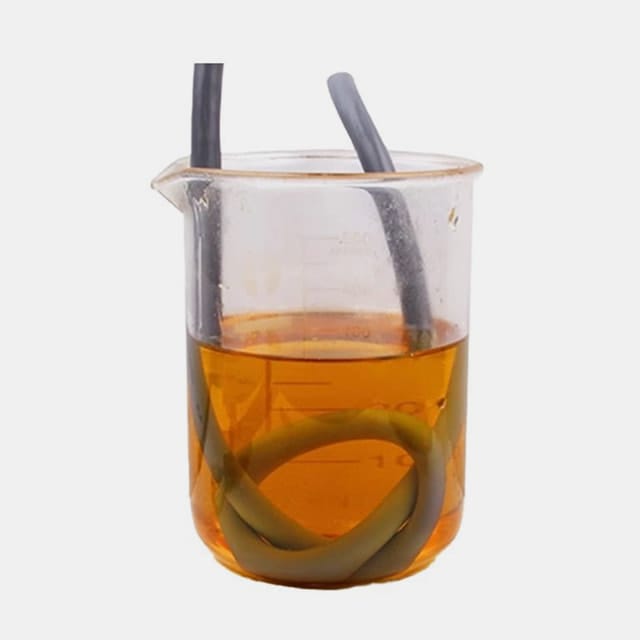
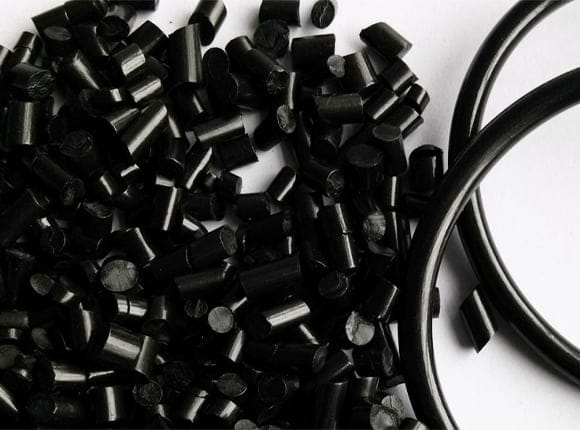
Drag chain cables often have to work in tough conditions. You could find oils, coolants, and chemicals in these places. Some materials that can be used to make the outer jacket that can handle these situations are polyurethane (PUR) or high-quality PVC. These materials are not affected by acids, alkalis, cutting fluids, or hydraulic oils. A PUR jacket will keep you safe from wear and tear. As a result, CNC machines and car assembly plants may use the cables.

Flexibility is one of the most important things about drag chain cables. Strands of very thin copper are used to make conductors. This makes it easy to bend the cable. Using TPU, TPE, and PUR, which are flexible jacket materials, makes this even better. These materials are as flexible as rubber, even though they are strong. The drag chain wires have a small bend radius, usually about five times the diameter of the cable. They pass the test after millions of times of bending.
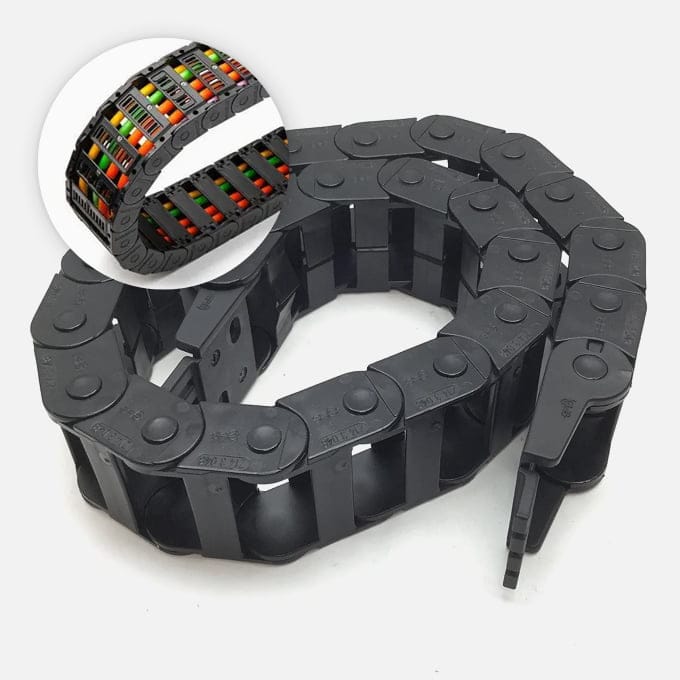
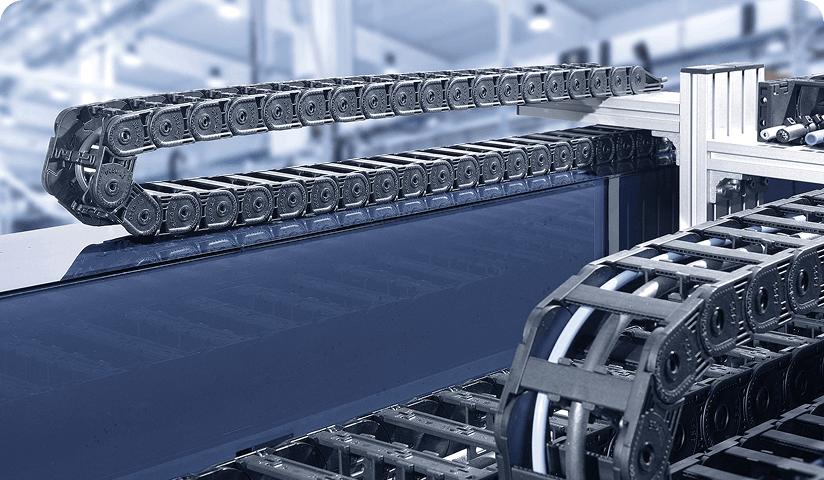
The drag chain wire and cable is just one part of a whole drag chain system. You'll also need the right tools to safely install it. Some examples of these are connections, cable carriers, strain relief devices, and PA66 drag chains. The goal was for all of the parts to work together as a whole. This setup protects the cables while they are in use. Because of this, they stay untangled and can move around freely.


PA66 drag chains keep moveable cables safe and on the right path. They use polyamide 66, a strong engineering plastic, to make them. Many designs use glass fibre to make things stronger. This material is very resistant to wear and lasts a long time. The chains keep the wires straight and don't let them make sudden turns. Because they are made with low-friction materials, they move quietly. Some high-end versions have more than 30% glass fiber, which lets them carry heavy loads. These drag chains can work for millions of cycles of motion. This makes them ideal for high-speed pick-and-place machines, CNC equipment, and industrial robots. As a result, manufacturers can significantly reduce cable replacement costs and downtime.
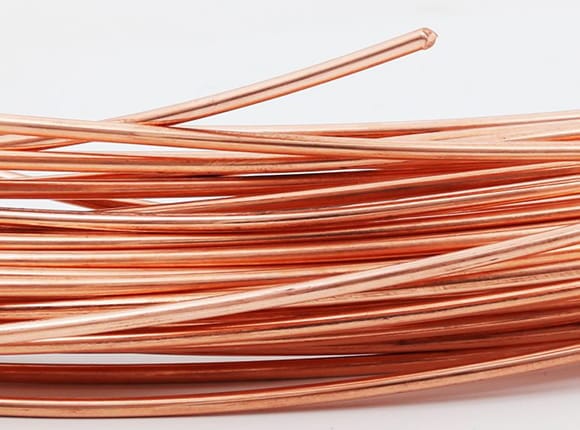
Annealed copper is usually used to make the wires in cables. This soft-drawn copper is very flexible, so it can be bent over and over again without breaking. Most of the time, tinned copper strands are used as conductors in Class 5 or Class 6 configurations. High-purity copper has low resistance and high electrical conductivity. Even when twisted tightly, the tiny strands keep the signal steady. Tinning stops copper from rusting and oxidizing. These benefits make annealed copper a reliable and long-lasting choice for cables.
Various jacket materials are available for different applications. PUR jackets offer excellent oil resistance and durability with high wear resistance. TPE and TPU jackets feature rubber-like elasticity and long service life, resisting environmental stress, pollution and UV radiation. Material selection depends on the working environment: PUR is ideal for high-wear areas, while TPE suits eco-friendly applications. Diverse options ensure customers get the most suitable cables.
Fillers with high resistance protect the cable's inner structure from wear and tear. Polyester strips and aramid yarns are some of the materials that fill the space between the conductors. These fillers will stop the wires from rubbing against each other as you move them. They not only make the cable less likely to break, but they also make it stronger. Because the drag chain wire and cables are so strong, they will keep their shape even after millions of bends. This makes sure that it will work reliably in situations where there is constant motion.
Cable jackets get surface treatments. These treatments make it easier to handle and safer. Smooth or low-friction surfaces lower the friction cable moves through the drag chain. Usually, materials that are not halogen-free or dangerous are used. These materials make the cables less likely to catch fire. Another benefit is that surfaces with a matte or glossy finish help keep dust and static electricity away. These treatments have made the wire easier to use and care for. They cut down on friction, which makes the service life longer.
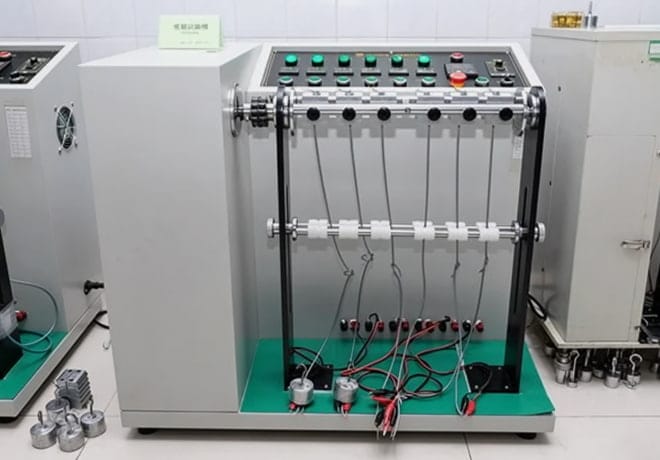
Quality control is an important part of the production process. Before delivery, each drag chain cable is carefully checked. Checking insulation thickness and size ensures correctness. Continuity and high-voltage (Hi-Pot) testing are two parts of electrical safety checks. Visual checks ensure the outer jacket is defect-free. Tension tests measure drag chain wire & cable strength.

Rotating or torsion tests show how well the cable can handle twisting. This test requires you to keep one end of the cable still while twisting the other end over and over. This is like how robots work in real life. The cables are tested at torsion angles of ±180° or more, and they often go through more than a million cycles. High-speed twisting keeps the wire's mechanical and electrical properties intact. After the test, the cable must still meet all of its performance requirements. This guarantees a reliable delivery of signals and power in the event of a continuous rotation.

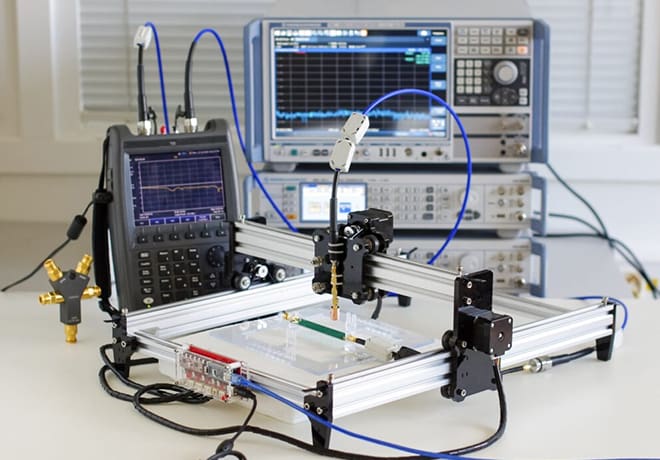
The shielded drag chain cables are tested for electromagnetic interference (EMI). This is a good example of how well the wire protects us from harmful electromagnetic waves. A high-frequency pulse is sent through the drag chain wire and cable, and the amount of signal loss is measured. Another way to test how well shielding works is to use an outside electromagnetic field. Cables with strong shielding have low transmission impedance and high attenuation. This will keep data and control signals stable even when motors and inverters are present.

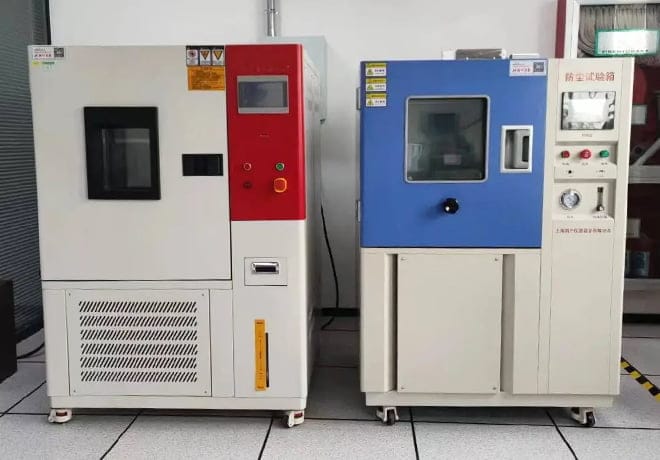
Ageing tests check how well cable materials last over time. Ovens heat samples of insulation and jackets to temperatures between 100 and 155 degrees Celsius. They stay for a long time to speed up the ageing process. After they have been exposed, we check the materials' elongation and tensile strength. This will keep them stable and flexible in the long run. The samples are also put in chemicals and industrial oils for more testing. It is necessary for a substance to keep its properties in order to be made. The tests show that the wires will work reliably for more than 20 years.

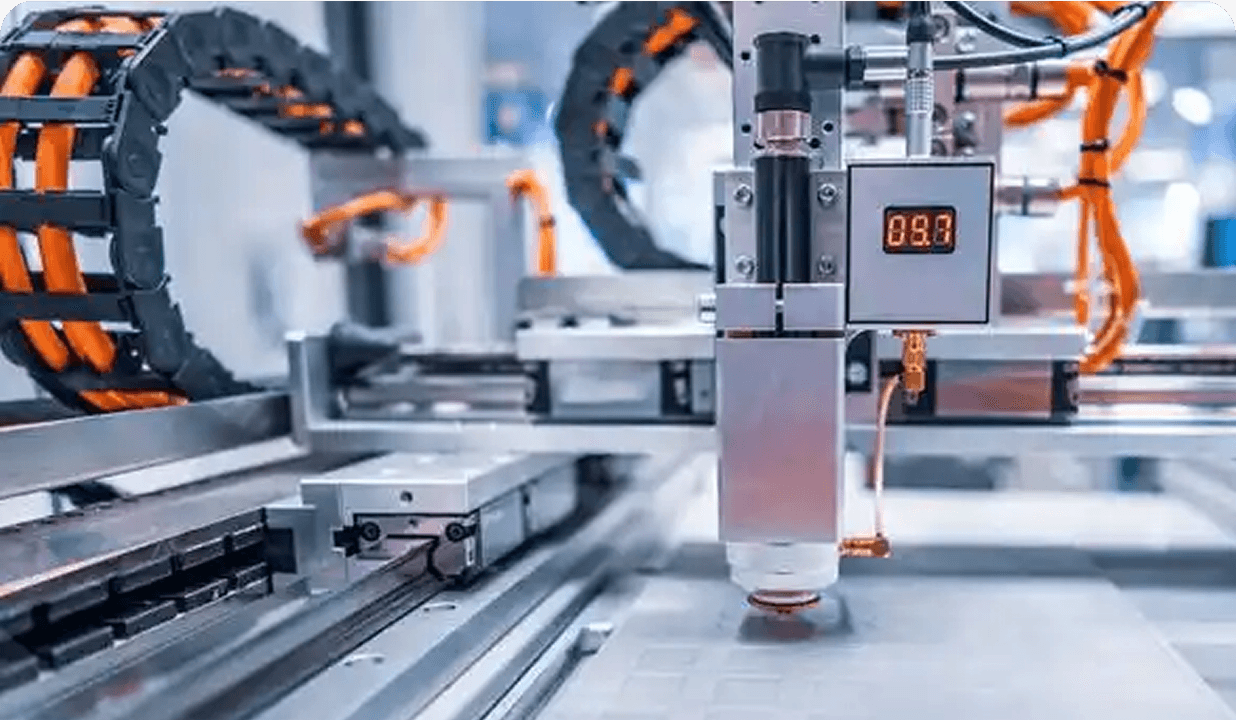
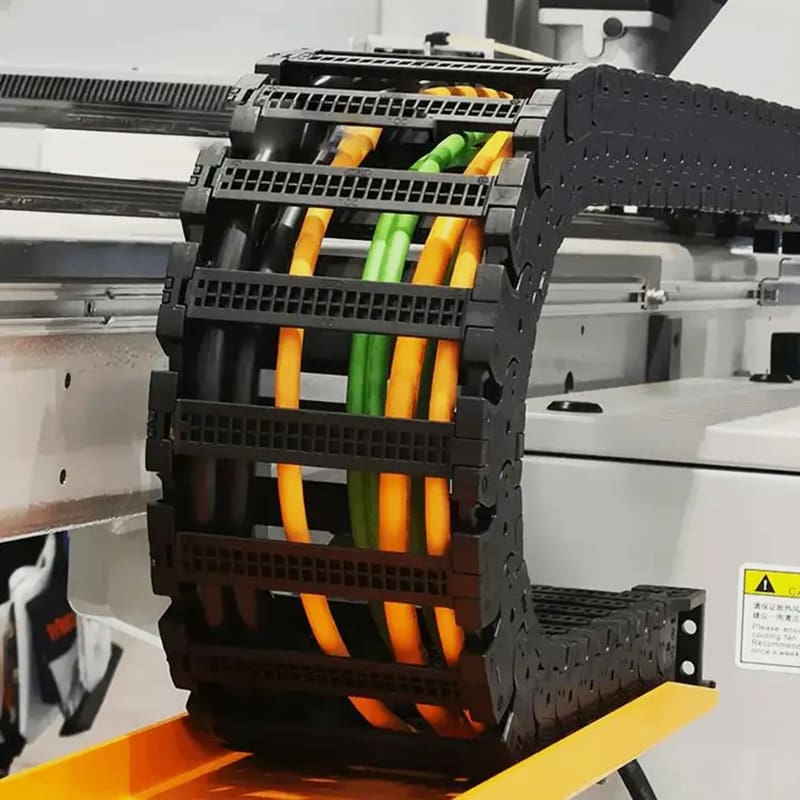
Every day, factories use industrial drag chain cables in their machines, conveyors, and assembly lines. The drag chain wire and cables are moved over and over again by revolving tables, sliders, and machine arms.

CNC machines and robotic arms need to be able to move smoothly in many directions. These wires send control data, encoder signals, and power to the servos while the machine is moving. The wire cores don't get stressed out because they are made of flexible materials.

Continuous-flex drag-chain cables are what wind turbines and solar trackers use to move. Solar-tracking arms and controls for blade pitch keep these wires moving all day long. They can handle any kind of weather, including sun, rain, cold, vibration, and dust.

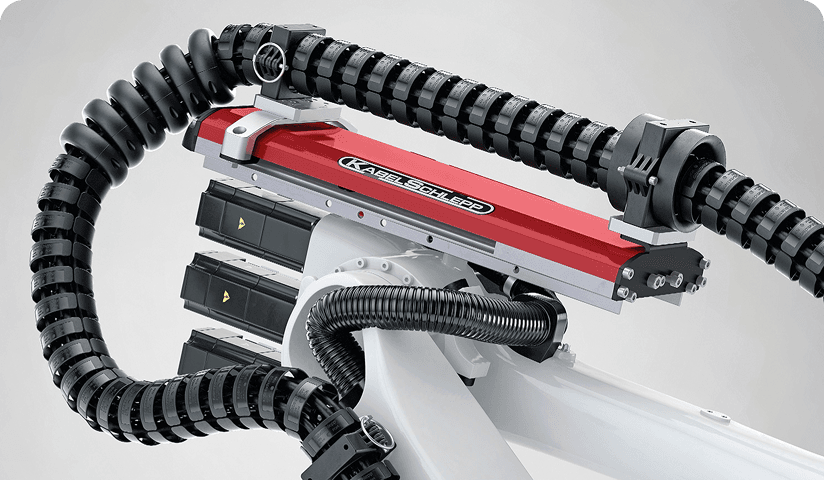
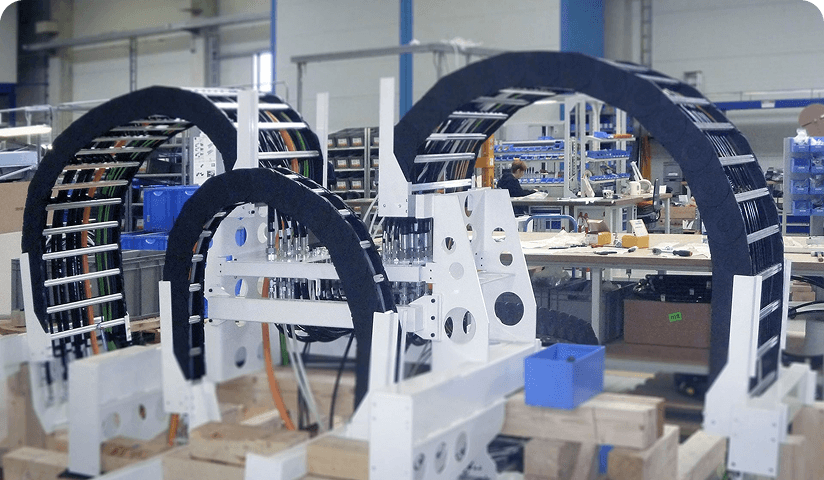
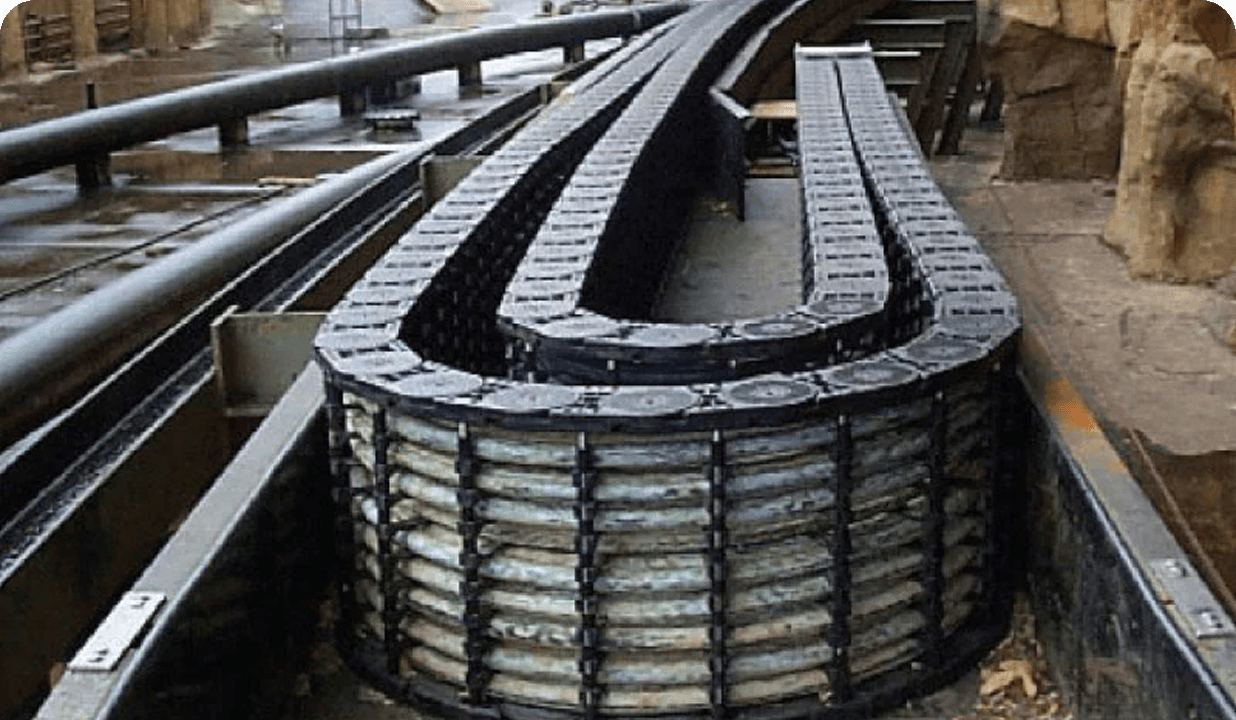
Any cable carrier system or moving cable tray needs to have good cable management. Carriers make it easy to keep wires neat by holding drag chain cables. This method can help you avoid rubbing, twisting, tangling, and breaking wires too soon.

Packaging machines and textile looms bend cables many times a day. The wire needs to be able to bend and hold up to the constant movement of these machines. Using high-flex drag-chain cables can help reduce the number of times machines have to stop because of wire failures.

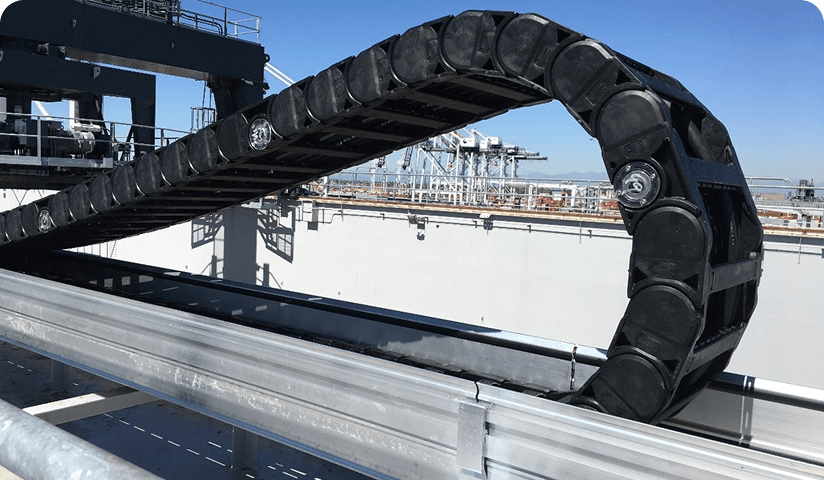
Drag chain cables are used in a lot of moving parts, such as warehouse systems, port cranes, and lifts. These wires keep the motors, sensors, and control systems connected when they move, lift, or slide. They keep dirt, grease, moisture, and the weather away from wires, whether they are inside or outside.

The outer jacket of a hybrid drag chain cable holds all of the wires, such as power, motor leads, and data. Because of this, there will be fewer drag chain wires and cables needed in the chain. Installation is easier, cleaner, and faster. It helps keep machine designs small by making them take up less space.
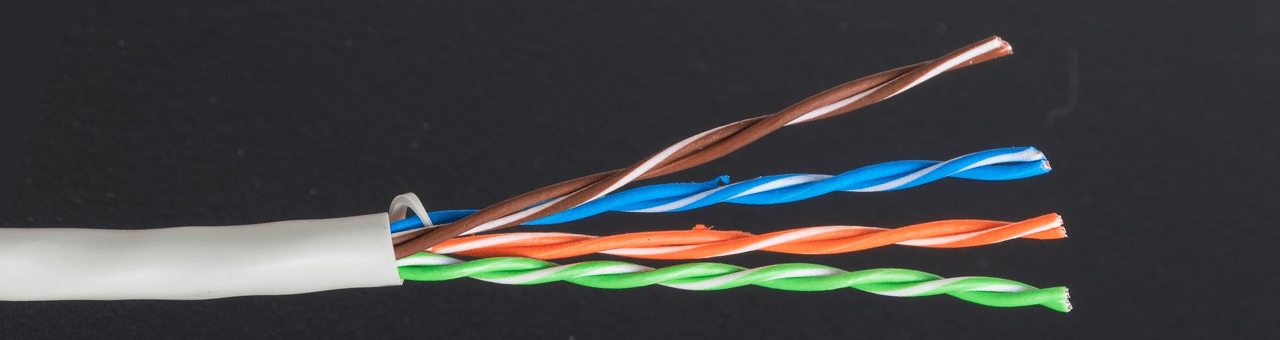
For sensor and data lines, hybrid cables use shielded twisted pairs. This makes it possible to lower the noise from nearby power cores. Foil or braided shielding can give you more EMI protection. This keeps signals clear, steady, and accurate while the machine is moving.
The inner arrangement keeps each core in its right place while it moves. This strong design makes it less likely that power and signal lines will get in each other's way. It also helps to balance impedance and lower capacitance. The end result is better and faster data transport.
Hybrid cables are the best choice for moving robots, CNC systems, and other automation equipment. You can send signals from the encoder, brake wires, and motor all through one cable. This makes the wiring on machines easier and cleaner. Also, the weight of the drag chain's cable is lower.

The cable's thin copper strands make it easy to bend, even when the object is always moving. Instead of breaking, the strands bend easily with the cable. This helps keep the electrical contact steady over time. Stable conductivity improves both the transmission of power and signals.
Twisted pairs can help reduce internal electrical noise. Adding foil or braid as a shield protects motors and drives from electromagnetic interference (EMI). This makes sure that data lines, sensors, and communication signals don't get in the way of each other. Stable signals help machines run more accurately.
These drag chain wires and cables are meant to have low capacitance and inductance. This helps reduce signal distortion when data is sent quickly. Especially useful for systems with a lot of wires and fieldbus systems. A more evenly distributed signal makes both speed and control more accurate.
Every cable design goes through a lot of tests, including millions of twists and bends. Before and during dynamic testing, engineers check the signal's quality. This is a better way to make sure that the cable will last even when machines are putting a lot of stress on it. Any flaws can be fixed before production.
You can order anything from one sample cable to huge production runs. This is helpful for both pilot programs and making a lot of things. Flexible ordering gives buyers more freedom. You can use it to make prototypes, fix things, and make OEMs. Both big and small buyers get help.
Sending a small order only takes a few days most of the time. The schedule for making things is very carefully planned to fit in with big projects. Standard supplies are always easy to find. This means that the time it takes to get things done is shorter and the delivery is faster.
You can change the packaging and shipping to fit the needs of your project. We can send different kinds of cables at the same time. You can also change the labels, reel sizes, and protection systems. This makes it easier to get and install.
OEMs can fully customize specifications and put their own label on their products with QL-Custom. It is possible to change the specifications for the drag chain wire and cables, labels, printing, and reel lengths. This might be a better way to meet the needs of your brand and supply chain.
Excellent cable quality! We installed the PUR drag chain cable in our CNC mill and saw zero downtime. The oil-resistant jacket is holding up perfectly.
Ordered a small batch and QL-Custom shipped fast. The drag chain wire and cables bent around our robot arm without issue. Highly recommend these flexible drag chain cables for automation!
QL-Custom’s cables survived over 10 million cycles in our test lab. They really are super flexible and durable. The insulation is tough against coolant spray.
Professional service and good prices. We needed custom lengths for a conveyor project. The drag chain cables were shipped quickly and met all specs.
Great flexibility and no signal loss on our encoder line. The shielded cable kept the noise down even near large motors. Exactly what our robotic system needed.
The PA66 chain and cables from QL form a perfect system. The chain is sturdy, and the cables slide easily inside. Very happy with the performance in our textile machine.

QL-custom has been making drag chain cables since 1997, so you can trust that they will work. The company has an ISO 9001 certification and has worked with many clients in the US and Europe. We design and test all of our cables in-house to make sure they meet international standards like UL, CE, and CSA. There are a lot of choices for buyers when it comes to conductor count, voltage, shielding, and jacket type. Getting your supplies straight from the factory is one way to keep prices low and quality high. Quick help, thorough testing, and service around the world make it easy to buy. Because of this, QL-Custom is a good choice for long-lasting, flexible drag chain wire and cable solutions.