De types en vormen van de terminals
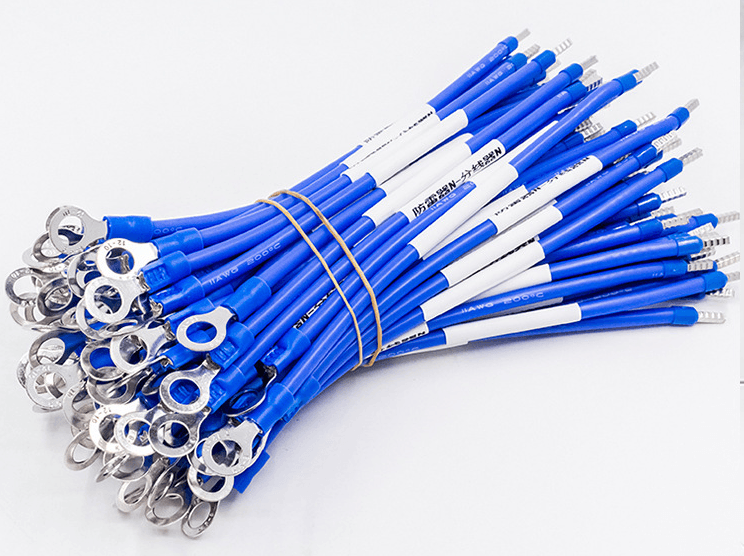
Vormen en stijlen van klemmen(contacten) Wat is de rol en losse klemmen? Figuur 1 toont een los stuk en een strip vrouwelijke crimp terminals. Beide zijn crimp terminals. Losse kabelschoenen worden aangesloten op een enkel interfacepunt, waarbij stabiliteit en betrouwbaarheid voorop staan. Strip terminals worden geleverd in een serie of op een rol voor meerdere aansluitingen, waarbij de nadruk ligt op krimpefficiëntie. Beide maken gebruik van mechanisch krimpen, waarbij de draadgeleider in de terminal wordt vastgezet voor een veilige en stabiele elektrische verbinding. Krimpen vereist specifieke draadmaten en striplengten. De juiste krimphoogte en plaatsing van de draad in de klem zijn cruciaal. De losse klem past op draad van 20-24AWG; de stripklem op draad van 14-18AWG. Beide worden gebruikt in auto's, connectoren en kabelbomen. Figuur 2 toont verschillende klemmen, waaronder ring-, spade-, U-vormige, pin-, huls- en bladklemmen. Deze zijn verkrijgbaar met of zonder isolatie. Ze worden aangesloten door middel van insteken en krimpen of solderen en krimpen met behulp van gereedschappen zoals krimpers of hamers. De toe te passen draaddikte hangt af van de terminalgrootte. Ze worden gebruikt in de auto-industrie, ruimtevaart en industriële elektronica. Blinde krimpaansluitingen Wat zijn blinde krimpaansluitingen? Bij blinde krimpinrichtingen is de positie van de klem niet zichtbaar, het is een krimppositie voor slangen, u moet het lipje positioneren terwijl u de draadisolatie in de slang steekt en vervolgens krimpen. Het zijn metalen connectoren die vaak worden gebruikt voor elektrische verbindingen. Ze zijn meestal gemaakt van aluminium of koper, vaak met een isolerende hoes, en verbinden draden en geleiders door krimpen of solderen, waardoor stroom en signalen kunnen worden overgedragen. Deze aansluitklemmen zijn verkrijgbaar in geïsoleerde en niet-geïsoleerde (kale) versies voor verschillende stroomsterktes en toepassingen. De keuze van het type klem hangt af van de specifieke behoeften van de toepassing en de bedrijfsomgeving. Blinde krimpaansluitingen bieden installatiegemak en betrouwbare prestaties, waardoor ze...
Read More "Cirkelvormige en rechthoekige connectortypen, gebruik, series, prijs
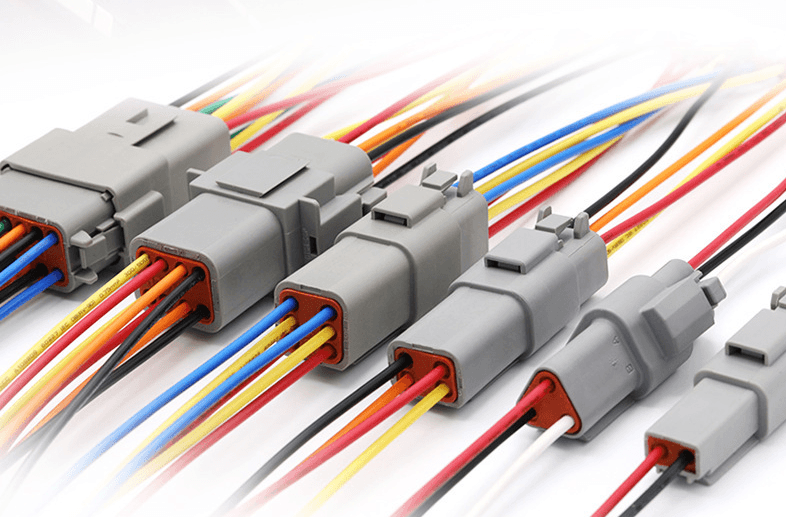
Circular and Rectangular Connector types, use, series,price What are the different shapes of connectors ? Circular connectors Circular connectors are mostly used for power transmission, but they are also used for signal transmission. Typical circular connectors are M5 M8 M12 M16, M23, D38999 MS5015, etc. This is a circular connectors, also known as a circular M12 connectors. The specific model is an M12 4-pin (TE T4171010004-001). Constructed with a metal shell and pins, and featuring a rubber seal, it utilizes an M12 thread. This connectors is designed for waterproof and shockproof applications. The threaded connection ensures robustness and reliability. Suitable for 22AWG, 4-core wire, it's frequently used in industrial machinery and equipment. Recotangle Connectors Figure 2 depicts a pin header connectors, also known as a male header or simply a header. Made of metal or plastic, it consists of two parts: the socket and the pins. These connectors, with their array of metal pins, are commonly found on PCBs or electronic components. Used for power supply, connection, and information transmission in electronic devices, they are typically operated via insertion and removal, primarily in computers, mobile phones, and other electronic devices. Here displays a D-sub connector, recognized by its characteristic D-shaped metal shell, which houses pins and provides the interface for mating plugs and sockets. D-sub connectors come in various sizes, commonly including 9P, 15P, 35P, and 37P. The appropriate size is chosen based on the product's specific needs. They are easy to install, usually by plugging or screwing them in, and are commonly used in computers, printers, and Ethernet applications. D-sub connectors are available in a variety of sizes, commonly including 9P, 15P, 35P, and 37P. The appropriate size is chosen based on the product's specific needs. They are easy to install. D-Sub rectangular socket...
Read More "Molex-connectorseries, typen, prijs

Molex-connector Inleiding Wat is Molex? Molex werd in 1938 opgericht in de Verenigde Staten en is nu een wereldberoemd bedrijf op het gebied van elektronische componenten. Het bedrijf houdt zich bezig met het produceren en leveren van elektronische connectoren, kabels, optische vezels, antennes, voedingen, enzovoort, op vele gebieden. Eigenschappen en toepassingen van Molex-connectoren Molex staat bekend om zijn producten van hoge kwaliteit en innovatieve mogelijkheden. Het bedrijf heeft meer dan 100.000 soorten producten, die op grote schaal worden gebruikt in communicatie, huishoudelijke apparaten, auto's, medische en andere gebieden. Soorten Molex-connectoren Volgens de officiële beschrijving zijn er ruwweg 10 soorten Molex-connectoren, namelijk backplane-connectoren: Traditionele en verticale orthogonale configuraties maken een verscheidenheid aan flexibele ontwerpen mogelijk en bieden tegelijkertijd superieure impedantiecontrole en hoge prestaties, hoge dichtheid en hoge gegevenssnelheden in toepassingen met hoge bandbreedte. Board-to-board connectoren: Of het nu gaat om een miniatuurverbinding met beperkte bedradingsruimte, een verbinding met hoog vermogen of een verbinding met hoge snelheid en hoge dichtheid, in dit type connector vindt u de juiste oplossing om de bedrading van de printplaat te vereenvoudigen, de ruimte van de kaartsleuf te maximaliseren en een efficiënte gegevensoverdracht te bieden. Zijkaartconnector: Een eenvoudig, klein en robuust socketontwerp dat kan worden aangesloten op high-speed parallelle bordpluggen, zijkaarten of kabels voor maximale ruimtebesparing. FFC/FPC-connectoren: Deze connectoren van Molex zijn verkrijgbaar in verschillende driverontwerpen, waaronder front flip, back flip, non-ZIF, sliders, flexibele vergrendeling, one-click, enz., gecombineerd met multi-pitch ontwerpen en circuitformaten, om klanten te voorzien van betrouwbare, robuuste, gebruiksvriendelijke connectoroplossingen met een grotere ontwerpflexibiliteit. Zware rechthoekige connectoren: Deze connectoren worden voornamelijk gebruikt in robuuste toepassingen zoals industriële robots, mechanische apparatuur, transport, energieopwekking en industriële regelapparatuur. I/O-connectoren: Beschikbaar voor een breed scala aan USB-producten, waaronder USB Type A, Type...
Read More "JAE-connectorseries, soorten, gebruik en prijs

JAE-connectorseries, soorten, gebruik en prijs Wat is JAE? JAE is Japan Aviation Electronics Industry, Ltd. Is een bedrijf dat zich richt op het leveren van connectoren voor verschillende soorten toepassingen. Kenmerken en toepassingen van JAE connectoren JAE connectoren dringen door in een zeer breed scala van industrieën, auto's, luchtvaart, smart phones en andere kleine apparatuur zijn erbij betrokken. De producten worden zeer gewaardeerd door klanten vanwege hun hoge dichtheid, hoge betrouwbaarheid, water- en stofbestendigheid, met name in de auto- en luchtvaartindustrie. Soorten JAE-connectoren Volgens de officiële beschrijving zijn er ruwweg tien soorten JAE-connectoren: Externe interface connectoren: gebruikt voor de verbinding tussen verschillende apparaten en systemen, kan voldoen aan verschillende normen volgens de behoeften van de klant. Board-to-board connector: gebruikt om PCB aan te sluiten. Diverse stapelhoogten, polen en contactafstanden kunnen worden ontworpen op basis van productvereisten. Board-to-board FPC/FFC-connector: gebruikt voor de verbinding tussen PCB en FPC of FFC. En hetzelfde als de vorige board-to-board connector, kan het ook een verscheidenheid aan verschillende stapelhoogten, polen hoeveelheden en contactafstanden volgens productvereisten. Board-to-wire connector: wordt gebruikt voor de verbinding tussen PCB en kabel. Ronde connectoren: Dit type connector is meestal zeer goed afgedicht. Vierkante connector: Dit type connector kan vaak worden gebruikt in multi-PIN verbindingsontwerp, dat efficiënt gebruik kan maken van bedradingsruimte om de overdrachtsefficiëntie te verbeteren. Optische vezelconnector: gebruikt voor datatransmissie en -communicatie met hoge snelheid en hoge bandbreedte. Dit soort toepassing heeft over het algemeen de kenmerken van hoge anti-interferentie. Coaxiale kabelconnector: gebruikt om coaxiale kabels aan te sluiten. Relaisconnector: Deze fungeert als schakel in het circuit. Geheugenkaartconnector: wordt gebruikt om SD- en SIM-kaarten aan te sluiten, er is een verscheidenheid aan verschillende kaartinvoegings- en terugtrekmethoden, afhankelijk van de behoeften van de klant. Connector voor geheugenmodule: Deze moet compatibel zijn met de standaarden voor geheugenmodules, zoals...
Read More "Om welke certificaten gaat het?

Which Certificates Wire Harness Involved? In the increasingly competitive wire harness market, product certification and factory certification shows particularly important, through the professional testing organizations to carry out strict quality control of product quality, you can effectively screen out qualified products, as well as high-quality suppliers, is a kind of protection for customers. 1- Product Certification RoHS 1. RoHS certification is a mandatory standard developed by the European Union. It is mainly used to regulate the material and process standards of electrical and electronic products, so that it is more conducive to human health and environmental protection. Rohs has been incorporated into the EU mandatory certification CE, generally only require a test report on it, but if the customer needs a certificate, you can also issue a CE certificate. It is mainly for the raw material of the product to be certified. Reach 2-Reach is only a test report, there is no certificate, REACH certification is the EU regulation “Registration, Evaluation, Authorization and Restriction of Legal Goods”. It is mainly for the raw materials of the product to be certified. Water-proof 3-Waterproof certification: First, we need to find out is the customer requirements of the material itself waterproof or design and manufacture of waterproof, which is our priority. About the material itself waterproof: the material itself waterproof means that the connector or wire and cable material can be used outdoors, will not be in the case of immersion in the physical deterioration. Manufacturing design waterproof: It means that after this product is designed and manufactured, this design will not enter water or dust, such as our common strain relief design. UL 4-UL: U.S. Security Laboratory certification, proving that the product meets U.S. safety standards. UL is mainly for North America, out of the U.S. harnesses are...
Read More "De ontwerplogica van opgerolde kabels
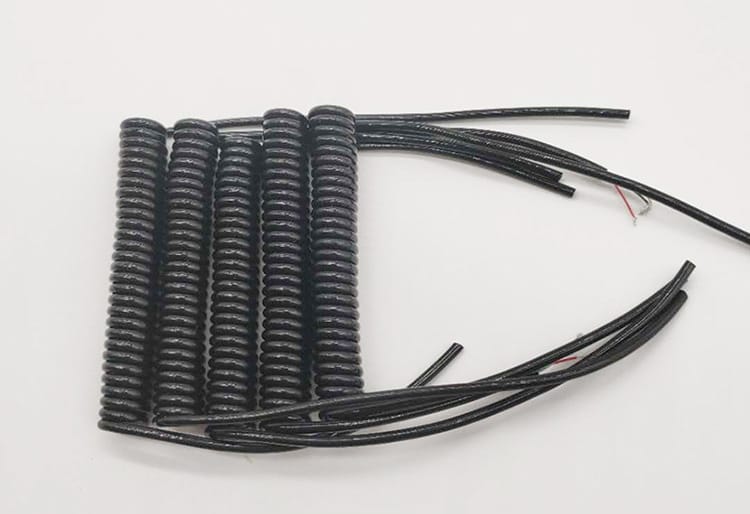
Coil Cable Design, Manufacturing, Length Calculation and Precautions 1. What is a Coiled Cable ? A Coiled cable, also known as a retractable coiled cord or spiral cable, is a type of electrical cable that can stretch and retract like a Coils. The prototype of the coil cable is actually a straight cable. The straight cable is wound around a fixed-size jig rod by winding, and the clamps on both sides are used to clamp the wire. Then it is put into the oven and baked for a certain period of time. It is taken out to form a coil cable. 2. Calculating the Real Length of a Coiled Cable 1. Determine the Structure: Understand the number of coiled sections and straight sections that make up the Coiled cable. 2. Measure the Coil Parameters: Coil length: we need to be clear the coiled part length, from one pc coiled cable L=350mm Coil ID : Measure the coiled part OD=15mm this parameter determines the fixture stick’s OD Coil OD: Measure the coiled part OD=25mm Cable OD: Measure the cable OD5.0mm Then we can work out the cable coiled part how many coils. Use the coiled part length/Wire OD 350/5.0=70coils Counting 1 coil length = πD= 3.14 X (25mm-5.0mm)=62.8mm (‘cause we can’t use the max OD to count the Circumference ) 1 coil 62.8mm X 70 coils = 4396mm+the both ends lengths is the one pc cable real length Note that the measurement method is relatively simple and intuitive but may have some errors. The formula calculation method requires accurate measurement of the structural parameters of the Coiled cable, and the calculated result is only an approximation. In practical calculations, choose the appropriate method based on the specific situation. 4. The Coiled Cable’s straight part orientation on both side The main exit directions of Coiled cables are as follows: I. Straight Exit- ...
Read More "Het belangrijkste punt van kwaliteitscontrole van draaduitrusting IPC620
Het belangrijkste punt van kwaliteitscontrole van kabelbomen IPC620 Neem contact met ons op om IPC620 Engelstalige versie gedrukt boek I. Processen betrokken bij de productie van kabelbomen De processen betrokken bij de productie van kabelbomen omvatten, maar zijn niet beperkt tot: Knippen: Verwijst naar het snijden van elektronische draden of kabels op de vereiste lengte met behulp van machines of handmatig, zonder de isolatie of buitenmantel te beschadigen. Buitenmantel strippen: De buitenste mantel verwijst meestal naar de kabelmantel. De machine voor het strippen van de buitenste mantel mag de isolatie van de kerndraden niet bekrassen of doorsnijden bij het strippen van de buitenste mantel. u Isolatiedikte is met meer dan 20% afgenomen . u Ongelijke of gerafelde stukken isolatie (rafels, staarten en labels) zijn groter dan 50% van de buitendiameter van de isolatie of 1 mm [0,039 in] als dat meer is . u Isolatie is verkoold . u Isolatie is in de draadstrengen gesmolten . Kerndraad strippen: Stel de kerndraadstripper in op de vereiste grootte voor het strippen en wees voorzichtig dat u de koperdraden niet bekrast of doorsnijdt. Krimpen: Selecteer het juiste mesje op basis van de klemgrootte. Krimp de voorbereide draad met het krimpgedeelte van de terminal met behulp van het mesje, zorg voor een stevige krimp en dat het uiterlijk en de trekkracht van de gekrompen terminal aan de normen voldoen. Plaats de connector: Steek de gekwalificeerde gekrompen aansluitdraden in de passende connectorbehuizing. U hoort een duidelijk klikgeluid wanneer de connector volledig is geplaatst. Draad draaien: Stel de draaddraaimachine in op de juiste hoogte om ervoor te zorgen dat de koperdraden niet platgedrukt of in de war raken en dat de gedraaide geleider een uniforme spiraalvorm heeft. Vertinnen: Breng vloeimiddel aan op de...
Read More "Hoe maken we tekeningen van kabelbomen?
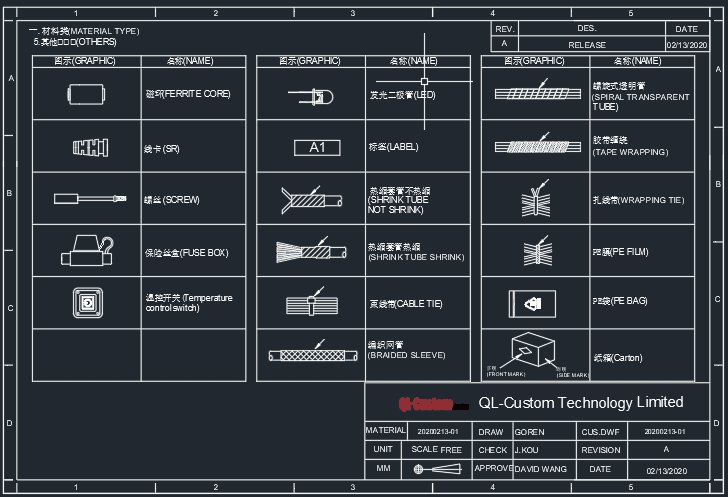
Overview of the Necessity and Importance of Wiring Harness Drawings Build wire harness drawings are essential for providing a clear and detailed representation of the harness layout, connection relationships, and component information. These drawings ensure the accuracy, reliability, and safety of the wiring harness. They illustrate the harness routing, including starting points, endpoints, and intermediate connection points, as well as the harness path. Moreover, the drawings depict the connection methods and relationships of each wire within the harness. As the primary source of information for wiring harness production, these drawings play a fundamental and critical role in the manufacturing process. Wire harness drawings build from customers' drawings : QL-Custom's Process from Inquiry Receipt to Drawing Submission for Customer Review : Upon receiving an inquiry, including customer drawings or samples, our engineers determine the sourcing strategy, whether it's original or domestic materials. They then source quotes from multiple suppliers, comparing prices to offer the best option to the customer. After price confirmation, a sample request is submitted. Engineers create drawings based on customer-provided information or samples. After internal review and approval, the drawings are sent to the customer for confirmation. Drawing Considerations and Details – Analyze customers' drawing to generate our Drawing : [caption id="attachment_4230" align="alignnone" width="796"] Wire Harness Drawings[/caption] As shown above, a typical drawing consists of seven main sections: Drawing information: Customer part number, internal part number, drafter, reviewer, revision level, date, etc. Revision history: Details of any changes made to the drawing. Quality and testing requirements: Specific standards and tests the harness must meet. 2D layout: A comprehensive view showing component placement, wire lengths, and other crucial manufacturing details. Circuit diagram: Illustrates the point-to-point connections within the harness. Bill of Materials (BOM): Lists all components, including wires, terminals, connectors, and sleeving, with quantities and internal part...
Read More "Welke kunststoffen kunnen worden gebruikt voor draadisolatie en kabelomhulling?
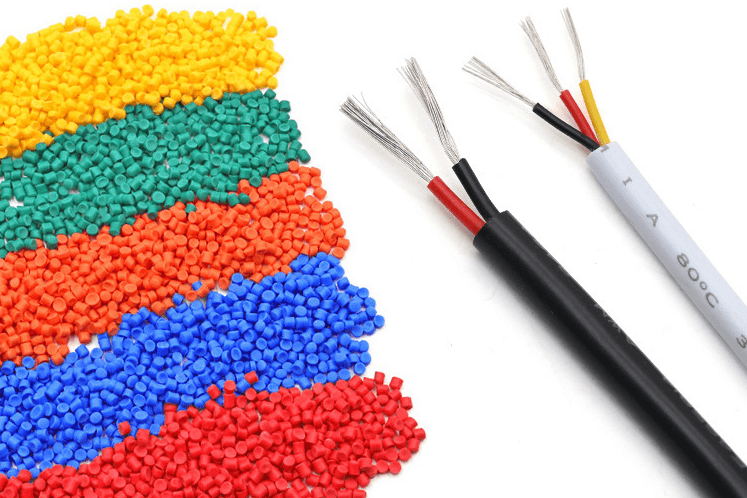
What Plastics Can Be Used for Wire Insulation and Cable Jacketing ? Wire insulation and cable jacketing are essential in electrical applications, meaning that the materials used for them are crucial in ensuring the safety, performance, and durability of cables. So, what plastics can be used as insulation and jacketing materials for wires and cables? Understanding Wire Insulation and Cable Jacketing Definition of Wire Insulation To make good use of wire insulation, we need to know what it is. Wire insulation is a layer of non-conductive material that surrounds a conductor. It effectively prevents leakage and protects the conductor from external environmental factors, avoiding accidents such as leakage, short circuit, and electric shock caused by contact between the internal conductor and the outside world. Definition of Cable Jacketing Cable jacketing is a protective layer that wraps around multiple insulated wires or cables. They are used to protect internal wires from external environmental damage, such as physical damage, moisture, chemicals, and UV radiation. Wire insulation primarily targets individual wires, while cable jacketing can protect multiple wires or cables [caption id="attachment_5047" align="alignnone" width="635"] Wire Insulation and Cable Jacketing[/caption] What Materials Are Used for Wire Insulation? Polyvinyl Chloride (PVC) PVC has excellent electrical properties, good flexibility, and can be used in humid environments, making it one of the most commonly used materials for wire insulation. The price of PVC is very advantageous, which is also an important reason for its widespread use. [caption id="attachment_5043" align="alignnone" width="558"] Wire Insulation and Cable Jacketing[/caption] Cross-linked Polyethylene (XLPE) XLPE itself is not a plastic, but the PE rubber compound is irradiated after extrusion to cross-link its chemical molecules, making it more temperature-resistant after aging. XLPE has extremely high heat resistance. It can withstand higher temperatures. Cables insulated with XLPE can work in an...
Read More "UL en Europe elektronische eenaderige draad?
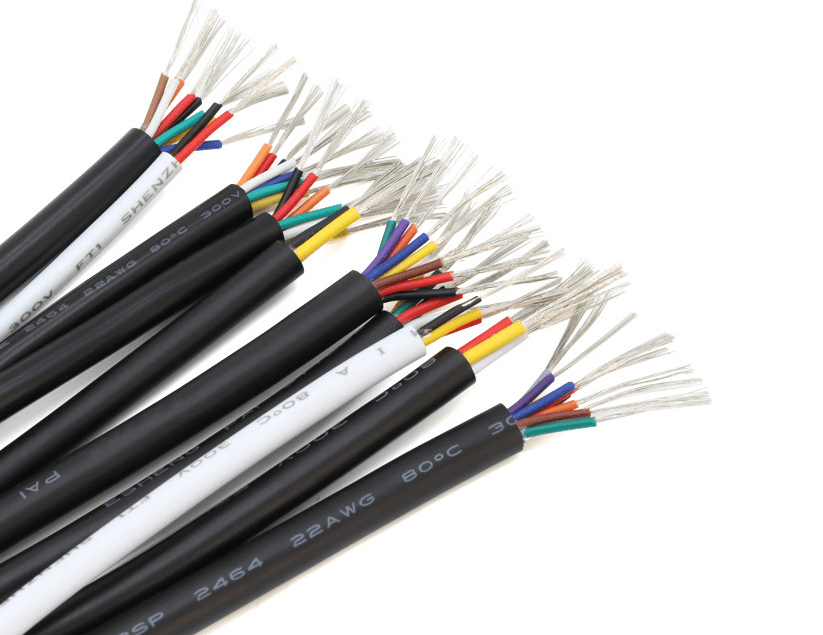
Wat is enkelvoudige draad? De term "eendraadsdraad" wordt vaak gehoord, maar wat is het precies? Laten we eens kijken naar dit alomtegenwoordige onderdeel, dat in bijna elk aspect van ons leven aanwezig is, van de definitie en toepassingen tot de voordelen. Een eenaderige draad is een elektrische draad die bestaat uit een enkele geleider omhuld met isolatie. De geleider is meestal gemaakt van blank koper of koper verguld met tin, zilver of nikkel. De isolatie is meestal gemaakt van PVC, maar er kunnen ook andere materialen worden gebruikt. De structuur van de geleider kan bestaan uit geslagen of massief koper, afhankelijk van de eisen van de klant. Van eenvoudige schakelingen tot complexe telecommunicatiesystemen, van hightech producten tot eenvoudige elektronische apparaten die in ons dagelijks leven worden gebruikt, draden met een enkele kern zijn onmisbaar. Het belangrijkste verschil tussen enkaderige draden en meeraderige kabels ligt in het aantal gebruikte geleiders. UL Standaard Eenaderige Draden UL 1015 - PVC-geïsoleerde eenaderige draad Beschrijving: Draden met PVC als isolatiemateriaal zijn geschikt voor gebruik op droge locaties. Toepassingen: UL 1015 aansluitdraden zijn geschikt voor gebruik in regelcircuits, apparaten en andere elektrische apparatuur. UL 1007 - Enkele of geslagen PVC geïsoleerde draad Beschrijving: Net als de 1015, UL 1007 draad maakt ook gebruik van PVC als isolatiemateriaal. Echter, 1007 is ontworpen voor gebruik in laagspanningsomgevingen en is flexibeler. Toepassingen: De flexibiliteit maakt het vaak gebruikt voor interne bedrading van apparaten en elektronische apparatuur. UL 1569 (Enkele geleider) Beschrijving: Zoals de naam al doet vermoeden, bestaat een enkele geleider uit één enkele of geslagen 30~10AWG vertind of blank koper. Deze geleider is plat en flexibel, met minder ruimtebeperkingen. Toepassingen: Vaak te vinden in elektronische apparatuur, automobieltoepassingen en andere gespecialiseerde toepassingen. Europese standaard eenaderige bedrading 1....
Read More "